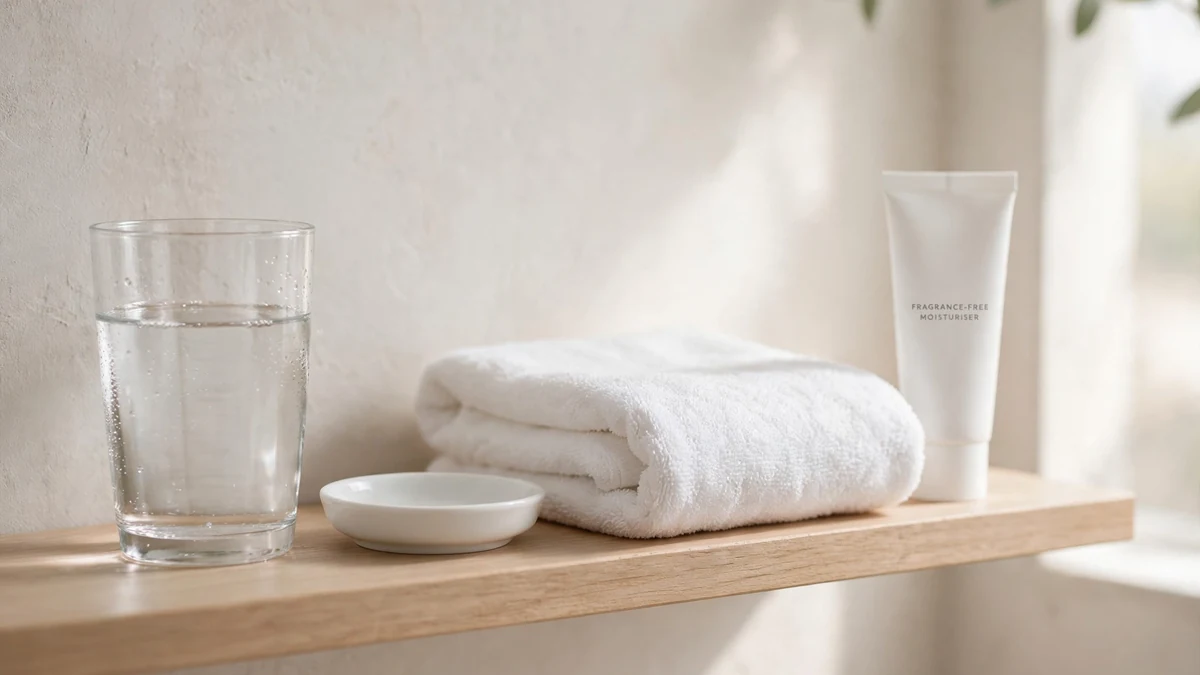
Some mornings, skin asks for less before the day has begun. It feels tight after washing, flushed after a hot shower, or tired of one new product after another. When skin reacts quickly, the answer is rarely a stronger product. It is almost always a gentler routine, built on plain water and a mild wash.
Water sensitive skin care starts with water itself. Lukewarm water, used gently and briefly, cleans without adding heat or stripping the skin. A mild wash, used once or twice a day, does the rest. Moisturiser on damp skin then holds that comfort in place.
This guide explains what sensitive skin is, why water temperature matters most, how to build a gentle routine step by step, and which habits to leave out. It is general information only, never a treatment, and it will not cure any skin condition. If your skin has a real, lasting problem, see a doctor or dermatologist.
Key Takeaways
- Sensitive skin reacts quickly to heat, strong products, and too much too fast.
- Lukewarm water suits sensitive skin best; hot water strips oils and adds flushing heat.
- A gentle routine is short: rinse, mild wash, pat dry, moisturise on damp skin.
- Patch test anything new, change one thing at a time, and give skin time.
- This guide is general information only; it will not treat or cure any condition.
What Sensitive Skin Is
Sensitive skin is skin that reacts quickly. A wash that is too hot, a cleanser that is too strong, a new product tried too fast, or a cold wind can leave it tight, flushed, dry, or uncomfortable. The reaction usually fades on its own, but it is a clear message: the skin wants less, done more gently.
Sensitive skin is not one single condition. Some people have skin that flushes easily, some have skin that dries out fast, and some react to fragrance or strong ingredients. What they share is the same answer: use less, use it gently, and give the skin time. The same gentle idea runs through pink opal gentle glow for sensitive skin, where a soft pink stone marks a slower morning wash.
Why Water Temperature Matters Most
Water temperature matters more than any product, because water touches the skin first and longest. Hot water feels good in the moment, but it strips the natural oils that keep skin comfortable, and it adds heat that leaves sensitive skin flushed and tight within minutes. A very hot face wash is one of the fastest ways to upset reactive skin.
Lukewarm water does the opposite. It feels neither hot nor cold on your wrist, and it rinses without adding warmth. Cool water also suits many people, especially on warm days, but it should never feel icy. The full guide is in water temperature skin guide, and its wrist test is the simplest check: if water feels comfortable on your wrist, it is right for your face.
The Gentle Routine in Order
A gentle routine is short, and its order matters. Start by wetting the face with lukewarm water, using your hands to splash it on rather than a rough cloth. Then use a small amount of mild wash, spread it with fingertips in slow circles, and rinse it away fully. Pat the skin dry with a soft towel, pressing gently instead of rubbing.
Finish by smoothing moisturiser over skin that is still slightly damp, while it can still hold the water in. The whole routine takes about three minutes, morning and evening, and the same short order works every day.

Choosing a Mild Wash
Choosing a mild wash is easier when you know what to look for. Look for a wash described as gentle, fragrance-free, and made for sensitive skin, with a short list of ingredients. A gel or cream wash is usually kinder than a foaming wash.
Avoid washes with strong fragrance, heavy scrubbing beads, or a long list of active ingredients, and avoid anything that promises dramatic results. A wash should clean gently and rinse away cleanly. If a wash leaves your skin feeling tight, it is too strong.
Rinsing Well, Patting Dry
Rinsing well matters, because wash left on the skin can irritate it all day. Rinse with lukewarm water several times, using your hands to carry the water, until the skin no longer feels slippery. A quick splash is rarely enough.
Drying matters just as much. Press a soft, clean towel against the skin gently, and lift it away, rather than rubbing. Rubbing adds friction, and friction is one of the things sensitive skin dislikes most. Leave the skin slightly damp.
Moisturising While Skin Is Damp
Moisturiser works best on skin that is still slightly damp, because it helps hold the water in. Smooth a small amount over the face with clean fingertips, and let it sink in for a minute. A plain, fragrance-free moisturiser is usually the kindest choice.
If your skin feels dry again by midday, a second light layer is fine, and so is a drink of water for yourself. Do not add a new product to fix a dry afternoon; the routine you already have, done gently twice a day, is usually enough.
Water Sensitive Skin at a Glance
| Lukewarm water | Mild wash | Damp skin |
|---|---|---|
| Wrist test first | Fragrance free | Pat dry gently |
| Rinse well | Small amount | Moisturise quickly |
| Never hot | Change one thing | Patch test first |
Patch Testing Anything New
Patch testing saves sensitive skin from most surprises. Before a new product touches your face, try a small amount on a small patch of skin, such as the inside of your forearm or behind your ear, once a day for two or three days. If the patch stays calm, the product is probably fine on your face.
If the patch reacts, stop using the product and wait for the skin to settle. Change only one thing at a time, so you always know what caused a reaction.
Morning and Evening Rhythms
Morning and evening ask for slightly different things, but the routine stays the same shape. In the morning, a rinse with lukewarm water is often enough, with a mild wash only if the skin feels oily. Moisturiser follows, and then sun protection if you go outside.
In the evening, the mild wash earns its place, rinsing away the day. Moisturiser follows again, on damp skin, and then the day is done. The same calm rhythm runs through larimar sea calm for sensitive skin, where a pale blue stone sits beside cool water while the wash stays slow.
Seasons, Weather and Hard Water
Seasons change what sensitive skin needs. In winter, cold wind and indoor heating dry the skin fast, so lukewarm water, a shorter wash, and a slightly richer moisturiser help. In summer, heat and sweat ask for a lighter moisturiser and a cool rinse.
Hard water, which leaves white marks on taps, can also leave sensitive skin feeling dry or tight. If your water is hard, rinse a little longer, pat dry gently, and moisturise quickly on damp skin.
What to Leave Out
A gentle routine is as much about what you leave out as what you keep. Leave out hot water, long showers on the face, rough cloths, and strong scrubs, because each adds heat or friction that sensitive skin dislikes. Leave out strong fragrance, too, a common trigger.
Leave out the habit of trying a new product every week. New products need days to show whether they suit you, and a shelf full of half-used bottles helps no one. Keep one wash, one moisturiser, and one routine.
What It Will Not Do
Be honest about what a gentle routine will not do. It will not treat or cure any skin condition: it will not clear eczema, rosacea, acne, or any lasting rash, and it will not change your skin type. It is a calmer way to wash and moisturise.
If your skin has a real, lasting problem — a rash that does not fade, skin that cracks or bleeds, swelling, or pain — see a doctor or a dermatologist. A gentle routine can support comfort, but only a clinician can diagnose and treat a skin condition.
Your Sensitive Skin Checklist
- Test water on your wrist first; lukewarm is right, hot is not.
- Use a mild, fragrance-free wash, once or twice a day, no more.
- Rinse well with lukewarm water, then pat dry gently, never rub.
- Moisturise while skin is still slightly damp, morning and evening.
- Patch test anything new, and change only one thing at a time.
- See a doctor or dermatologist for any real, lasting skin problem.
Frequently Asked Questions
What water temperature suits sensitive skin best?
Lukewarm water suits sensitive skin best. Test it on the inside of your wrist first: it should feel neither hot nor cold. Hot water strips natural oils and adds flushing heat, while icy water can feel like a shock.
How often should I wash sensitive skin?
Once or twice a day is enough for most people: a mild wash in the evening, and a rinse or a mild wash in the morning. Washing more often can strip the skin and leave it tight and dry. If your skin feels tight after washing, try washing less, or a milder wash.
Should I use a washcloth on sensitive skin?
A washcloth is usually not needed, and a rough one can add friction that sensitive skin dislikes. Clean hands are the gentlest tool: splash lukewarm water on with your hands, spread the wash with fingertips, and rinse the same way. If you like a cloth, choose a very soft one and press gently, never rub.
How do I patch test a new product?
Try a small amount on a small patch of skin, such as the inside of your forearm or behind your ear, once a day for two or three days. If the patch stays calm, the product is probably fine on your face. If it reacts, stop and wait.
Is this routine different from the pink opal and larimar guides?
Yes, those guides are stone-centred rituals, with a pink opal or a larimar stone beside the water setting a calm mood. This guide has no stone in it: it is a general gentle routine built on water temperature, a mild wash, rinsing, patting dry, and moisturising on damp skin.
When should I see a doctor about my skin?
See a doctor or a dermatologist if a rash does not fade, skin cracks or bleeds, or you have swelling, pain, or a problem that keeps coming back. A gentle routine can support comfort, but it cannot diagnose or treat a skin condition.
The Bottom Line
Water sensitive skin care is simple: lukewarm water, a mild wash, a gentle pat dry, and moisturiser on damp skin.
Keep it gentle, keep it short, and let skin settle.
A Note for Sensitive Skin
Keep it lukewarm, keep it mild, keep it calm. Your skin will thank you for the quiet.