Some skin routines ask for too much. Ten bottles, five steps, a shelf full of promises, and a morning gone before the first layer has dried. The skin feels tired before the day has begun, and the routine is the first thing dropped when life gets busy.
Water and rosehip ask for almost nothing. A splash of clean water, a few drops of golden rosehip oil, and a plain moisturiser are a complete routine for many people, morning and evening. It is short enough to repeat and gentle enough for ordinary skin, and it takes less than five minutes from start to finish.
This guide explains what water and rosehip do together, how to choose a plain rosehip oil, how to patch-test it, and how to build a simple morning and evening routine. It makes no medical claims, only a gentle habit done well, and real skin problems belong to a doctor or dermatologist.
Key Takeaways
- Water rosehip is a simple routine: clean water, a few drops of rosehip oil, then moisturiser.
- Rosehip oil is a golden facial oil, used in drops, and it cannot replace moisturiser alone.
- A plain oil with a short ingredient list matters most; a dark glass bottle keeps it fresh.
- Always patch-test a new oil on the wrist first and wait a day before using it on the face.
- A simple routine is a gentle habit, not a treatment; real skin problems belong to a doctor.
What Water and Rosehip Are
Water is the first step of the routine, and it is the simplest one. Clean, lukewarm water rinses away the night and prepares the skin for the next step, without stripping it the way hot water or harsh cleansers can.
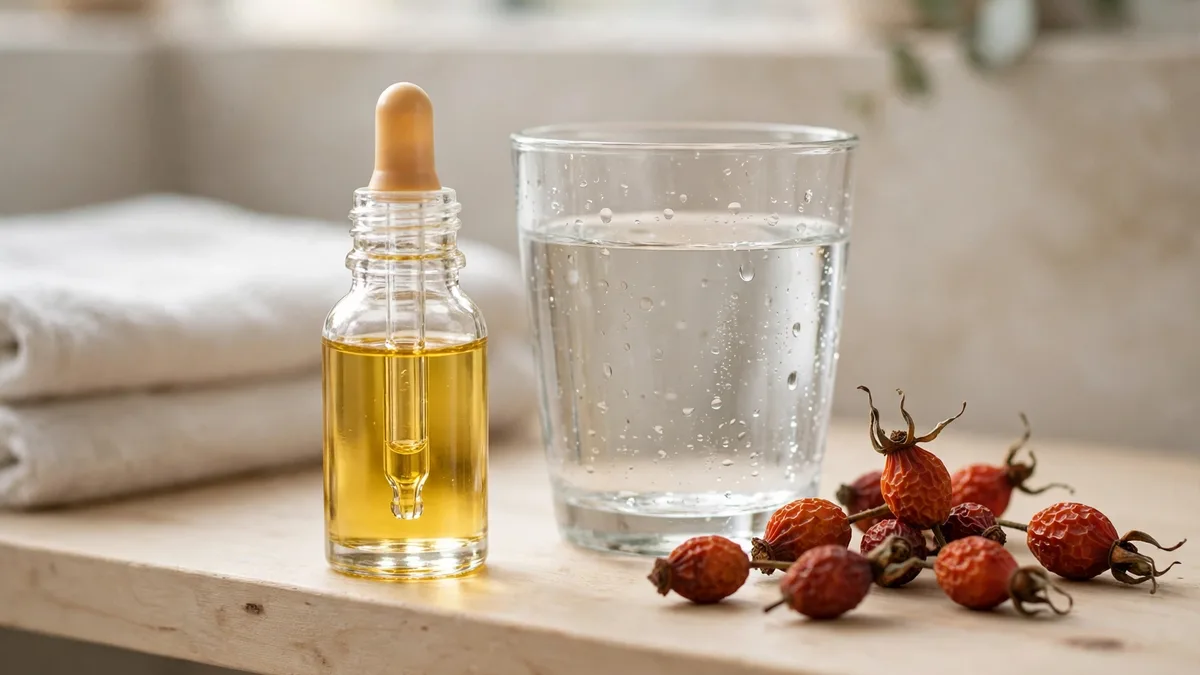
Rosehip oil is a golden oil pressed from the seeds of the rosehip, the small red fruit left behind when a rose flower fades. It is light, absorbs quickly, and leaves a soft sheen rather than a heavy shine. A plain rosehip oil has one ingredient, and that is what this routine uses.
Why the Pair Works Together
Water and rosehip work together because each one does a job the other cannot. Water gives the skin a fresh, damp surface, and oil spread over damp skin feels lighter and spreads further than oil on dry skin. A few drops are enough, because the damp skin carries the oil across the face in a thin, even layer.
The same pairing runs through water and aloe: a simple skin routine, where water first and a light layer second make a short routine that is easy to repeat.
Choosing a Plain Rosehip Oil
Choose a plain rosehip oil, and read the label before you buy it. The ingredient list should be short, ideally one ingredient, and the bottle should be dark glass, because light can spoil an oil over time. A dropper bottle is easiest, because it gives you drops one at a time, and a pump bottle works well too.
Buy from a trusted seller, and avoid oils with added perfume, colour, or long lists of extras.
The Patch Test First
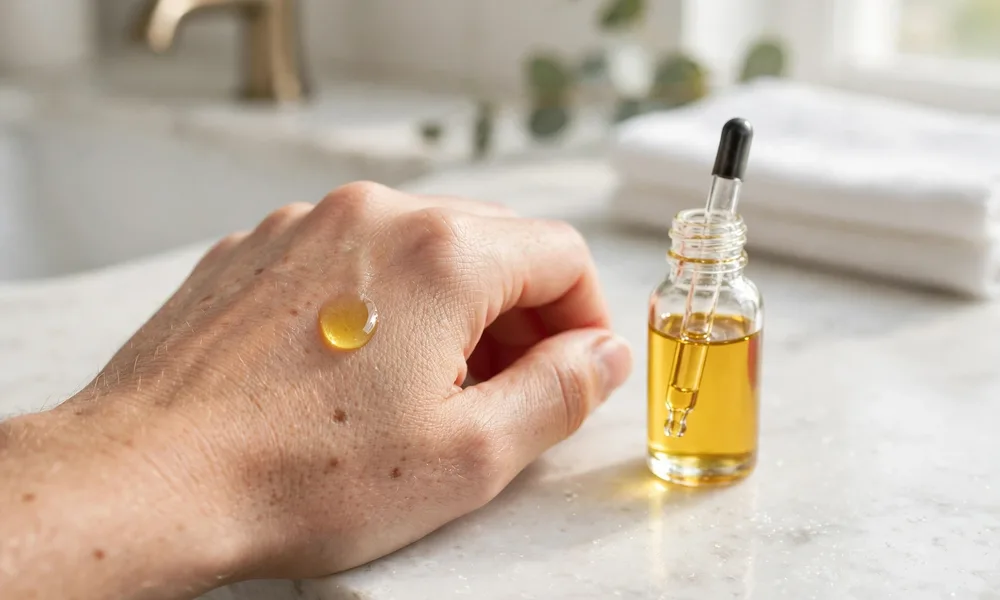
Never put a new oil on your face the first time you use it. Patch-test it first, on the inside of your wrist, where the skin is thin and any reaction shows quickly. Put one drop on the wrist, rub it in gently, and wait a full day before you use it on your face. If the skin stays calm, with no redness, itching, or swelling, the oil is likely fine for you.
If the skin turns red, itches, or swells, wash the wrist with lukewarm water, do not use the oil again.
The Morning Routine
The morning routine takes three minutes, and it starts with water. Splash the face with clean, lukewarm water, and pat it dry lightly with a clean towel, leaving the skin slightly damp. Then put three or four drops of rosehip oil on your fingertips, warm them between your hands, and press them gently over the face and neck.
Finish with a plain moisturiser, because oil alone cannot lock moisture in, and a thin layer of moisturiser seals the routine. If you go outside, add sun protection as the last step, because no oil protects the skin from the sun.
The Evening Routine
The evening routine is the same three steps, done slowly. Wash the day away with lukewarm water and a gentle cleanser if you need one, then pat the skin until it is just damp. Warm three or four drops of rosehip oil between your hands, press them over the face and neck, and finish with the same plain moisturiser.
Evenings are the best time for a little patience. Sit for a minute after the oil, let it settle, and do not rub the skin hard.
How Much Oil to Use
A few drops are enough, and more is not better. Three or four drops cover the whole face, and five at most for the face and neck together. Too much oil sits on the skin, feels heavy, and can mark the pillow or the collar, and it does not help the skin any more than the right amount does.
If the face feels greasy after a few minutes, you used too much, so use one drop fewer next time.
Storing Rosehip Oil Well
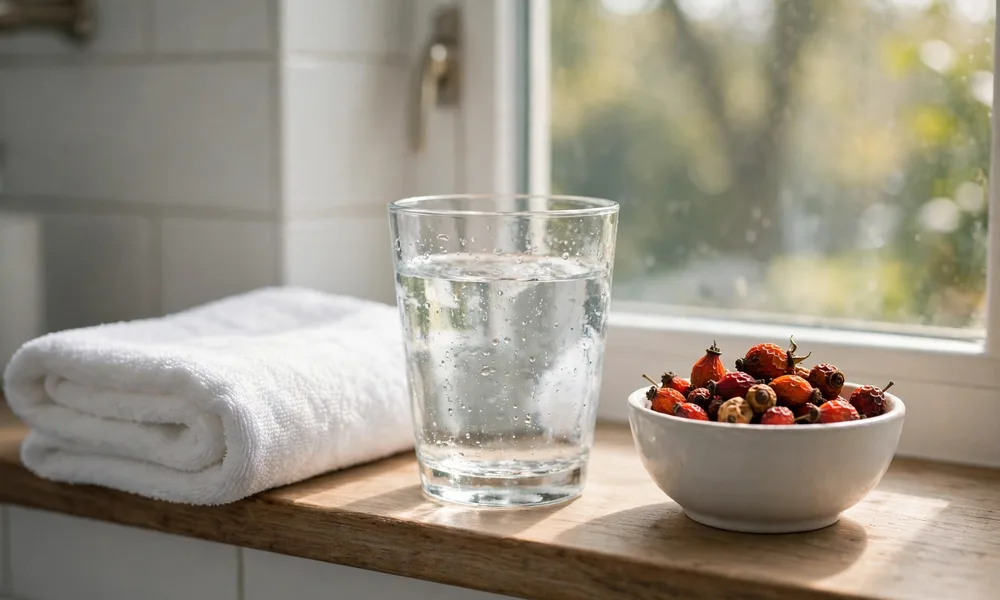
Rosehip oil is a fresh oil, and it needs a little care to stay good. Keep the bottle in a cool, dark place, away from the bathroom window and the steam of hot showers, and always close the dropper tightly after use. A dark glass bottle helps, but a cool shelf matters just as much.
Use the oil within a few months of opening it, and check the smell before each use. A fresh oil smells faintly nutty and mild, and if it smells sharp, sour, or paint-like, it has gone off. Throw it away, and open a fresh bottle.
Water Rosehip at a Glance
| Clean water | Golden oil | Simple routine |
|---|---|---|
| Lukewarm gentle splash | Three drops only | Morning three minutes |
| Damp skin first | Plain short label | Evening three minutes |
| Pat dry lightly | Dark glass bottle | Patch test first |
| Drink water daily | Cool dark shelf | Moisturiser seals all |
What It Will Not Do
Be honest about what water and rosehip will not do. They will not cure any skin condition, fade scars, erase wrinkles, clear acne, or heal a rash, and no honest seller should claim otherwise. They are a gentle routine for ordinary skin, and a gentle routine is all they are. If your skin has a real problem, such as a rash that will not settle, swelling, blistering, or pain, stop the routine and see a doctor or dermatologist.
The same honest limit runs through water and tea tree: a gentle skin guide, where a simple routine is a habit, not a treatment.
Mistakes to Avoid
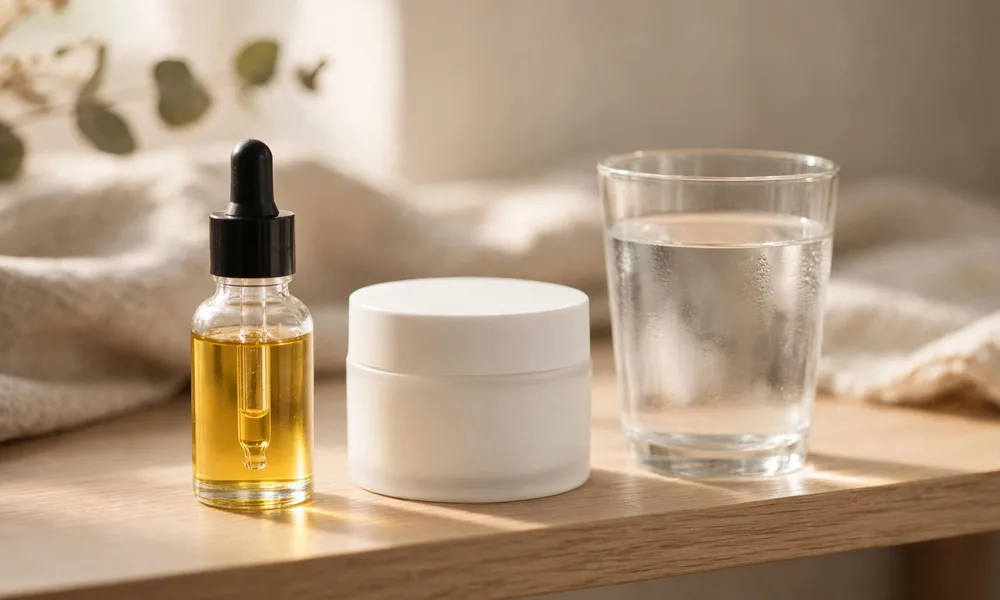
The common mistakes are small, and they are easy to fix. Do not use hot water, because it strips the skin and leaves it tight and dry. Do not rub the skin hard with a towel, because rough rubbing can irritate it. Do not skip the patch test, because a sore face is a high price for saving a day.
Do not mix the oil with other strong products on the same day you first try it, because if the skin reacts, you will not know which product caused it. A spring-skin routine, like the one in strawberry quartz soft pink spring, makes the same point in another way: keep it simple, keep it gentle, and let the skin settle.
Your Simple Skin Checklist
- Splash with clean, lukewarm water, and pat the skin until just damp.
- Patch-test new rosehip oil on the wrist first, and wait a full day.
- Use three or four drops of plain rosehip oil, warmed between your hands.
- Finish with a plain moisturiser, and sun protection before going outside.
- Store the oil in a cool, dark place, and throw it away if it smells off.
- See a doctor or dermatologist for any real skin problem, and stop the routine.
Frequently Asked Questions
What is rosehip oil?
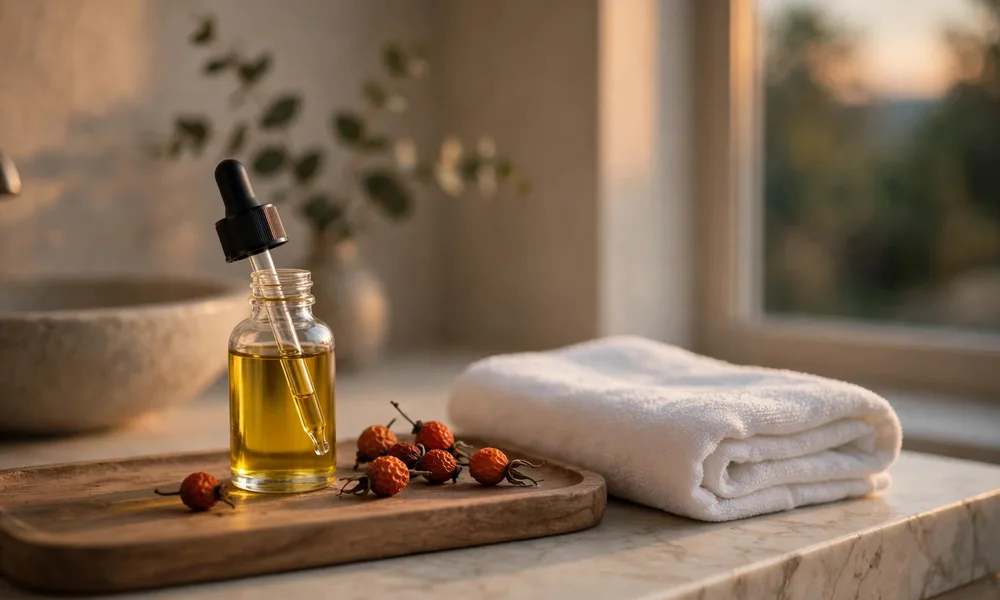
Rosehip oil is a golden oil pressed from the seeds of the rosehip, the small red fruit left behind when a rose flower fades. A plain rosehip oil has one ingredient, it is light, it absorbs quickly, and it leaves a soft sheen rather than a heavy shine.
How many drops of rosehip oil should I use?
Three or four drops cover the whole face, and five at most for the face and neck together. Warm the drops between your hands, press them gently over damp skin, .
Do I still need moisturiser after rosehip oil?
Yes, always. Rosehip oil is a light oil, and it cannot lock moisture into the skin on its own, so a plain moisturiser should always follow it. The oil goes on damp skin first, and the moisturiser seals the routine.
How do I patch-test rosehip oil?
Put one drop on the inside of your wrist, rub it in gently, and wait a full day before you use it on your face. If the skin stays calm, with no redness, itching, or swelling, the oil is likely fine for you, and if it reacts, wash it off and do not use it again.
Can rosehip oil cure acne or fade scars?
No, it cannot. Rosehip oil will not cure any skin condition, fade scars, erase wrinkles, or clear acne, and no honest seller should claim otherwise. It is a gentle routine for ordinary skin, and real skin problems belong to a doctor or dermatologist.
How should I store rosehip oil?
Keep the bottle in a cool, dark place, away from the bathroom window and the steam of hot showers, and always close the dropper tightly after use. Use it within a few months of opening, and throw it away if it smells sharp, sour, or paint-like.
The Bottom Line
Water and rosehip are a short, gentle routine: clean water, a few drops of golden oil, and a plain moisturiser.
Keep it simple, patch-test first, and let the habit do its quiet work.
A Note for Simple Skin
Keep it clean, keep it golden, keep it gentle. Your skin will thank you for the calm.