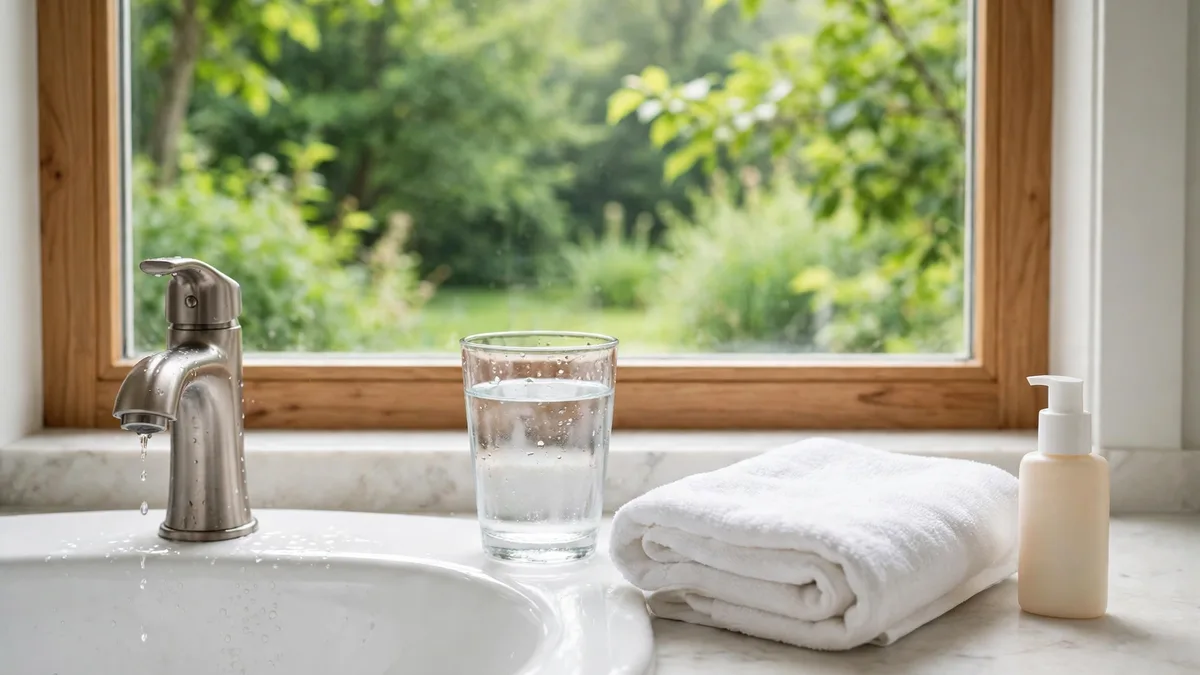
Humid weather has a feeling all of its own. The air is thick and warm, and your skin notices before you do. By mid-morning the forehead shines, the neck feels damp, and a wash from an hour ago feels like yesterday. Nothing is wrong, yet the skin never quite feels fresh.
The answer is not more products, and it is not washing harder. It is a lighter routine, matched to muggy air: short cool rinses, a little plain water through the day, and fresh air whenever you can find it. Small habits, repeated, keep skin fresher than any single product can.
This guide explains what humid weather does to skin, why muggy air feels sticky, and how to build a simple morning and evening routine for days when the air itself feels wet. It is gentle general information only, never medical advice.
Key Takeaways
- Humid weather fills the air with moisture, so sweat dries slowly.
- Short cool rinses with plain water keep skin fresh without stripping it.
- Blot shine gently; never scrub, and never wash more than twice a day.
- Light clothes, fresh air and water through the day help most.
- Plain water does not replace sunscreen, and real problems need a doctor.
What Humid Weather Does to Skin
Humid weather does several things at once. The air is already full of moisture, so sweat stays on the surface instead of drying, and the face can feel damp by mid-morning. The skin makes more oil in warm, muggy air, and the forehead shines sooner than on a dry day.
All of that is ordinary, but it changes what the skin wants. Heavy creams feel greasy in muggy air, harsh soaps strip the surface, and long hot washes leave the skin tight and dry. Humid-weather skin asks for less: less heat, less scrubbing, less weight, and more cool water and air.
Why Humid Air Feels Sticky
Humid air feels sticky because sweat cannot do its job. On a dry day, sweat evaporates quickly and cools the skin as it leaves. On a muggy day, the air is already full of water, so sweat stays where it is.
Humidity also changes how products behave. A rich cream that felt comforting in dry weather can feel heavy in damp air. This is normal, and a sign to lighten the routine. The same warm-weather thinking runs through water and hot weather for skin that stays cool, where cool water carries the skin through the hottest hours.
A Fresh Morning Wash
A fresh morning wash in humid weather starts with lukewarm water, never hot. Cup your hands, splash your face a few times, and use a small amount of mild cleanser. Massage it in softly for half a minute, then rinse well.
Pat your face dry with a clean soft towel, pressing gently instead of rubbing. Finish with a thin layer of plain light moisturiser while the skin is still slightly damp, and sunscreen if you will go outside. The whole wash takes less than two minutes.
Drinking Water Through a Muggy Day
Drinking water through a muggy day is the quiet half of the routine. The skin loses moisture in the heat, even when the air feels wet, and a glass of water, taken steadily through the day, is the simplest way to replace it. Keep a bottle nearby and sip a little at a time.
Start the morning with a glass of water, then keep water with you through the day: a glass at each meal and one between meals is a good rhythm. Carry the bottle when you go out, so the water is there when the air feels heaviest.

Blotting and Midday Freshness
Midday is when humid weather shows itself. The forehead shines, the nose feels oily, and the skin feels tired. The fix is blotting, not washing: press a clean tissue gently against the shiny spots, lift it away, and let the skin breathe.
Do not scrub, and do not add another wash at midday, because more washing can strip the skin and make it produce more oil. A plain-water splash is enough if the face feels hot: cup cool water over the skin and pat dry.
Light Clothes and Fresh Air
Light clothes are the skin's best friend in humid weather, and they cost nothing. Loose cotton or linen in pale colours lets air move over the skin, unlike tight dark clothes, which trap warmth against the body. A light long sleeve can feel cooler than bare skin, because it keeps the sun off while the air moves through.
Fresh air matters just as much indoors. Open a window when you can, and let the air move through the room, even for a few minutes. Stale indoor air makes skin feel closer and warmer, while a light breeze dries the surface gently.

Sunscreen: Water Does Not Replace It
Say this plainly: plain water does not replace sunscreen. Drinking water, splashing with cool water and fresh air all help the skin, but none of them blocks the sun's rays. Only shade, clothes and sunscreen do that.
Use a sunscreen you like enough to wear every day, and apply it before going outside. Cover the face, ears, neck and arms, and reapply after sweating or a few hours outdoors. On humid days, a light sunscreen suits the skin better than a heavy one. Water is a comfort for humid-weather skin, but sunscreen is its shield.
Washing Gently in the Evening
Evening is when the day's sweat, oil and sunscreen need washing away. Lukewarm water is the right temperature again: warm enough to lift the day off the skin, cool enough not to strip it. Wash briefly, with your hands.
Take off sunscreen properly: a gentle wash with lukewarm water and a mild cleanser removes it without scrubbing. Do not use hot water to hurry it, or a rough cloth. Pat the skin dry and apply a plain light moisturiser while it is still slightly damp.
A Cool Room and a Fresh Night
After the evening wash, the room matters as much as the skin. Keep the bedroom cool and airy: a glass of water on the bedside table, light cotton bedding, and a window open a crack.
Do not add new creams at night in humid weather: a new product can irritate warm, damp skin. Keep the night simple, the bedding light, and the air moving. The same cool-room thinking is explained in water and skin in air conditioning, where cool indoor air helps the skin recover after heat.
Humid Weather Away from Home
Humid weather away from home needs the same habits, carried in a bag. A bottle of water, tissues for blotting, and sunscreen are enough for a muggy day out. Pack them the night before.
On the move, sip water often and splash your face at a tap when you can. Seek fresh air at rest stops, and rinse off sweat in the evening as soon as you are home. A spare dry shirt in the bag is a small kindness on the muggiest days.

What Humid Weather Will Not Do
Be clear about what humid weather will not do. Humid air will not cleanse, refresh or heal skin on its own, and sitting in damp air is not skin care. Water helps when it is used gently, but it is not a treatment.
Most muggy-day discomfort fades with gentle care and fresh air. But some signs mean it is time to see a doctor or dermatologist, and no home routine should replace that visit. See a doctor promptly if a rash spreads, blisters or weeps, if the skin is very painful, or if itching keeps you awake at night.
Humid Weather at a Glance
| Muggy morning | Midday freshness | Evening calm |
|---|---|---|
| Lukewarm wash briefly | Blot shine gently | Lukewarm wash briefly |
| Pat skin dry | Plain water splash | Pat skin dry |
| Light moisturiser thin | Sip water often | Light moisturiser thin |
| Sunscreen every morning | Fresh air often | Cool airy room |
Your Humid Weather Fresh Skin Checklist
- Wash briefly morning and evening with lukewarm water and a mild cleanser.
- Pat skin dry with a clean soft towel, never rub.
- Blot midday shine gently; never scrub, and never add a third wash.
- Sip water steadily through the day, and carry a bottle when you go out.
- Wear light, loose, pale clothes, and let fresh air move through the room.
- Remember water does not replace sunscreen, and real problems need a doctor.

Frequently Asked Questions
How often should I wash my face in humid weather?
Wash briefly morning and evening with lukewarm water, and add a plain-water splash at midday if the face feels hot. More washing can strip the skin, so keep washes short and gentle. Blotting is better than a third wash.
Does drinking water keep skin fresh in humidity?
Drinking water steadily through a muggy day replaces the moisture the skin loses in the heat, even when the air feels wet. Sip a little at a time, and keep a bottle with you when you go out.
Can I use ice water on my face in humid weather?
Cool water is better than ice water. Water from the tap or the fridge is refreshing without shocking the skin, while very icy water can feel unpleasant on a warm face.
What should I wear in humid weather?
Wear loose cotton or linen in pale colours, which lets air move over the skin. A light long sleeve can feel cooler than bare skin.
Does water replace sunscreen on cloudy muggy days?
No. Drinking water, splashing with cool water and sitting in fresh air all help the skin, but none of them blocks the sun's rays. Clouds block less sun than most people think, so use sunscreen every day.
When should I see a doctor about my skin?
See a doctor or dermatologist promptly if a rash spreads, blisters, or weeps, if the skin is very painful, if itching keeps you awake, or if a sore does not heal within a week or two. The same care is advised in water and rainy days for skin that stays calm.
The Bottom Line
Humid weather fills the air with moisture, and fresh skin asks for less: lukewarm water, a light touch, and fresh air.
Wash gently, blot softly, drink steadily, and let the muggy hours pass.
A Note for Humid Days
Keep it light, keep it fresh, keep it simple. The muggy air will pass, and your skin will thank you.