Some evenings end with tired skin and a tired body, and the simplest comfort is a warm bath. The water is run, the bathroom door is closed, and for twenty minutes the day can wait outside. A bath like this asks for very little, and bath salts are one of the smallest additions you can make to it.
Water and bath salts are a simple pair. The salts dissolve in warm water, the water feels a little softer, and the soak feels a little more deliberate than plain water alone.
This article is a simple soak guide: what bath salts are, how to choose them, how much to use, how warm the water should be, and what to do afterwards. It is gentle guidance for a comfort habit, never a treatment.
Key Takeaways
- Water and bath salts mean warm water with a little dissolved salt, for a simple twenty-minute soak.
- Warm water, never hot, protects your skin and lets you soak longer without feeling drained.
- A small handful of plain bath salts is enough; more salt does not make a better soak.
- Never soak on broken or irritated skin, and rinse with plain water afterwards.
- A bath salts soak is a comfort and a habit, not a treatment, and it never replaces rest or care.
What Bath Salts Are
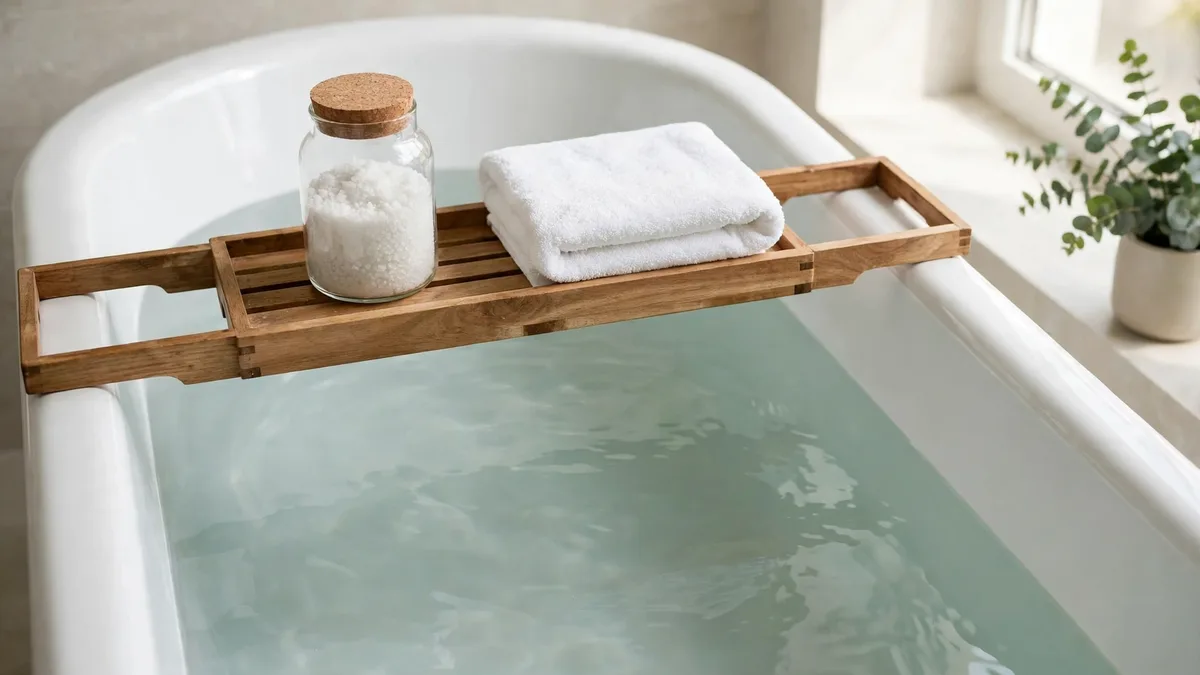
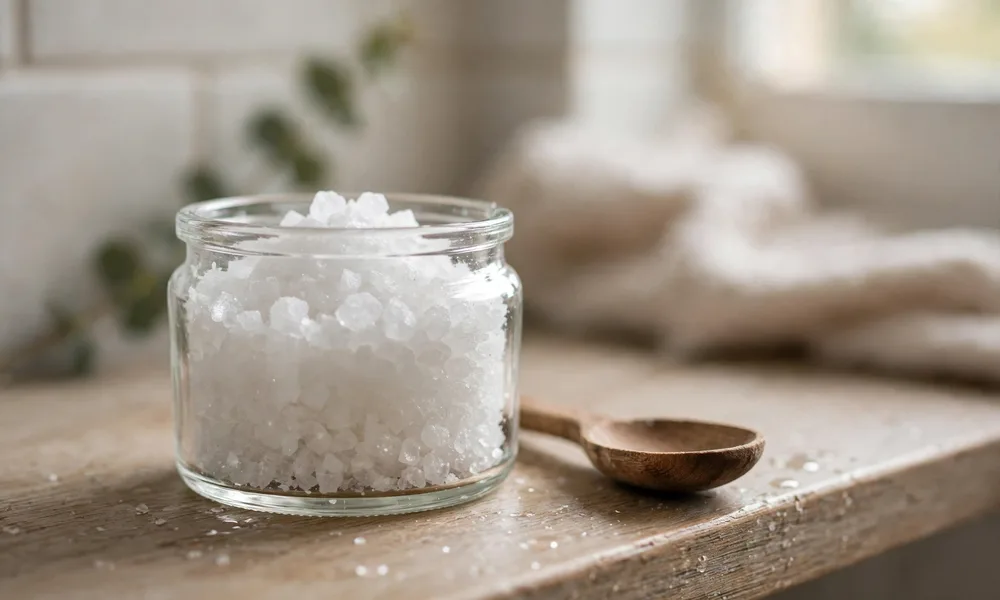
Bath salts are crystals that dissolve in warm bath water. Most are made from mineral salts, often magnesium sulphate, which is also called Epsom salt, or from plain sea salt. They usually come in a jar or a bag, and they look like coarse white crystals, sometimes with a little colour or scent added.
When the crystals dissolve, they make the water feel slightly softer and silkier on the skin. That is all they do, and that is enough. They are a small comfort for a warm soak.
Why a Simple Soak Helps
A simple soak helps because warm water is kind to a tired body. It warms the skin, loosens stiff muscles a little, and gives you twenty minutes of quiet with nothing to do. The bath salts add a small ritual to the soak: measuring them out, watching them dissolve, and settling in slowly.
The help is modest and honest. A soak will not fix a bad week, cure a skin problem, or replace a good night of sleep.
Choosing Bath Salts
Choose bath salts you can read. Look for a short ingredient list, with the salt itself first, and no long list of colours, glitter, or strong perfumes. Plain white or pale salts are the safest choice, especially if your skin is sensitive.
Avoid salts with bright dyes, heavy fragrance, or sharp pieces that do not dissolve well. If a jar lists ingredients you do not recognise, or promises to heal, detox, or cure anything, put it back.
How Much Salt and How Warm
A small handful is enough for a full bath: about two to three tablespoons, or a quarter of a cup at most. Stir the salts into the running water so they dissolve before you climb in, and do not add more halfway through.
The water should be warm, not hot: around 37 to 39 degrees, which feels comfortable when you test it with your hand. Hotter water can leave you feeling drained and dry out your skin. If the water feels too hot for your hand, it is too hot for a soak.
A Simple Soak, Step by Step
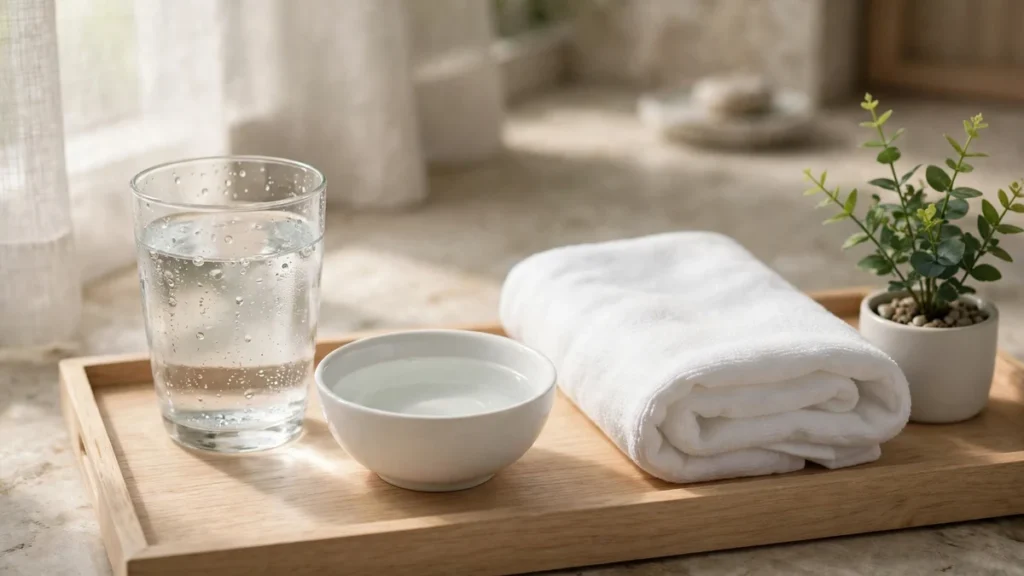
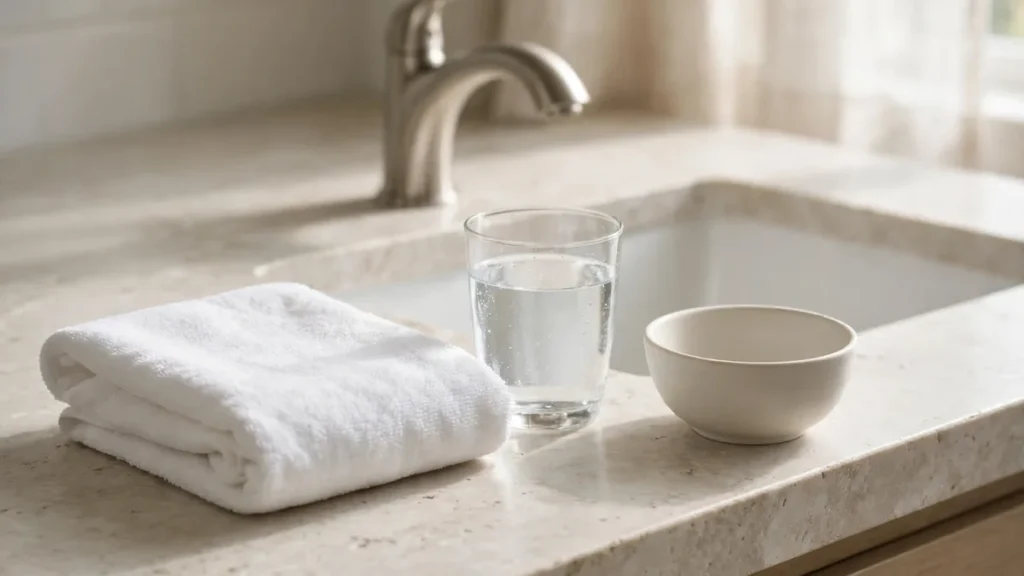
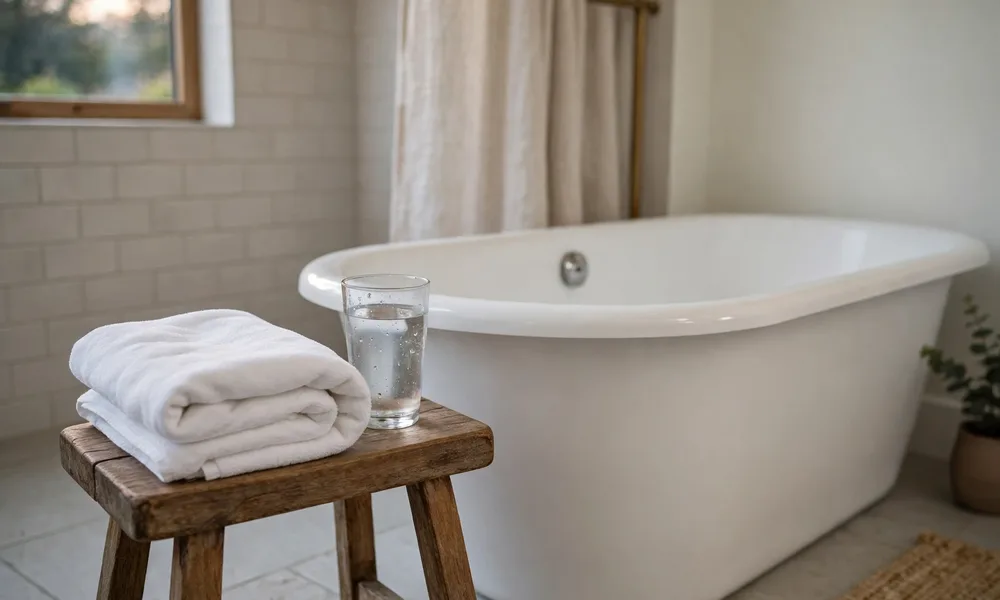
A simple soak takes no planning at all, and it starts before the water is run. Lay out a clean towel, a glass of drinking water, and the jar of bath salts, so the bath itself is free of small errands.
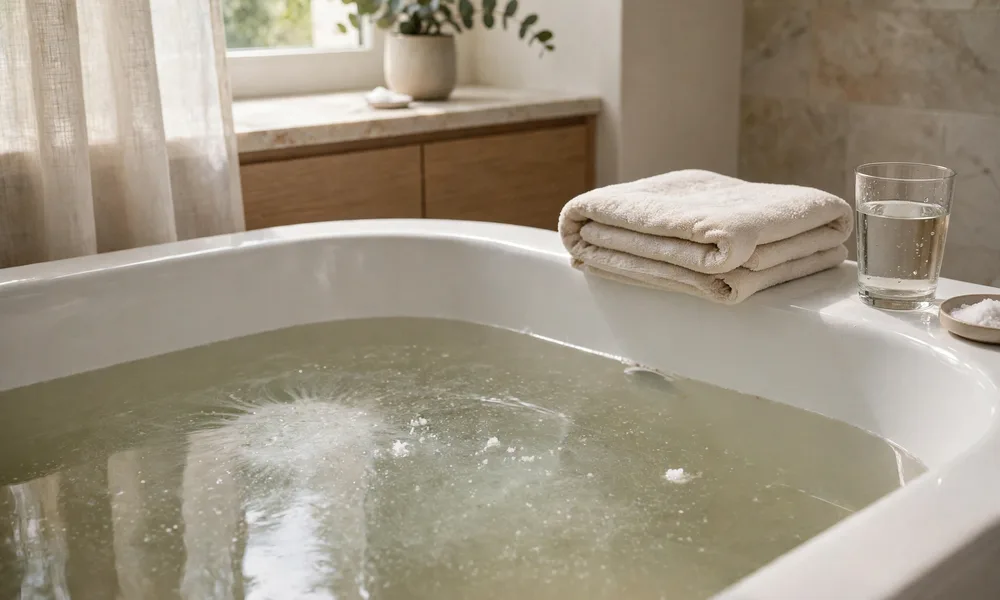
Run the bath warm, stir in a small handful of salts, and step in slowly. Settle in for about twenty minutes, no longer, and keep your shoulders and neck relaxed. Sip the drinking water while you soak, and climb out slowly when the time is done.
Water Before and After the Soak
Drink a glass of fresh water before you soak, and keep one beside the bath to sip while you soak.
After the soak, rinse with plain warm water. A quick rinse washes the salt off the skin, so it does not sit on the skin and dry it out. Then pat dry gently with a clean towel, and moisturise while the skin is still slightly damp. The same gentle idea runs through the gentle art of a slow Sunday bath, where warm water and slow aftercare close a quiet hour.
After the Soak: Skin Care
After a bath salts soak, the skin needs very little. A plain moisturiser, applied while the skin is still slightly damp, is enough. Choose one without strong fragrance, and use a small amount, rubbed in gently.
Watch how your skin feels in the hour after the soak. If it feels soft and calm, the salts suit you. If it feels tight, itchy, or dry, use less salt next time, or skip the salts and soak in plain warm water instead. Skin that is broken, irritated, or sunburnt should never be soaked at all.
Making the Bathroom Calm
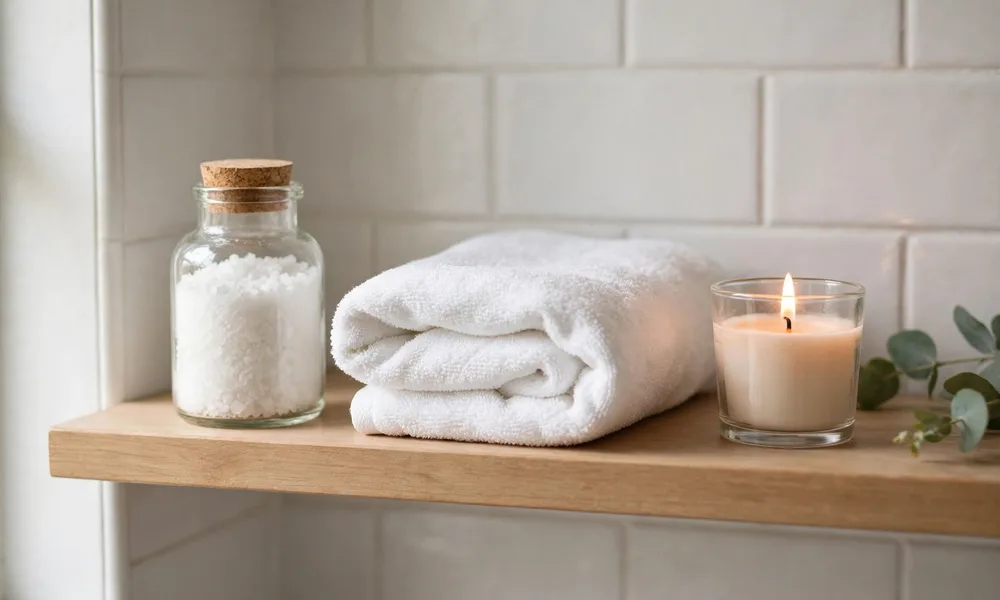
A calm bathroom makes a simple soak feel like a ritual. Tidy the surfaces before you run the bath, fold a clean towel where you can reach it, and keep the lights soft. A small candle in a glass holder is enough, and it should sit well away from the water and the towel.
Keep the phone outside the bathroom, and let the house know you need twenty quiet minutes. The soak is short, and the quiet is part of it.
Soaking Less Often, Gently
A bath salts soak is best as an occasional habit, not a daily one. Once or twice a week is plenty, and plain warm water is fine for the other baths. Soaking every day in salty water can dry the skin, and dry skin needs rest, not more soaking.
Listen to your skin across the week. If it feels dry or tight, take a break from the salts and soak in plain water, or skip the bath and wash quickly instead.
Storing Bath Salts Well
Store bath salts in a dry place, in a jar with a lid that closes well. Bath salts pull moisture from the air, and a damp jar turns the crystals into a hard lump that is difficult to use. Keep the jar away from the bath itself, where steam and splashes can reach it.
Use a dry spoon to measure the salts, and close the lid after each use. A small jar kept dry will last for months, and the salts will stay free-flowing and easy to measure. The same care for simple things runs through foot soaks with salt water, where a basin, warm water, and a spoonful of salt are the whole list.
What Bath Salts Will Not Do
Be honest about what bath salts can and cannot do. Bath salts will not cure a skin problem, draw out toxins, heal sore muscles, or fix poor sleep. They will not replace a doctor, a moisturiser, or a good night of rest. They are a comfort for a warm soak, and their value is the quiet twenty minutes around them.
If your skin has a real problem — a rash that will not settle, broken skin, or pain that keeps coming back — see a doctor instead of soaking.
| Simple soak | Water beside | Skin after |
|---|---|---|
| Warm water first | Sip water slowly | Rinse plain water |
| Small handful salt | Glass beside bath | Pat skin dry |
| Soak twenty minutes | Lukewarm water first | Moisturise lightly |
| Climb out slowly | Drink before soak | Rest after soak |
Your Simple Soak Checklist
- Choose plain bath salts with a short ingredient list and no bright dyes.
- Test the water with your hand first; warm, never hot, and around 37 to 39 degrees.
- Stir in a small handful of salts before you climb in, and soak for twenty minutes.
- Sip drinking water while you soak, and never soak on broken or irritated skin.
- Rinse with plain warm water afterwards, pat dry, and moisturise while skin is damp.
- Store the salts dry in a closed jar, and soak with salts only once or twice a week.
Frequently Asked Questions
How much bath salt should I use?
A small handful is enough for a full bath: about two to three tablespoons, or a quarter of a cup at most. Stir the salts into the running water so they dissolve before you climb in, and do not add more halfway through.
How warm should the water be?
The water should be warm, not hot: around 37 to 39 degrees, which feels comfortable when you test it with your hand. Hotter water can leave you feeling drained and dry out your skin.
Can I soak with bath salts every day?
It is better not to. Once or twice a week is plenty, and plain warm water is fine for the other baths. Soaking every day in salty water can dry the skin, and dry skin needs rest, not more soaking.
Should I rinse after a bath salts soak?
Yes. Rinse with plain warm water after the soak, so the salt does not sit on the skin and dry it out. Then pat dry gently and moisturise while the skin is still slightly damp, as in sea salt and rose water for a fresh skin reset.
Can I use bath salts on broken skin?
No. Never soak on broken, irritated, or sunburnt skin, and never use bath salts on a rash or a cut. If your skin has a real problem that will not settle, see a doctor instead of soaking.
Do bath salts help with sleep?
A warm soak can feel relaxing before bed, and a calm evening helps you wind down, but bath salts are not a treatment for sleep problems. If poor sleep keeps coming back, a doctor can help more than any bath.
The Bottom Line
Water and bath salts are a warm bath, a small handful of salt, and twenty quiet minutes.
Run the bath tonight, and let the evening end a little more gently.
A Note for Simple Soaks
Keep it warm, keep it simple, keep it gentle. The quiet hours can still belong to you.