Fresh breath is a small thing, noticed in small moments: a morning hello, a quiet word across a table, a laugh shared up close. When breath feels fresh, those moments feel easy. Most of the time, the answer is simple, and it starts with water.
Water for fresh breath means using plain water well through the day: a glass first thing in the morning, gentle brushing, a rinse after meals, and slow sips between meals. Water keeps the mouth moist and washes away food left behind. It is not a treatment, and it will not cure anything. It is simply a daily habit, done gently and often.
This guide explains how plain water helps breath stay fresh, how to build a simple morning and evening routine, and which habits dry the mouth. It is gentle general information only. If breath stays bad, or the mouth stays sore, please see a dentist or a doctor.
Key Takeaways
- Water for fresh breath means plain water, used gently through the day, with brushing and rinsing.
- A glass of water first thing in the morning wakes the mouth and washes the night away.
- Brush gently twice a day with a plain toothbrush, and rinse with water after meals.
- Slow sips of water through the day keep the mouth moist and feeling fresh.
- This is gentle general information only; lasting breath problems belong with a dentist or a doctor.
What Water for Fresh Breath Means
Water for fresh breath is a small idea with a plain name. It means keeping the mouth clean and moist with plain water, alongside gentle brushing, as part of an ordinary day. The mouth dries overnight, and food and drink leave traces behind during the day. Water helps simply: it rinses and moistens.
It is not a special rinse, a strong mouthwash, or a cure. It is a habit, like washing your hands: a few small steps, done every day.
Why Breath Changes Through the Day
Breath changes through the day because the mouth changes. Overnight, the mouth makes less saliva, and it dries out while you sleep. That is why morning breath feels stale. A glass of water first thing helps at once, because it moistens the mouth and washes the night away.
During the day, food, coffee, strong flavours and long hours without water all leave their traces. Talking for hours dries the mouth too, and a dry mouth feels stale faster than a moist one.
A Glass of Water First Thing
The first habit of the day is the simplest: a glass of fresh water, drunk slowly, before anything else. Keep a glass by the bed the night before, so it is there when you wake. Sit up, drink it slowly, and let the water wash the mouth and wake the body.
After the water, brush gently. A plain toothbrush, a small amount of plain toothpaste, and two minutes of slow, gentle brushing are enough. Brush the teeth and the tongue lightly. Rinse with fresh water, and the morning feels clean. Where water gym days fresh routine starts a gym day with a filled bottle the night before, this guide starts an ordinary day with a glass by the bed.
Brushing Gently, Twice a Day
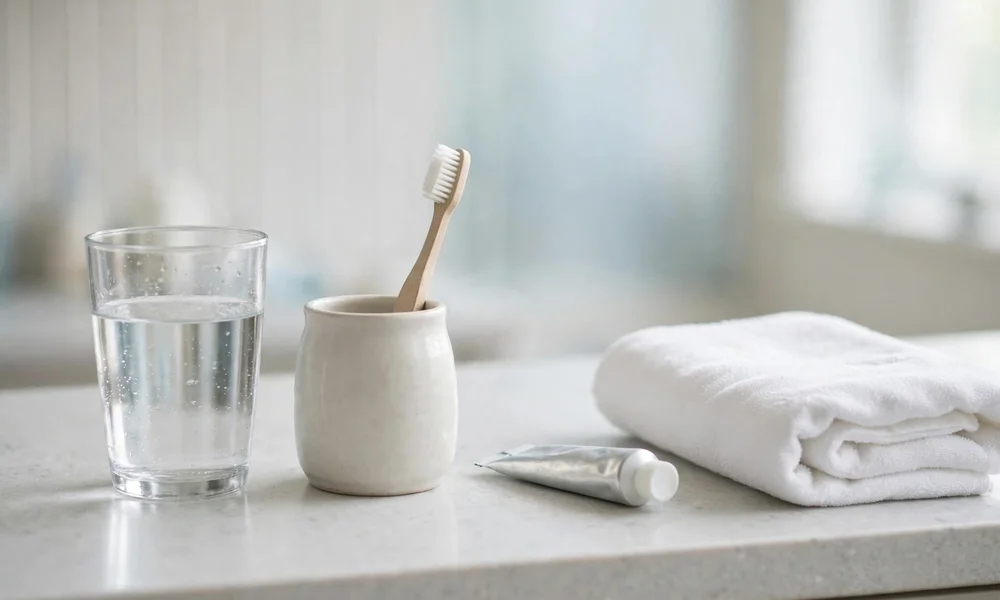
Brushing gently, twice a day, is the heart of fresh breath. Brush in the morning and again in the evening, before bed. Use a soft, plain toothbrush and a small amount of toothpaste. Brush slowly, with short, gentle strokes, and do not scrub hard.
Give the tongue a light, gentle brush too, because the tongue holds traces of food and drink. Rinse the brush well after use, and keep it standing upright in a clean holder so it dries between uses. Change the brush when the bristles bend or spread.
Rinsing After Meals and Drinks
Rinsing after meals is a small habit with a large effect. After eating, swish a mouthful of plain water around the mouth for a few seconds, then swallow it or spit it out. The water carries away food left between the teeth. Do the same after coffee, tea or sweet drinks.
This rinse is not a replacement for brushing. It is a bridge between brushings, a way to keep the mouth fresh through the middle of the day. A glass of water at the table makes it easy: finish the meal, take a sip, swish gently, and carry on.
Fresh Foods, Plain Water
Fresh foods help fresh breath in a quiet way. Crisp fruit, fresh mint leaves, and plain water all leave the mouth feeling clean. A few mint leaves in a glass of water, or a slice of lemon, can make a plain glass feel fresh.
Strong foods leave strong traces: garlic, onion, and heavily spiced meals can linger in the breath for hours. Water helps, but it cannot erase them at once. Eat them, enjoy them, and rinse well afterwards. Where water exercise fresh after workouts uses water to freshen up after a workout, this guide uses water and fresh foods to keep breath fresh through an ordinary day.
Habits That Dry the Mouth
Some habits dry the mouth, and a dry mouth feels stale sooner. Long hours without water are the most common cause: a busy morning with no glass in sight leaves the mouth dry by noon. Talking for hours and breathing through the mouth dry it too. Smoking dries the mouth and leaves a strong smell.
The answer is the same in each case: water, often, in slow sips. Keep a bottle or a glass within reach, and sip through the day. If the mouth stays dry no matter how much water you drink, or if it stays sore, please see a dentist or a doctor.
Keeping Water Close Through the Day
Keeping water close through the day is what makes the habit last. A bottle on the desk, a glass by the sink, a small bottle in the bag: when water is near, sipping is easy. When water is far away, the habit fades, and the mouth dries out.
Refill the bottle in the morning, and take it with you when you leave the house. Sip slowly, a little at a time, rather than drinking a large glass all at once. Slow sips keep the mouth moist through the hours.
A glass at the table helps too. When water sits beside the plate, rinsing after the meal is easy, and sipping between bites keeps the mouth comfortable while you eat. At work, a bottle on the desk does the same job: it is there for every pause, every phone call, and every long stretch of talking. The habit works because the water is always within reach, never in another room.
Water for Fresh Breath at a Glance
| Morning glass | Gentle brushing | Sip through day |
|---|---|---|
| Water first thing | Twice a day | Slow, small sips |
| Wash night away | Soft brush, light touch | Keep bottle close |
| Then brush gently | Rinse after meals | Rinse after coffee |
A Simple Day of Fresh Breath
A simple day of fresh breath follows the same small pattern from morning to night. Wake, drink a glass of water, brush gently. Eat breakfast, rinse with water. Sip through the morning, rinse after lunch, and sip again through the afternoon. Brush gently before bed.
Nothing in the day is large or difficult, and nothing needs special products. The pattern is water, brushing, rinsing, and sipping, repeated quietly.
When Breath Needs a Dentist
Water and gentle habits help ordinary fresh breath, but they are not a treatment. If breath stays bad for weeks, even with gentle brushing and plenty of water, please see a dentist. A dentist can check the teeth and gums and find the cause. The same is true if the gums bleed often, a tooth hurts, or the mouth stays sore.
Do not try to treat these problems with strong rinses, home remedies, or extra brushing. Where lip care water daily habit says sore or cracked lips belong with a professional, the same rule holds here: lasting breath or mouth problems belong with a dentist or a doctor.

Your Fresh Breath Checklist
- Drink a glass of fresh water slowly when you wake.
- Brush gently twice a day with a soft, plain toothbrush.
- Rinse with plain water after meals, coffee and sweet drinks.
- Sip water slowly through the day and keep a bottle close.
- Eat fresh foods, rinse after strong flavours, and avoid drying habits.
- See a dentist or a doctor if breath stays bad or the mouth stays sore.

Frequently Asked Questions
Does drinking water really help fresh breath?
Yes, plain water helps simply: it moistens a dry mouth, rinses away food left behind, and leaves the mouth feeling clean. It is a habit, not a cure, and it works best with gentle brushing twice a day and a rinse after meals.
How much water should I drink for fresh breath?
There is no single amount that suits everyone. Sip plain water slowly through the day, drink a glass first thing in the morning, and rinse after meals. Listen to thirst, keep water close, and sip little and often. If you feel unwell, see a doctor.
Is rinsing with water enough after meals?
Rinsing with plain water after meals is a good bridge between brushings: it carries away food and softens strong flavours. It is not a replacement for brushing twice a day.
Should I use a strong mouthwash instead of water?
A strong mouthwash is not needed for ordinary fresh breath, and it can dry the mouth. Plain water, gentle brushing and slow sips are enough for most days. Ask a dentist before using any strong product.
Why is my breath stale in the morning?
Morning breath feels stale because the mouth dries overnight while you sleep. A glass of water first thing, followed by gentle brushing, washes the night away.
When should I see a dentist about my breath?
See a dentist if breath stays bad for weeks despite gentle brushing and plenty of water, or if the gums bleed often, a tooth hurts, or the mouth stays sore.
The Bottom Line
Water for fresh breath is simple: a glass first thing, gentle brushing twice a day, a rinse after meals, and slow sips of plain water through the day. Keep the mouth moist and clean, and fresh breath follows.
A Note for Fresh Days
Keep it plain, keep it gentle, keep it often. A glass of water, used well, is enough.