Diwali turns an ordinary home into a bright one. Small clay lamps line the doorway, marigold flowers glow orange against the walls, and every room smells of flowers and clean linen. It is a festival of lights, and the light feels warmest when the house is fresh and tidy.
Fresh water belongs at the heart of that brightness. A jug filled in the morning, a glass drunk slowly before the day begins, a bowl of water with marigold petals by the door: these small habits keep the festival clear and unhurried, even when the day is full.
This guide gathers simple fresh rituals for Diwali at home: a calm morning, a tidy house, water at the table, lamps in the evening, and a quiet close to the day. It is gentle general information only, never medical advice and never religious instruction; real health problems belong with a doctor.
Key Takeaways
- Diwali is the festival of lights, with lamps, marigolds and a fresh home.
- A Diwali water ritual needs only a jug, a glass and a few quiet minutes.
- Diwali mornings begin quietly, with a glass of water and gentle light.
- A jug on the table keeps Diwali meals fresh and unhurried for everyone.
- This guide is general information only; see a doctor for health problems.
What a Diwali Water Ritual Is
A Diwali water ritual is a handful of easy habits for the festival days, built to keep the house feeling bright rather than busy. Think of it as four small pauses spread across the day: a quiet morning glass, water on the table at meals, a fresh break in the afternoon, and lamplight in the evening. Pick the pauses you like and skip the rest; even one will make the festival feel calmer.
Why Diwali Evenings Feel Fresh
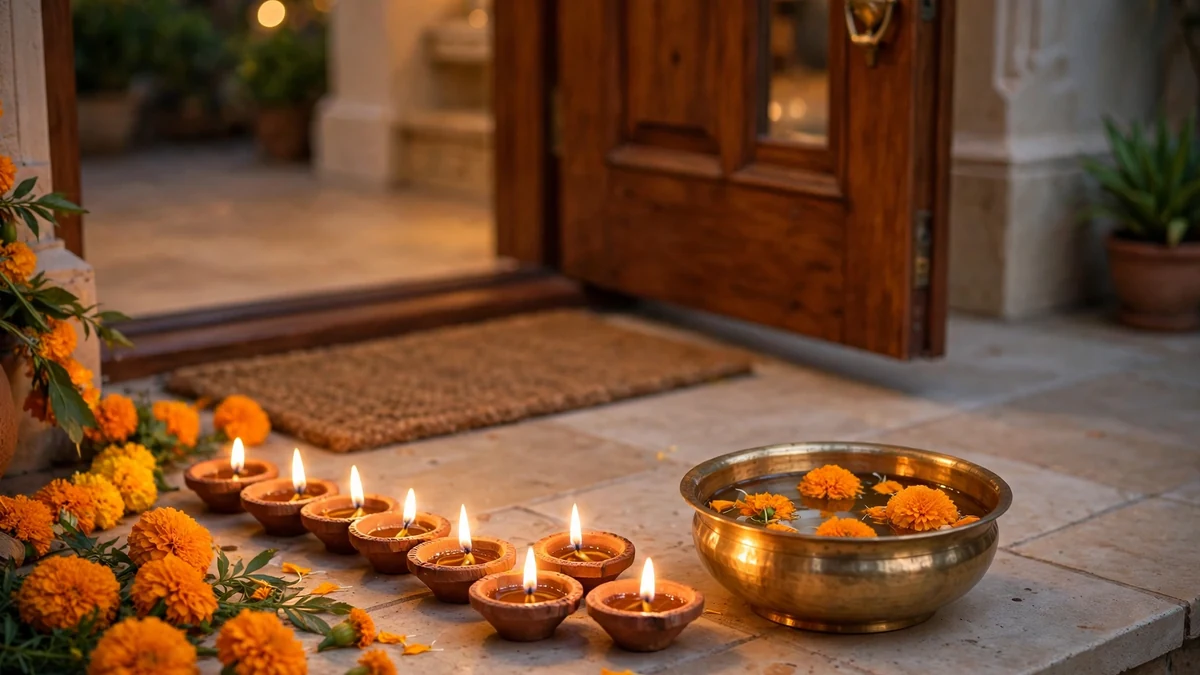
Diwali evenings feel fresh because the house is clean and the lamps are lit. The marigolds are out, the floors are swept, and the soft glow of the small clay lamps makes even a plain room look warm. A bowl of water with petals floating on it by the door catches the lamplight and throws it back in small ripples.
Water suits the evening because it cools the day down. After hours of cooking, cleaning and welcoming guests, a glass of fresh water and a slow wash feel like a small reset before the lamps are lit.
Setting Up Your Diwali Water Corner
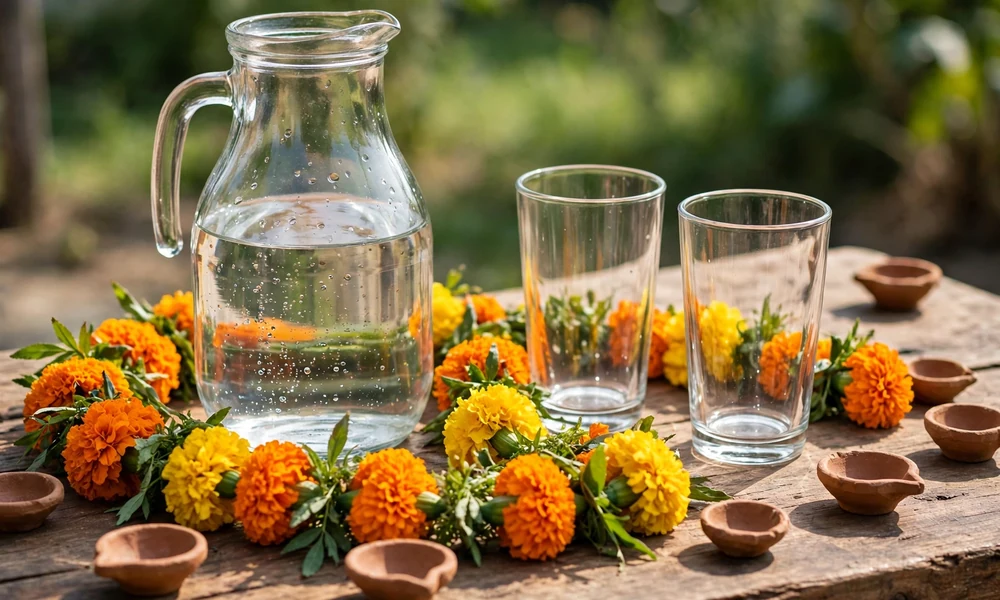
A Diwali water corner needs very little: a clear jug, two clean glasses, and a small bunch of marigolds on a wooden table. Put the jug where the morning sun can reach it, with the glasses beside it, ready to fill. A few unlit clay lamps nearby wait for the evening.
Keep it plain and within reach. Anything that needs more than a minute to arrange is too much fuss. Water, light, marigolds and one clean glass will do.
A Calm Diwali Morning
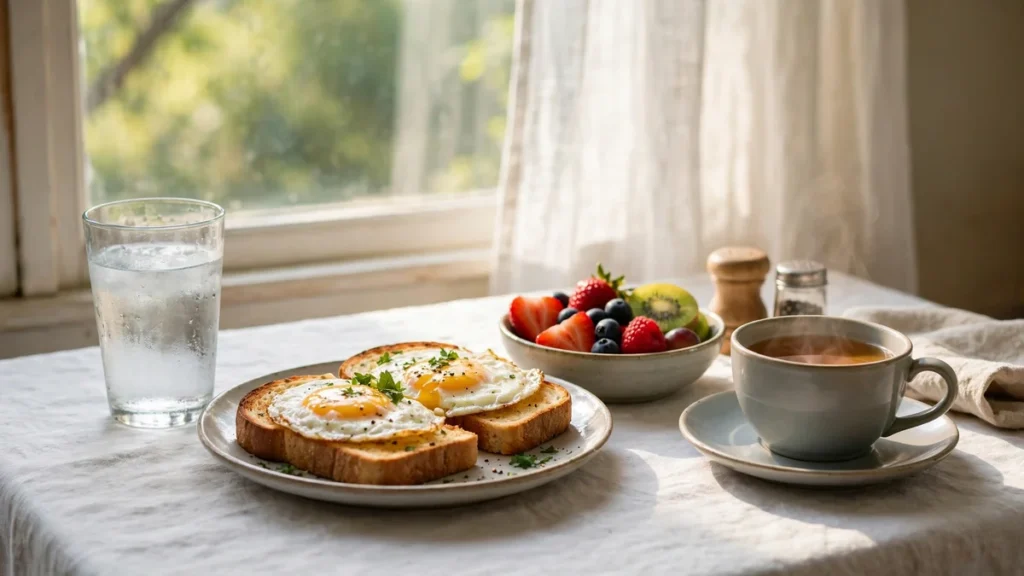
Set up the night before: fill the jug, put the glasses beside it, and place the marigolds on the table. In the morning, pour a glass and sip it slowly while the house is still asleep. Then draw the curtains back and let the morning sun spill in. Splash your face with lukewarm water, dry it with a clean towel, and pour a second glass before breakfast. The morning is the whole festival in small: water, light, and a few quiet minutes before the day begins.
On a busy festival day, those few slow minutes matter even more. A calm glass of water at the start can carry you through hours of cooking, guests and lamps.

Water at the Diwali Table
Water at the Diwali table keeps a shared meal fresh and unhurried. Put a clear jug of fresh water at the centre of the table, a glass beside every plate, and let each person pour for themselves. A few marigolds in a small bowl are decoration enough.
Sip water through the meal instead of saving it all for the end. With the jug already on the table, nobody needs to leave the meal to fetch a drink, so everyone stays together, unhurried.
When the meal is over, clear the glasses, wash them, and set the jug out again for the evening.
Diwali at a Glance
| Diwali lamps | Fresh water | Tidy home |
|---|---|---|
| Clay lamps, marigolds | Jug, glass, bowl | Sweep, wash, rest |
| Light at evening | Sip, wash, pause | Clean, bright, calm |
| Fire-safe lamps | Fresh, clear, cool | Simple, fresh, home |
Lamps, Light and Water
Lamps are the heart of Diwali, and they deserve care. Set small clay lamps on a flat, steady surface, away from curtains, paper, dry flowers and anything that can catch fire. Never leave a lit lamp alone in a room, and never let children play near a flame.
A bowl of water with marigold petals floating on it makes a lovely companion to the lamps, and it is safe: water and flame sit side by side, never touching. Put the bowl on a steady table, a little away from the lamps, where it can catch the light without being knocked over.
When the evening ends, blow the lamps out gently, check that every flame is out, and put the lamps away once they are cool. A festival that ends safely is a festival remembered fondly.
A Fresh Home for Diwali
A fresh home is the quiet half of Diwali. Before the festival, sweep the floors, wipe the tables, wash the curtains if you can, and put clean linen on the beds. A house that is clean smells fresh, and a fresh house makes the lamps look brighter.
Water helps with every part of it. A bucket of fresh water for mopping, a damp cloth for the shelves, a splash of water on the doorstep before the lamps go out: these are small acts, but they add up to a house that feels new. Change the water in the bowl by the door each morning, and swap any tired marigolds for fresh ones, so the entrance always looks newly dressed.
Keep the cleaning simple and spread it over a few days. A little each day beats a long, tiring rush.
Diwali and the Other Festival Days
Diwali is not the only festival with water rituals here, and the differences are worth knowing. The holidays guide is a travel ritual for days away from home, with a bottle packed in a bag and a first morning in a new place. Water for holidays keeps a small water kit for journeys; this guide keeps water, lamps and marigolds at home for Diwali.
The christmas guide is a winter home ritual, with a pine sprig, a shared meal and a quiet evening by candlelight. Water for Christmas keeps a jug and a pine sprig for a cold season; this guide keeps a jug and marigolds for a festival of lights.
The valentines guide is a February day for two people to share, with two glasses of water and a walk together. Water for Valentines Day keeps a shared morning for a couple; this guide keeps a whole household ritual for Diwali.
Its Batch 63 siblings differ too. Ramadan is a month of fasting, with water at dawn and at the evening meal. Eid is a feast day of shared meals and visits. Diwali is neither: a festival of lamps, marigolds and fresh home rituals.

A Quiet Diwali Evening
A quiet Diwali evening closes the day gently. Light the lamps once the sun has set, set the bowl of water with petals by the door, and sit for a while in the lamplight. Drink a glass of fresh water slowly, and wash your hands and face before bed.
Put the house to rest in small steps: blow out the lamps, check every flame, wash the glasses, and lay out clean towels for the morning. The evening is water, light, and a few quiet minutes before sleep. Keep a glass of water on the bedside table, so the morning starts fresh without a trip to the kitchen.
Your Diwali Checklist
- Fill a clear jug with fresh water and set out clean glasses.
- Drink a glass of fresh water slowly when the Diwali morning begins.
- Set a bowl of water with marigold petals by the door.
- Place lit lamps on steady surfaces, away from curtains and paper.
- Wash your hands and face with lukewarm water before bed.
- Remember this guide is general information only; see a doctor for health problems.

Frequently Asked Questions
What is a Diwali water ritual?
A Diwali water ritual is a short set of habits for the festival of lights: a glass of water in the morning, a jug at the table, a bowl of water with marigold petals by the door, and a slow wash before bed.
Is Diwali the same as Christmas?
No. Christmas is a winter festival with a pine sprig, a shared meal and a quiet evening. Diwali is a festival of lights, with small clay lamps, marigold flowers and a fresh, tidy home.
Are the lamps safe with water nearby?
Yes, if you keep them apart. Set lamps on a flat, steady surface away from curtains and paper, and put the bowl of water a little away from the flames, where it can catch the light without being knocked over.
Can I keep just one ritual?
Yes. Keep the morning glass, or the jug at the table, or the bowl by the door. One small habit is enough, and the festival will still feel simpler for it.
Is this guide religious instruction?
No. This guide is gentle general information about fresh water, lamps and a tidy home. It gives no religious instruction, and real health problems belong with a doctor.
What should I do at the end of the evening?
Blow the lamps out gently, check that every flame is out, wash the glasses, and lay out clean towels for the morning. A quiet close keeps the next day fresh.
The Bottom Line
Water and Diwali go together simply: lamps at the door, marigolds on the table, and fresh water in a jug, a glass and a bowl. Keep the lamps safe, the water fresh, and the house tidy.
A Note for Diwali
Let the lamps stay bright, the water stay fresh, and the home stay tidy. A few small lamps, one jug of water, and a few quiet minutes are plenty for Diwali.