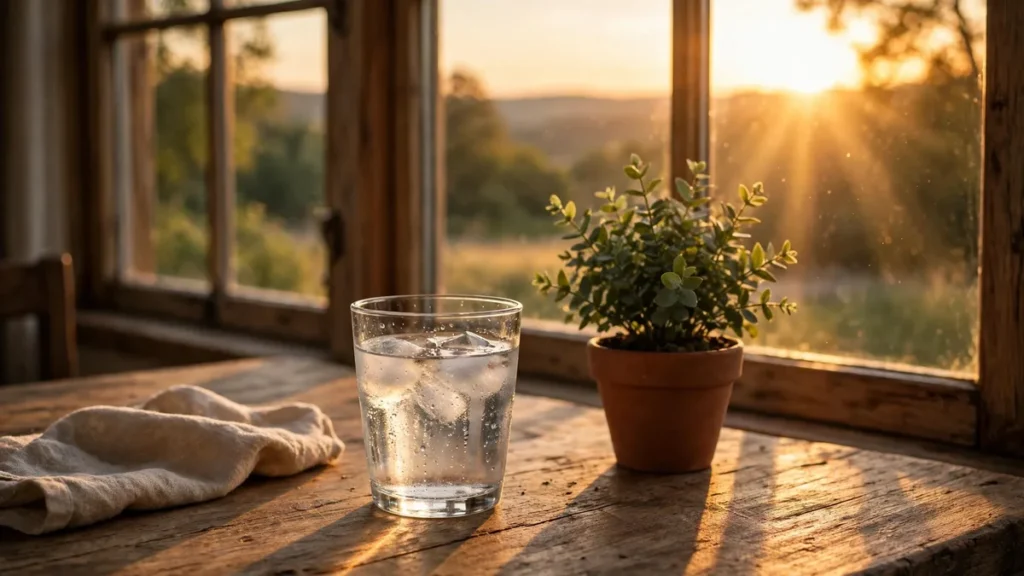
Some evenings arrive with a colour of their own. The sky turns a deep violet as the light fades, the room grows quiet, and the day finally loosens its hold. It is a short hour, easy to miss, and it asks for very little: a lamp turned low, a glass of water, and something beautiful to look at while the evening settles.
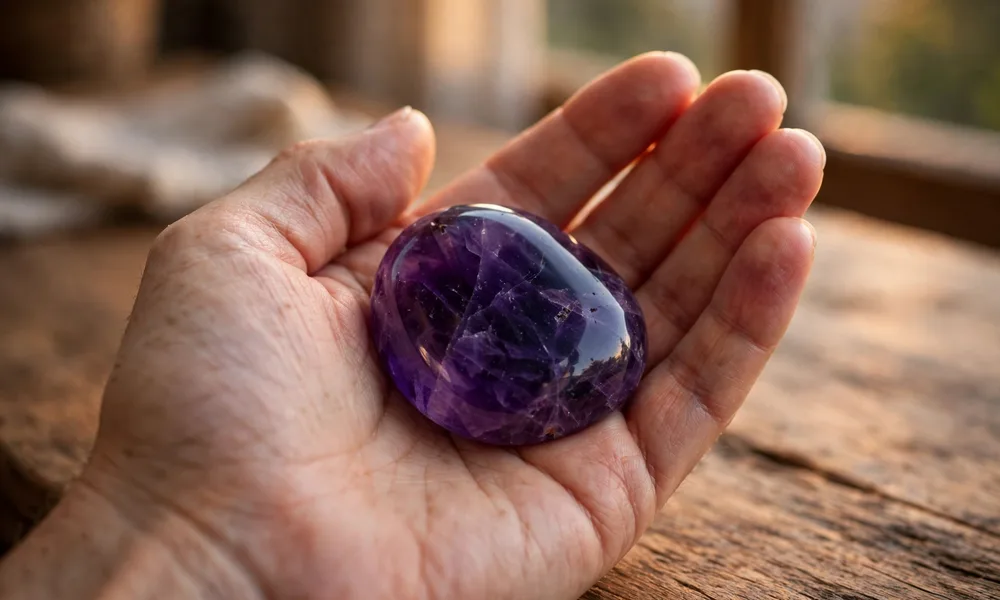
Uruguay amethyst is the stone that matches that hour. It is a deep violet quartz from Uruguay, where dark geodes hold crystals of a rich, saturated purple, darker and deeper than most amethyst. Hold a piece in lamplight and the colour glows from within, the way dusk glows through a window.
This guide explains what Uruguay amethyst is, where its deep violet colour comes from, how to choose a piece, how to keep it safely beside water, and how to build a short evening-calm habit around it. The stone is for display and handling only, never a treatment, and it will not calm you or help you sleep. The quiet evening is the part that helps, and the stone simply keeps it company.
Key Takeaways
- Uruguay amethyst is a deep violet quartz from dark geodes in Uruguay, darker than most amethyst.
- Its deep violet colour suits quiet evenings, low lamplight and slow hours.
- Uruguay amethyst is for display and handling only; it will not calm you or help you sleep.
- The stone stays beside drinking water, never in it.
- An evening-calm habit needs very little: a lamp, a glass of water, one stone, and ten quiet minutes.
What Uruguay Amethyst Is
Uruguay amethyst is a variety of quartz, the same mineral family as all amethyst, but it comes from Uruguay, where geodes grow in dark volcanic rock and hold crystals of an unusually deep, saturated violet. The best pieces are a rich grape purple, sometimes almost black at the base. It is usually sold as polished tumbled pieces, small palm stones, or as clusters and geode halves with pointed crystals that catch the light.
Its colour comes from iron inside the quartz, coloured by natural radiation over a very long time. Hold a Uruguay piece beside a pale amethyst and the difference is plain at a glance: one is a soft lilac, the other is a deep, dark violet. Where amethyst water rituals for a calmer evening keeps a general amethyst beside a glass of water, this guide keeps a specifically Uruguayan stone, chosen for its darkness, beside the same glass.
Why Deep Violet Suits the Evening
Deep violet suits the evening because it is the colour of the hour itself. Mornings belong to pale colours and bright light, but evenings belong to dark, quiet tones. A deep violet stone does not compete with lamplight; it deepens it. It sits still on the table while the day winds down.
Deep violet also suits the evening because it asks nothing of you. A bright stone would wake the eye up, but a dark violet one lets it rest. When the stone is the darkest thing on the table, the room feels settled, and the evening can begin without hurry.
The Safety Rule First: Beside Water Only
The stone stays beside water only, never inside drinking water, never soaked, and never used in elixirs of any kind. If a piece ever falls into a glass by accident, throw the water away and wash the glass and your hands.
Stones that must never touch water at all are worth naming here. Malachite must never go in water or elixirs, apatite and lepidolite must never go in drinking water, lepidolite contains lithium, pyrite must never go in drinking water, angelite must never be soaked, and amber must never go in drinking water or soaks. Hematite must never go in drinking water either. Uruguay amethyst itself is hard quartz, but the rule for this journal never changes: no stone belongs in a drink, and the stone stays dry beside the glass.
Choosing a Uruguay Amethyst Stone
Choose a stone you can see clearly before you buy it, in warm indoor light if you can, because that is the light it will live in. Look for a deep, even violet, a smooth polish with no sharp edges on a tumbled piece, and a size that fits in your palm. A walnut-sized piece is ideal.
Be wary of stones that look too perfect, with a flat, painted-on purple colour or a plastic shine. Real quartz feels cool, has a little weight, and shows small natural marks inside when held to the light. Ask the seller plainly where the stone comes from, and buy from one who can tell you it is natural Uruguayan amethyst, never from one who promises it will change your sleep or your mood.
A Quiet Evening with Uruguay Amethyst
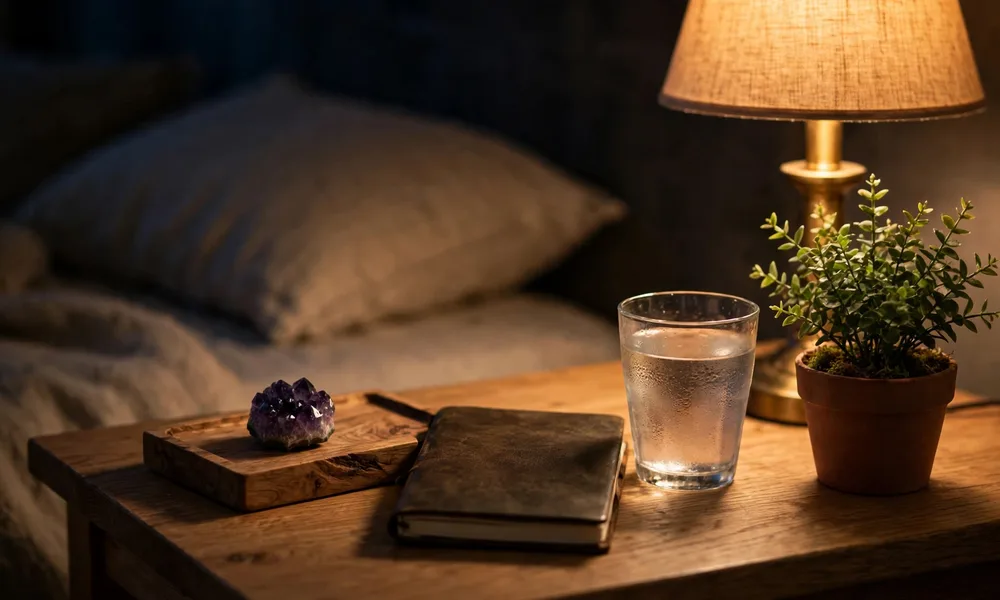
A quiet evening takes only a few minutes to set up, and it starts before the evening does: leave the bedside table clear, the book closed, and the stone on its dish where the lamplight will find it. When the evening comes, pour a glass of fresh water, sit down, and take ten unhurried minutes for yourself.
Drink the water slowly, turn a few pages of the book, and let the deep violet catch the light. Do the same few things in the same order each night, and the stone will mark the start of the evening.
Uruguay Amethyst in Your Palm
Holding the stone is the quietest part of the routine. Pick up the Uruguay amethyst, close your fingers around it, and feel its cool, smooth weight. Turn it once in the lamplight and watch the violet deepen and lighten as it moves. Set it back down on its dish beside the glass.
Hold it while you look out at the darkening sky, and let the deep violet remind you that the day is done.

Deep Violet and a Calm Evening Routine
A calm evening routine stays short on purpose. One glass of water, one book, one stone, and a lamp turned low: that is the whole set. Wash your face, change into something comfortable, and sit down before the evening fills with screens and chores. Where smoky amethyst deep calm for slow evenings keeps a dusky, smoky purple beside a slow evening, Uruguay amethyst keeps a darker, clearer violet beside the same kind of hour.
Keep the shelf simple too. A geode half belongs on a shelf where it can be seen, a tumbled piece belongs on the bedside table, and neither one needs company. If the evening feels restless night after night, the answer is rest and, if it does not settle, a doctor, not a new stone.
Uruguay Amethyst at a Glance
| Deep violet | Evening calm | Stone care |
|---|---|---|
| Dark grape colour | Low lamplight only | Wipe stone dry |
| Cool smooth touch | Glass beside stone | Dish beside glass |
| Fits in palm | Ten quiet minutes | Never soak stone |
| Uruguayan geodes | Same time nightly | Shade from harsh sun |
Caring for a Deep Violet Stone
Uruguay amethyst is hard quartz, and its care is simple. Clean it with a dry, soft cloth, or with a cloth barely dampened with plain water, then dry it at once. Never soak it, and never use vinegar, lemon juice or harsh chemicals. Quartz can chip if dropped, so keep it away from harder stones and metal edges. Keep it out of strong sunlight, which can fade its colour.

What It Will Not Do
Be honest about what a stone can and cannot do. Uruguay amethyst will not calm you, heal you, or help you sleep. It will not fix a restless evening or a broken night. It is a beautiful stone, and a stone is all it is. The quiet routine is the part that helps: ten slow minutes can make an evening feel finished. The stone keeps you company while you take them.
No stone or ritual will replace rest, sleep and medical advice. If sleep stays broken week after week, or worry will not lift, the answer is a doctor, not a new stone.
Your Uruguay Amethyst Evening Checklist
- Choose a palm-sized Uruguay amethyst with a deep, even violet colour.
- Set a glass of fresh water beside the stone each evening, never in it.
- Keep the lamp low, the book closed nearby, and the table clear.
- Sit for ten quiet minutes at the same time each night.
- Carry the stone in its own soft pouch and keep it away from keys and hard stones.
- Clean the stone with a dry soft cloth, never soak it, and store it dry on its tray.
Frequently Asked Questions
What is Uruguay amethyst?
Uruguay amethyst is a deep violet variety of quartz from dark geodes in Uruguay. It is kept as a display and handling stone, never as a treatment.
How is Uruguay amethyst different from other amethyst?
Uruguay amethyst is darker and more saturated than most amethyst, a deep grape violet rather than a pale lilac. Its colour comes from iron in the quartz, formed in Uruguayan geodes.
Can I put Uruguay amethyst in my drinking water?
No. Keep the stone beside the glass, never in it. No stone belongs in a drink, and the stone stays dry.
Will Uruguay amethyst help me sleep?
No. It will not calm you, heal you, or help you sleep. A quiet evening routine may help you wind down, and the stone simply keeps it company.
How do I clean Uruguay amethyst safely?
Wipe it with a dry, soft cloth, then dry it at once. Never soak it or use vinegar, lemon juice or harsh chemicals, and keep it out of strong sunlight.
How is Uruguay amethyst different from chevron amethyst?
Chevron amethyst is banded purple and white quartz with bold white V-shaped stripes, while Uruguay amethyst is a single deep violet with no white bands. Where chevron amethyst banded calm for study days keeps a striped stone on a study desk, this stone keeps a dark violet geode on the bedside table.
The Bottom Line
Uruguay amethyst is a deep violet stone, a glass of water beside it, and an evening that moves slowly. Set your stone out tonight, and let the dusk do the rest.
A Note for Quiet Evenings
Keep it violet, keep it dry, keep it quiet. The deep hours belong to you.