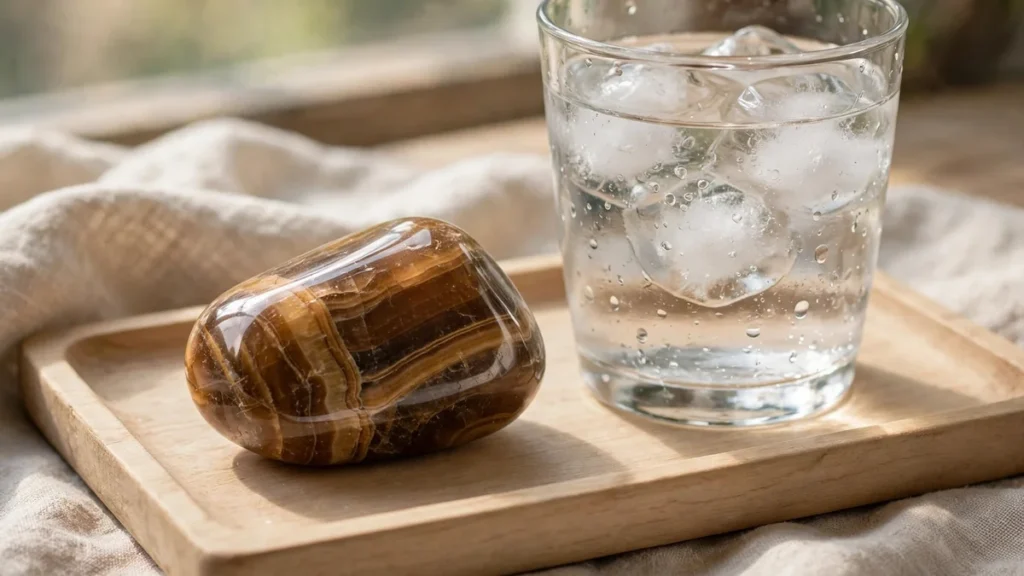
Some days arrive bright from the very first hour. The sun is up early, the light comes in warm through the window, and the whole day feels open and ready. On a day like that, a dark stone can feel too heavy, and a pale white stone too faint.
Libyan desert glass is a stone for bright days like these: a warm gold natural glass, pale and glowing, the colour of sunlight on desert sand.
This guide is a spotlight on Libyan desert glass: what the glass is, how it formed in the desert, how to choose a piece, how to display it on a desk, and how to enjoy it through a bright day. The glass is for display and handling only, never a treatment, and it will not heal anything.
Key Takeaways
- Libyan desert glass is a warm gold natural glass from the desert.
- It formed when a meteorite impact melted desert sand long ago.
- Its warm gold colour suits bright days, strong light and open hours.
- Libyan desert glass differs from obsidian, tektite and moldavite.
- The glass is for display and handling only; it will not heal anything.
What Libyan Desert Glass Is
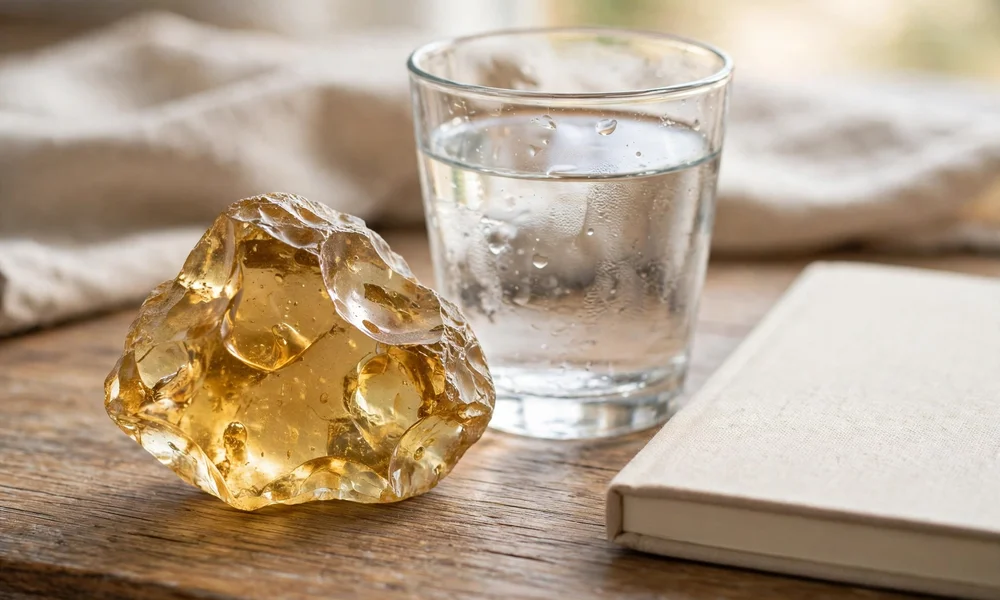
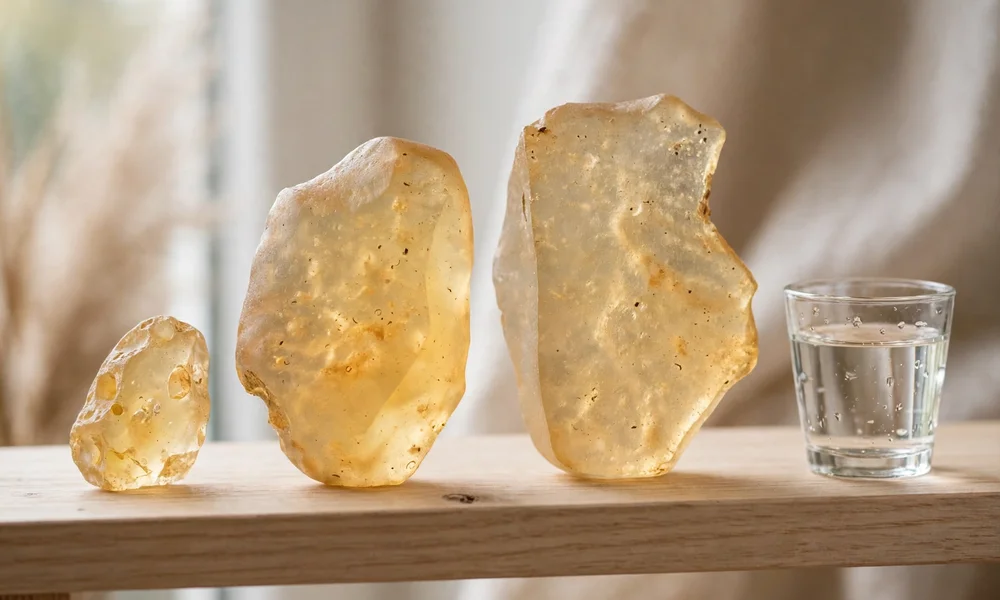
Libyan desert glass is a natural glass, not a crystal grown slowly underground. It is found in the sand of the Libyan Desert, in the wide empty stretch between Libya and Egypt, where pieces of warm gold glass lie scattered across the dunes. Each piece is smooth and glassy, pale gold to honey yellow, with a soft glow.
The glass feels warm and smooth in the hand, and it is often sold as a small tumbled piece, a palm stone, or a rough natural chunk with softly rounded edges. It formed in a single sudden moment, about twenty-nine million years ago, when a meteorite struck the desert: the heat melted the sand in an instant, and the melted sand cooled into glass. No volcano was involved, and no slow crystal growth either — the glass is the desert itself, changed by heat from the sky in a moment.
Why Warm Gold Suits Bright Days
Warm gold suits bright days because it is the colour of sunlight itself. Deep red can feel too loud on a bright morning, and cool blue can feel too quiet in strong light, but warm gold sits glowing between the two, and its honey colour gives the room a warm lift without any glare.
The warm colour gives the room a sunny, open feeling, like a window opened onto a bright desert morning.
Choosing a Libyan Desert Glass Piece
Choosing a Libyan desert glass piece is mostly a matter of looking closely and trusting your eye. A good piece shows a clear, even warm gold with a bright glassy shine, not a dull cloudy yellow with no light at all. The surface should be smooth with no sharp chips, and the colour should stay bright even in soft light.
A palm-sized tumbled piece is enough for a bright-day desk, and a small rough chunk looks lovely on a shelf. If a piece feels pleasant in your hand, it is the right one. Buy from a trusted seller, never one who promises it will change your health.

A Bright Day with Libyan Desert Glass
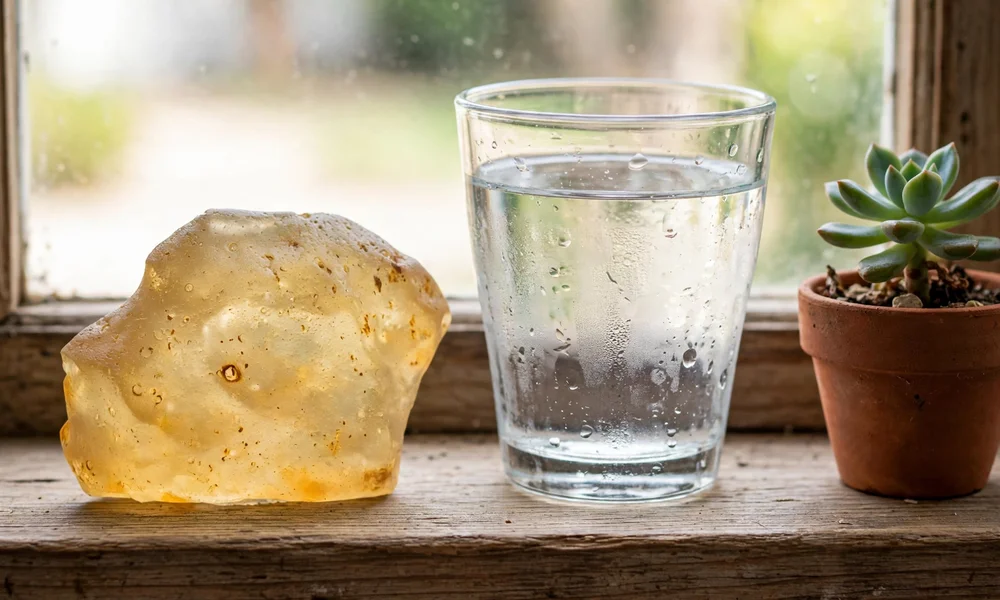
A bright day with Libyan desert glass takes only a few minutes to begin: place the glass on its tray, fill a clear glass with fresh water, and set it beside the piece. Sit down, drink the water slowly, in small sips, and then pick up the glass and look at its warm gold surface for a few breaths.
Put the piece back, and let the day carry on brightly. The day is water, bright light, one warm gold glass, and a short pause before the hours begin.
Libyan Desert Glass Beside Water
Water belongs beside the glass, never around it: set a clear glass of fresh drinking water next to the piece on the tray. They share a tray, not a glass. Never place the glass inside drinking water, and never soak it, because a stone has no place in a drink.
If the glass spills, lift the piece away and dry it at once with a soft cloth.
Keeping Libyan Desert Glass Safe
Libyan desert glass needs only gentle care: the glass is for display and handling only. Never put it in drinking water, never soak it, and never use it in a bath or a foot soak. Wash your hands after handling the piece, and keep it away from small children and pets.
Dust the piece weekly with a soft, dry cloth, never soap or polish, and never scrub it.
Libyan Desert Glass at a Glance
| Warm gold glass | Bright days | Display only |
|---|---|---|
| Soft golden glow | Bright daylight | Never in water |
| Smooth glassy shine | Desk and tray | Dust with dry cloth |
| Warm in hand | Water, light, pause | Wash hands after |
Libyan Desert Glass and Gold Sheen Obsidian
Libyan desert glass and gold sheen obsidian share a warm golden shine, yet they come from different worlds. Gold sheen obsidian is black volcanic glass, born in a volcano, with a warm golden sheen that moves across its dark surface as you turn it, and it suits bold days.
Libyan desert glass is warm gold all the way through, pale and glowing, born when a meteorite melted desert sand, and it suits bright days in strong daylight rather than bold days. Where gold sheen obsidian warm shine for bold days keeps a black volcanic glass with a golden sheen for bold days, this guide keeps a warm gold desert glass for bright days. One is dark glass with gold light; the other is gold glass through and through.
Libyan Desert Glass and Silver Sheen Obsidian
Libyan desert glass and silver sheen obsidian could hardly look further apart, though both are natural glass. Silver sheen obsidian is black volcanic glass with a soft silver-grey sheen, gentle and cool, like moonlight on still water, and it suits quiet days in soft light.
Libyan desert glass is warm gold, pale and glowing, the colour of sunlight on desert sand, and it suits bright days in strong daylight rather than quiet days. Where silver sheen obsidian soft shine for quiet days keeps a black volcanic glass with a silver sheen for quiet days, this guide keeps a warm gold desert glass for bright days.
Libyan Desert Glass and Mahogany and Rainbow Obsidian
Libyan desert glass differs from mahogany obsidian and rainbow obsidian in colour, in birth and in mood. Mahogany obsidian is warm brown volcanic glass, dark brown all through with soft reddish-brown swirls, like polished wood caught in stone, and it suits steady days. Rainbow obsidian is dark black volcanic glass with a rainbow sheen, bold and bright against the black, and it suits bold days.
Libyan desert glass is neither brown nor black, and it holds no rainbow flash: it is one warm gold, pale and glowing, born in the desert sand from a meteorite impact, for bright days. Black obsidian, smooth black volcanic glass for busy weeks, and snowflake obsidian, black volcanic glass with soft white spots for new routines, are volcanic glass too, and just as different.
Libyan Desert Glass and Tektite and Moldavite
Libyan desert glass, tektite and moldavite are all natural glass, yet each one tells a different story. Tektite is dark natural glass, black or deep brown, smooth and often pitted, like a piece of the night sky that fell to earth, and it suits bold evenings. Moldavite is green natural glass, rough and pitted, the colour of deep forest leaves after rain, and it suits new chapters.
Libyan desert glass is warm gold, smooth and glowing, born in the desert sand, and it suits bright days. Where tektite dark glass for bold evenings keeps a dark glass for bold evenings, this guide keeps a warm gold glass for bright days. One is dark and evening; one is green and new; this one is gold and bright.
Stones That Must Never Touch Water
Not every stone is safe beside water, and some must never touch water at all. Malachite must never go in water or in elixirs, because it can release harmful substances. Hematite must never go in drinking water, and apatite, lepidolite — which contains lithium — pyrite, angelite and amber must never go in drinking water or soaks either.
The rule stays the same for Libyan desert glass: display it on a tray, and never let the two meet.
Your Bright Days Checklist
- Set the glass on a tray beside a clear glass of water.
- Drink a glass of fresh water slowly while the day begins.
- Hold the piece for a few breaths and look at its warm gold colour.
- Keep the glass beside water, never inside drinking water or soaks.
- Dust the piece dry weekly, and wash your hands after handling it.
- Remember the glass will not heal anything; see a doctor for health problems.
Frequently Asked Questions
What is Libyan desert glass?
Libyan desert glass is a warm gold natural glass found in the sand of the Libyan Desert, formed when a meteorite impact melted desert sand long ago.
Is Libyan desert glass safe to handle?
Yes, Libyan desert glass is safe to hold and display if you wash your hands with soap and water after handling it. It is for display only, never in drinking water, never in soaks.
Can I put Libyan desert glass in drinking water?
No, never. The glass belongs beside a glass of water, not inside it. Keep a glass of water beside the piece on the tray, and never soak the piece.
Will Libyan desert glass heal anything?
No. Libyan desert glass will not heal anything. It is a beautiful object for display and handling, and the bright feeling comes from the pause, the water and the sunny day.
How is Libyan desert glass different from obsidian?
Obsidian is black volcanic glass, born in a volcano, while Libyan desert glass is warm gold glass born when a meteorite melted desert sand. One is volcanic; the other is desert glass.
Where should I keep my Libyan desert glass?
Keep it on a small tray or desk in a dry room, with a clear glass of water beside it — a desk, a shelf or a windowsill works well.
The Bottom Line
Libyan desert glass brings warm gold to bright days: a smooth, glowing desert glass, held beside a glass of fresh water. Keep it beside water, never in it, and dust it dry.
A Note for Bright Days
Keep it warm, keep it dry, keep it bright. A small gold glass, a glass of water, and a few slow minutes can carry a day well.