Some days feel thin and hurried from the very first hour. The phone lights up before breakfast, the list grows longer by noon, and the whole day slips past without ever touching the ground. A grounded day is the opposite: it moves at walking pace, with both feet on the floor, a glass of water within reach, and one small, steady thing to look at.
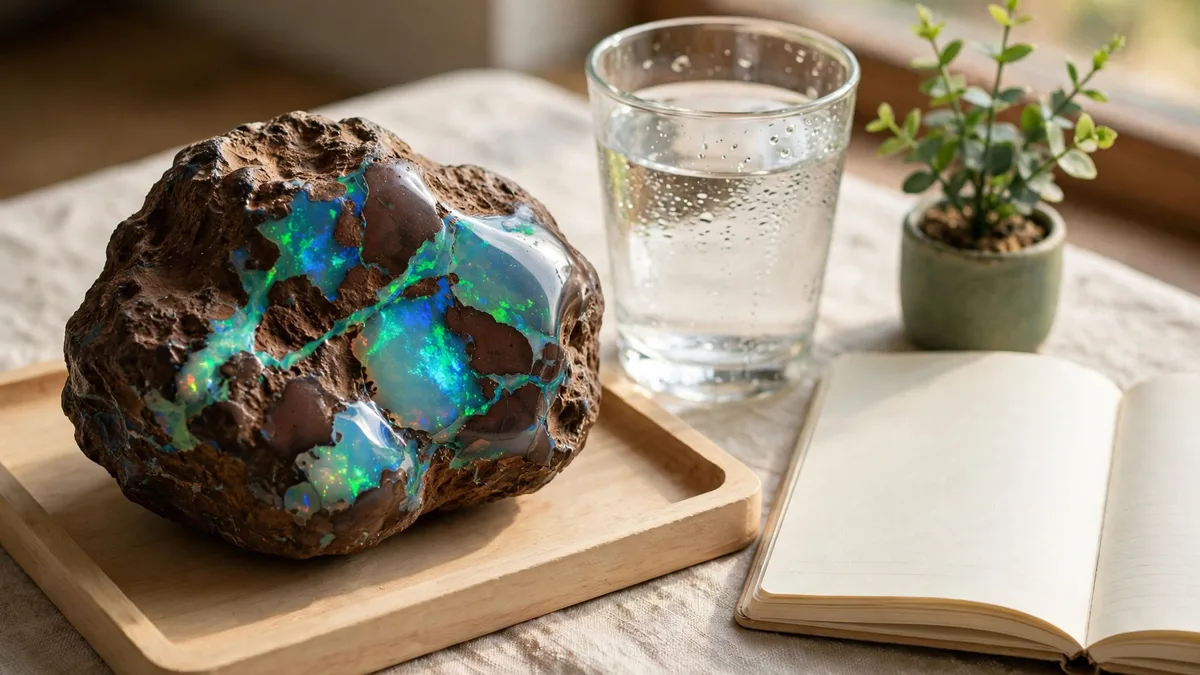
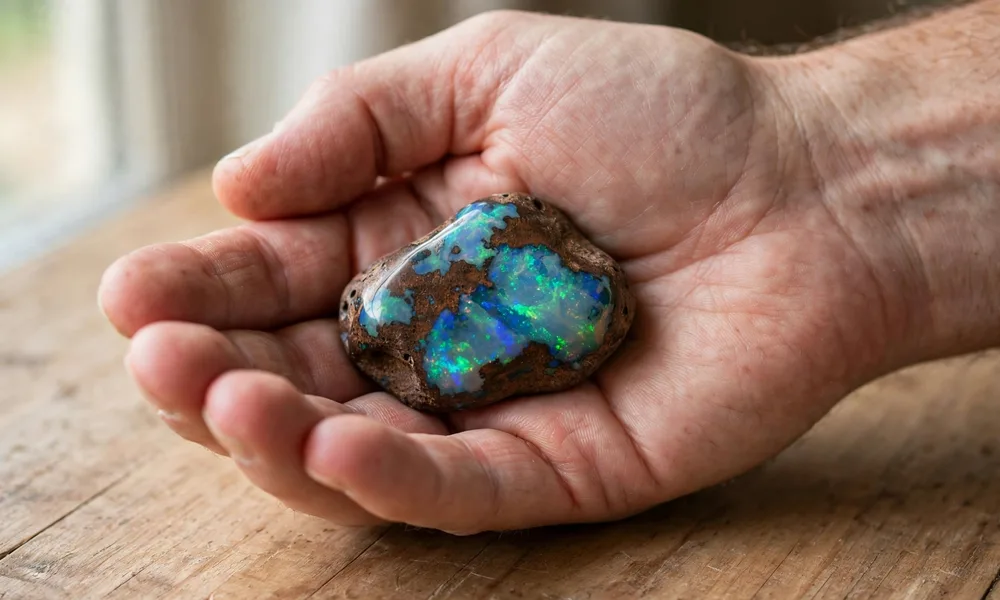
Boulder opal is a stone that looks the way those days feel. It is opal that grew inside dark ironstone rock in Queensland, Australia, and it carries the colours of the earth itself: warm brown rock threaded with veins and patches of bright blue, green and gold opal, like light in the cracks of dry ground. No two pieces match.
This guide explains what boulder opal is, how its earth patterns form, how to read them, how it differs from the other opals, how to choose one, and how to keep it safely beside water. The stone is for display and handling only, never a treatment, and it will not heal anything.
Key Takeaways
- Boulder opal is precious opal in thin seams across dark brown ironstone from Queensland, Australia.
- Its earth patterns are natural veins of bright blue, green and gold opal, and no two stones match.
- The stone stays beside water only, never inside drinking water, and hands are washed after handling.
- A grounded day needs very little: water, one clear task at a time, and a slow pace.
- The stone is for display and handling only; it will not heal anything.
What Boulder Opal Is
Boulder opal is a kind of precious opal that formed inside ironstone rock, rather than on its own. Long ago, silica-rich water seeped into cracks in the dark brown ironstone of Queensland, and as the water dried away it left opal behind in thin seams, veins and patches across the stone. Cut and polished, both parts show at once: warm brown ironstone, and bright blue, green and gold opal glowing against the dark rock. The ironstone is the host rock, giving boulder opal its weight and warmth. Yowah is one famous boulder opal town, described in yowah opal warm earth for grounded mornings.
How Earth Patterns Form in Ironstone
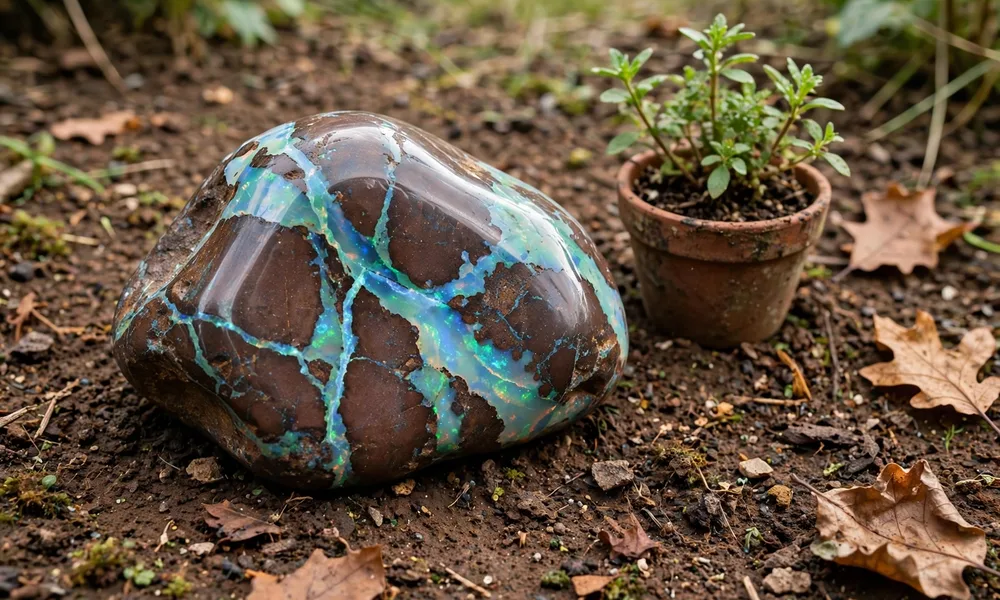
The earth patterns in boulder opal are the record of water moving through rock over a very long time. Rain fell on dry ground, sank down through cracks in the ironstone, and carried tiny grains of silica with it, deep underground. As the ground dried, the water slowly left, and the silica stayed behind, settling into the cracks in thin layers until it hardened into opal. Where the cracks were wide, the opal grew thick and bright; where they were thin, it grew as fine veins. That is why no two boulder opals look alike.
Reading the patterns is a slow pleasure: hold the stone up to the window, turn it slowly, and follow one vein with your eyes from where it begins to where it ends. The same slow looking suits the soft grey branches of dendritic opal soft patterns for quiet minds, where fern-like marks invite the same unhurried eye.
The Colours of the Earth
The colours of boulder opal are the colours of the ground it came from, and they sit together in a way that feels natural because it is. The ironstone is warm brown, rust red and deep chocolate, the colours of dry soil, red clay and old wood. Against that brown, the opal shows blue like a clear sky, green like new leaves after rain, and gold like pale sand in late light. These colours pair best with earthy, plain things: wood, cream cloth and a glass of clear water.
How Boulder Opal Differs from Other Opals
Boulder opal differs from the other opals first in its host rock. Blue opal is a pale, milky blue stone, soft and even all the way through, with no dark rock in it at all. Pink opal is warm and pink all through, like the inside of a shell. Peruvian and Andamooka opals are even stones with no dark rock in them either. None of them carry opal inside brown ironstone. Matrix opal is the closest cousin, also opal in dark host rock, as in matrix opal patterned light for bright days, where pale veins glow in strong daylight. Boulder opal is brighter and warmer, flashing blue, green and gold.
The Safety Rule First: Beside Water Only
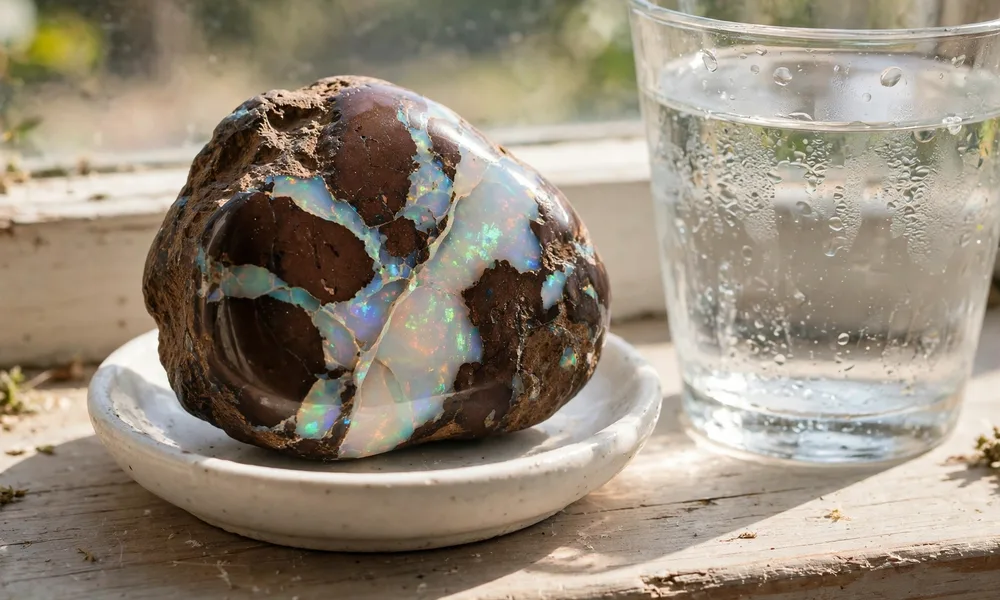
The stone stays beside water only, never inside drinking water, never soaked, and never used in elixirs of any kind. Keep the glass beside the stone's dish, and keep the stone dry. If a piece ever falls in by accident, throw the water away and wash the glass and your hands. Stones that must never touch water at all are worth naming here. Malachite must never go in water or elixirs, apatite and lepidolite must never go in drinking water, lepidolite contains lithium, pyrite must never go in drinking water, angelite must never be soaked, and amber must never go in drinking water or soaks. Hematite must never go in drinking water either. Boulder opal itself holds water inside its structure, so soaking can damage it.
Choosing a Boulder Opal Stone
Choose a boulder opal stone you can see clearly before you buy it, in daylight as well as in the shop light. Look for warm brown ironstone that is rich and even, with opal patches that show plainly and catch the light as you turn the stone. A good piece has colour that moves as it turns. A piece that fits in your palm is enough. Buy from a trusted seller who can tell you plainly that the stone is natural boulder opal. Avoid stones that look dyed, and avoid any seller who promises the stone will change your health or your luck.
A Grounded Day with Boulder Opal
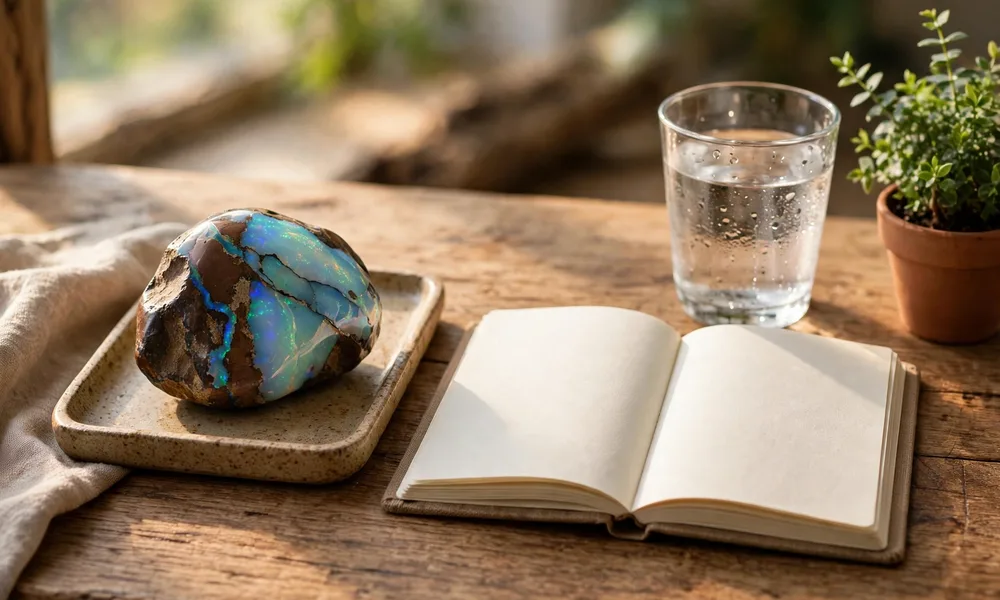
A grounded day takes very little planning, and it starts with the tray. Set out the stone on its dish the evening before, beside a clean glass, a journal and a pen. When you wake, pour a glass of fresh water and set it beside the boulder opal, drink it slowly, and look at the stone for a moment. Then write down the one thing that matters most today, in a single short line. Through the day, let the stone mark the slow hours: step outside and stand on the soil, drink another glass of water beside the stone at midday, and keep the stone beside your journal on your desk. In the evening, set the stone back on its dish and close the journal.
Boulder Opal at a Glance
| Earth pattern | Grounded day | Stone care |
|---|---|---|
| Brown ironstone base | Feet on floor | Wipe stone dry |
| Blue green veins | One clear task | Dish beside glass |
| Warm rust patches | Slow first hour | Never soak stone |
| Soft pale seams | Water beside stone | Wash hands after |
Caring for a Patterned Stone
Boulder opal needs gentle care, because opal is softer than most stones and holds water inside its structure. Clean it with a dry, soft cloth, or with a cloth barely dampened with plain water, then dry it at once. Never soak it, and never use harsh chemicals, which can dull the opal. Handle it gently: it can chip if dropped, so keep it in its own pouch or on its dish. Store it dry, away from strong heat and bright sun. Wash your hands after handling it.
What It Will Not Do
Be honest about what a stone can and cannot do. Boulder opal will not heal anything: it will not cure an illness, ease a medical condition, calm a racing mind, or make a busy day quiet on its own. It is a beautiful patterned stone, and a patterned stone is all it is. The grounded day is the part that helps, in an ordinary way: a clear desk can steady a scattered day, and one clear task can keep the hours calmer. The stone keeps you company while you do that work. No stone or ritual will replace rest and sleep.
Your Grounded Day Checklist
- Choose a palm-sized boulder opal with warm brown ironstone and bright blue, green or gold veins.
- Set a glass of fresh water beside the stone each morning, never in it.
- Write down one clear task for the day, in a single short line.
- Step outside once, stand on the soil, and look at the earth colours around you.
- Keep the stone on your desk in its own dish, away from keys and hard stones.
- Clean the stone with a dry soft cloth, never soak it, and store it dry.
Frequently Asked Questions
What is boulder opal?
Boulder opal is precious opal that formed in thin seams, veins and patches across dark brown ironstone host rock in Queensland, Australia. Cut and polished, it shows bright opal against warm brown rock.
How is boulder opal different from Yowah opal?
Yowah opal is boulder opal from one town, Yowah, in south-west Queensland, with warm brown, rust and cream colours. Boulder opal as a family covers all the Queensland fields, often brighter blue and green.
Can I put boulder opal in drinking water?
No, never. The stone stays beside water only, never inside drinking water, never soaked, and never used in elixirs of any kind. If a piece ever falls in by accident, throw the water away and wash the glass and your hands.
Is boulder opal safe to handle?
A polished piece is safe to handle briefly with clean, dry hands, but wash your hands afterwards. Never cut, grind or break it, and keep it away from strong heat, which can crack it.
How do I choose a good piece?
Look at the stone in daylight, and choose one where the ironstone is rich and even and the opal veins show plainly. Buy from a trusted seller who makes no medical claims.
How do I clean boulder opal?
Wipe it with a dry, soft cloth, then dry it at once. Never soak it or use harsh chemicals, and store it dry in its own pouch, away from harder stones.
The Bottom Line
Boulder opal earth patterns are dark ironstone, bright veins, and a whole day lived at walking pace beside a glass of water. Set your stone out tonight, and let tomorrow stay on the ground.
A Note for Grounded Days
Keep it earthy, keep it dry, keep it beside the water. The ground will hold you.