A bright day has a colour of its own, and it is not one colour at all. The morning starts pale and gold, the middle of the day turns white and clear, and by late afternoon everything softens into green shadows and pink light. A stone that holds two colours at once belongs on a day like that.
Bi-colour tourmaline is that stone. It is one crystal with two colours inside it, usually a soft pink that melts gently into a fresh green along the piece. There is no hard line between the two halves, only a slow shift.
This guide walks through the stone in plain steps: what it is, how to pick a good piece, and how to enjoy it on a bright day with a glass of water standing safely nearby. The stone is there to be looked at and admired, and nothing more. It will not cure anything or change your health in any way.
Key Takeaways
- Bi-colour tourmaline carries two colours in one stone, pink shading into green.
- The gentle shift suits bright days and changing light.
- It differs from watermelon, pink and green tourmaline in how the colours meet.
- The stone is for looking at only: it rests beside water, never inside it.
- One small piece on a dry tray is enough for a bright day.
What Bi-Colour Tourmaline Is
Tourmaline is a mineral family that grows in almost every colour, and the colour of each stone comes from tiny traces of other elements caught inside it while it formed. In bi-colour tourmaline, the mix of those traces changed partway through the growth, so one end of the crystal came out pink and the other end green. The result is a single stone with two colours, joined by a soft blend where they meet.
A fine piece is usually sold polished, as a smooth tumbled stone or a short prism. Hold it up to a window and the light passes through both colours at once, pink on one side and green on the other. It feels cool and smooth, and it is fairly hard, so it keeps its polish when handled gently.
Why Two Colours Suit Bright Days
A bright day is never one flat colour from morning to night. The early light is pale, the midday sun is white and strong, and the evening light turns warm and rosy. A single-colour stone matches only one of those hours, but a bi-colour stone keeps pace with all of them.
That slow change is the whole pleasure of the stone. As you move around the room, the pink half catches the sun first, then the green half. It is a small show that asks for nothing but a sunny windowsill and a few minutes of looking.
Choosing a Bi-Colour Tourmaline Piece
Choose the stone in good daylight, where both colours show honestly. Look for a piece in which the pink and the green are both clear, with a soft blend between them rather than a sharp stripe. The surface should be smooth and free of deep cracks.
Keep the piece modest: a stone about as long as your thumb is plenty for a tray. Buy from a seller who can say plainly that the stone is tourmaline, and who will let you look at it in daylight before you decide.

A Bright Day with Bi-Colour Tourmaline
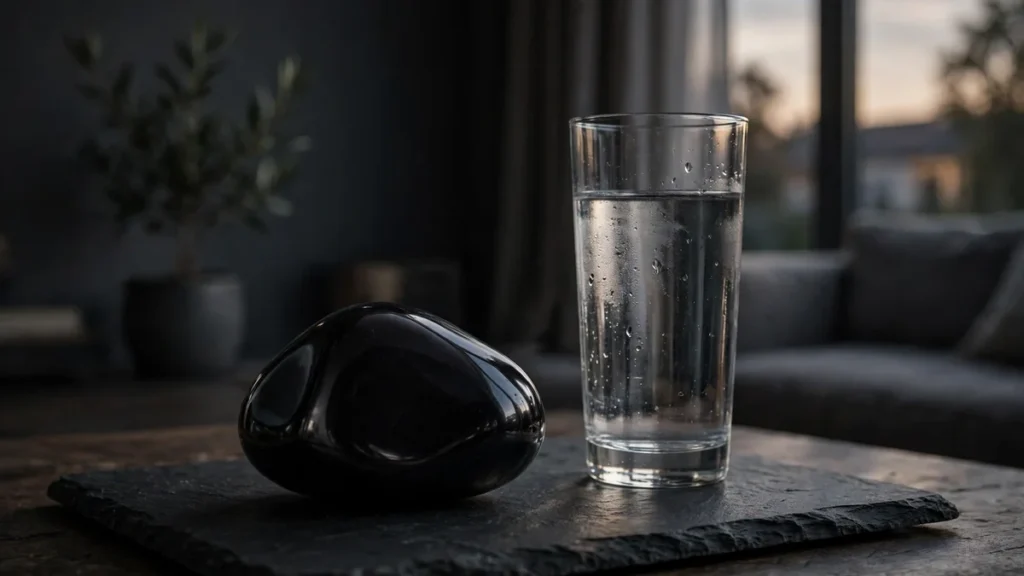
Start the morning by setting the stone on its tray in the sunlight, with a glass of cold water at the far end, close enough to see together but never touching. Drink the water slowly, let the two colours catch your eye, and take one calm breath.
Leave the tray where the sun will find it, perhaps on a windowsill or a desk near the glass. Each time you pass, the pink and green will look a little different. The stone does no work at all; the quiet minute is yours.
Bi-Colour Tourmaline Beside Water
Stone and water can share one tray, and the tray is as close as they ever get. Rest the glass at one end and the stone at the other: a display stone never belongs in a drink. A splash dabbed dry at once is harmless; a soak is not.
This habit keeps the morning calm and safe. Rinse your hands once you have held the stone, keep it far from food and little children, and never let it fall into a glass, jug or bath.
Bi-Colour Tourmaline at a Glance
| Pink and green | Bright days | Display only |
|---|---|---|
| Two colours, one stone | Tray, desk, shelf | Wash hands after |
| Smooth, cool, fairly hard | Sunlight, open windows | Never in water |
| Pink fades into green | Morning, midday, evening | Dry cloth wipe |

Bi-Colour Tourmaline and Watermelon Tourmaline
Watermelon tourmaline is the closest cousin to bi-colour tourmaline, and the two are easy to mix up. Watermelon tourmaline for fresh starts covers a stone that is pink in the centre and green around the rim, like a slice of watermelon cut across.
Bi-colour tourmaline arranges its colours differently. Instead of a pink middle ringed with green, the pink sits at one end and the green at the other, and the two melt into each other along the length. That gentle shift gives this guide its own subject.
Bi-Colour Tourmaline and Pink Tourmaline
Pink tourmaline is the softest-coloured member of the family, and it makes a clear contrast with a two-colour stone. Pink tourmaline for tender days covers a rose-pink stone with a warm, even blush, the sort of colour that suits slow, tender mornings.
Bi-colour tourmaline is only half pink. Where pink tourmaline glows rose from edge to edge, the bi-colour stone lets its pink fade away into green halfway along. One suits a soft, single mood; the other suits a bright day that changes.
Bi-Colour Tourmaline and Green Tourmaline
Green tourmaline is the freshest single-colour cousin, and it throws the two-colour stone into sharp relief. Green tourmaline for new routines is about a green stone the shade of young leaves after rain, calm rather than loud.
Bi-colour tourmaline is only half green. Where green tourmaline holds one steady leaf colour from end to end, the bi-colour stone lets its green soften into pink as you look along it. One feels like spring arriving and staying; the other feels like the day moving from morning green to evening rose.
Bi-Colour Tourmaline and the Other Tourmalines
Beyond the three nearest cousins, the family holds more colour still. Black tourmaline is deep black from edge to edge, a dark anchor for grounded days, while paraiba tourmaline glows a vivid blue-green like tropical sea water, and chrome tourmaline is a deep forest green. Achroite is the colourless white tourmaline, clear as glass, and the general tourmaline guide covers protection rituals for crowded days.
Two more tourmalines are being written about in this same batch: Canary Tourmaline, a sunny yellow stone, and Orange Tourmaline, a warm orange stone. Neither of them holds two colours in one piece. Bi-colour tourmaline stands apart from all of them by carrying pink and green together in a single stone.

Caring for Bi-Colour Tourmaline
Bi-colour tourmaline asks for gentle habits. Keep it in a dry place away from heat, such as a lidded box lined with soft cloth. Do not let it rattle loose in a pocket with keys or coins, since the edges can chip.
Dust it with a dry, soft brush, never with soap, sprays or creams. When the tray is damp, move the stone aside, wipe the tray dry, and only then set the stone back down.
Stones That Must Never Touch Water
Some stones must never go near a drink, and their names are worth knowing. Malachite comes first: never lower it into a jug, a cup or a glass, because it can shed traces a drink must never hold. Hematite stays out of drinking water too, not even for the shortest dip or the quickest rinse.
Apatite needs the same care, and lepidolite too, its soft pale flakes holding lithium within. Pyrite, angelite and amber also belong away from water, so keep all of them out of glasses, jugs and soaking bowls. Bi-colour tourmaline is gentler than those, but the rule holds for it as well: the stone stays beside the glass, and the water in it never touches the stone.
Your Bright Days Checklist
- Set the stone on a dry tray, a glass of water resting close by.
- Sip the water slowly as the morning light grows stronger.
- Clean your hands with soap after holding the stone.
- Buy from a seller who can tell you plainly that it is tourmaline.
- Keep the stone dry, away from food and children.
- A stone cannot mend health troubles, so take those to a doctor.

Frequently Asked Questions
What is bi-colour tourmaline?
Bi-colour tourmaline is a tourmaline with two colours in one crystal, most often pink at one end and green at the other. The mix of colouring traces changed while the stone was forming, so the colours blend softly into each other along the stone.
How is bi-colour tourmaline different from watermelon tourmaline?
Watermelon tourmaline is pink in the centre and green around the rim, like a slice of fruit. Bi-colour tourmaline is pink at one end and green at the other, with a slow fade between them.
Is bi-colour tourmaline safe to hold?
Holding it for a look is fine, if you wash your hands with soap after you set it down, and keep it away from children and food. It is a display stone, not one to wear pressed against your skin all day.
Why must bi-colour tourmaline never go in water?
A display stone sits beside the glass, never within it. Bi-colour tourmaline must never be dropped into a drink or left to rest in a soak, and a splash should be dabbed dry at once.
Will bi-colour tourmaline heal anything?
No. It is a lovely two-colour stone to admire, and if a quiet minute beside it leaves you calmer, that calm comes from the pause itself, not from the stone.
Where should I keep bi-colour tourmaline at home?
Set it where morning light falls and the air stays dry, on a wooden tray, a sunny shelf, or a bedside table, with a glass of water nearby but always separate.
The Bottom Line
Bi-colour tourmaline lends bright days two colours at once: pink fading gently into green, resting on its dry tray near a glass of water, admired and never sipped from.
A Note for Bright Days
Let the daylight shift and the stone shift with it. One small two-colour piece, one glass of water, and a few unhurried minutes are all you need.