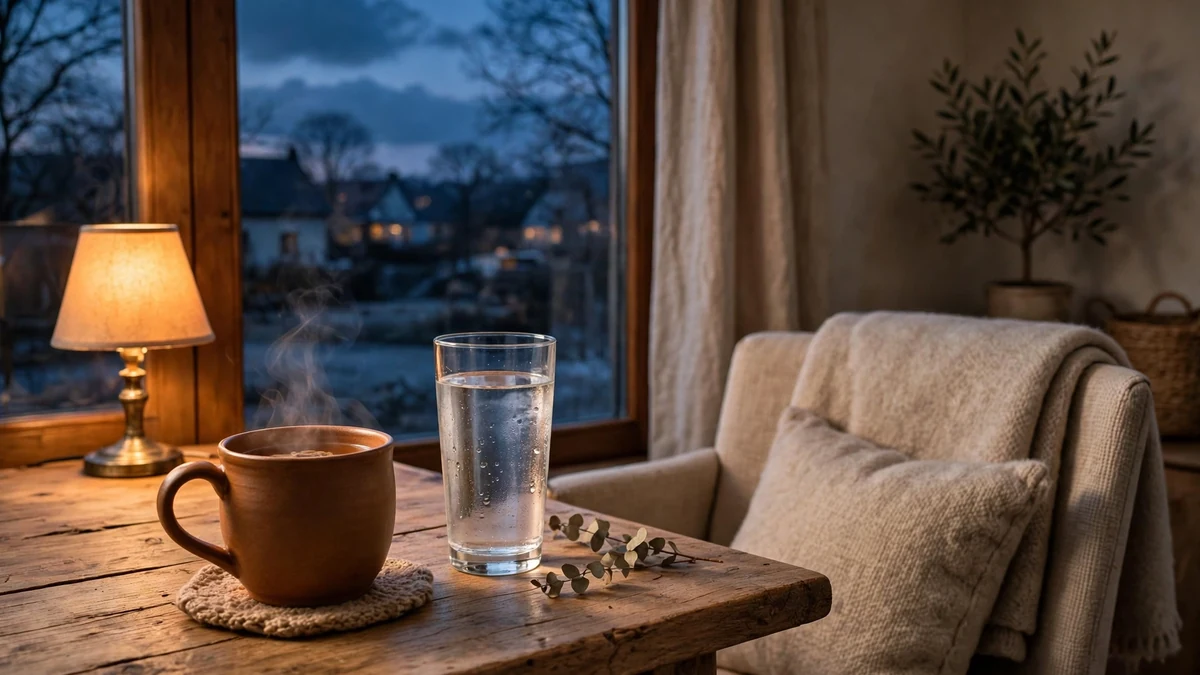
By four in the afternoon, the winter sky has already gone the colour of slate. Frost gathers along the edges of the window, the street outside grows quiet, and the house feels smaller and warmer than it did at noon. The hour invites a lamp, a blanket, and a slower pace.
The kindest way to meet it is with plain water and warmth. A glass to sip from as the light fades, a gentle wash for hands that have been out in the cold, and a mug to hold while the night settles in. Small things, done in order, can carry a whole evening.
What follows is one winter evening, taken step by step, from the moment the sky turns dark until the moment you slip under the blanket. Treat it as gentle general information only, never medical advice; anything that truly worries you about your health belongs with a doctor.
Key Takeaways
- A winter evening is cold outside and dry inside, so the skin wants lukewarm water and a light cream.
- Four small steps carry the evening: sip, wash, eat lightly, and rest early.
- This ritual is one winter evening, not an autumn evening, a summer evening, or a winter morning.
- Warm drinks and room-temperature water suit cold nights better than iced water.
- Ongoing skin trouble or a health worry deserves a doctor, not a glass of water.
Why a Winter Evening Feels the Way It Does
Cold does more than chill the air; it dries it. Once the heating has been on for a few hours, the rooms feel warm yet the air holds little moisture, and hands and faces pay for it first. Skin that spent the afternoon in a cold wind comes home tight and a little sore.
Then there is the dark. Long before supper, the windows turn black and the world outside disappears, which makes the house feel like a small lit island. The evening works better when you lean into it: lamps low, curtains drawn, and everything you need within reach.
Four Small Steps for the Evening
Think of the evening as four small moves, each one leading quietly into the next. When the sky darkens, fill a glass and keep it beside your chair, sipping now and then instead of gulping it all at once. After that, give your face and hands a brief lukewarm wash and pat them dry. Then sit down to something light and warm, with water at your elbow. At last, set a fresh glass by the bed and let the night begin early.
Nothing here needs buying, and nothing takes longer than a few minutes. A glass, a basin, a mug, and a blanket are the whole kit.
Sipping Water as the Light Fades
Start the evening with the glass. Keep it where you sit, and take a mouthful every few minutes while you read, talk, or simply watch the window grow dark. Little sips through the afternoon and evening are easier on the body than one large glass swallowed in a hurry, and they give the evening its rhythm.
Plain water at room temperature is the best choice, or water that is just barely warm from the kettle. Iced water has no place on a cold night. Refill it when it runs low, and let the habit of reaching for it slow the whole evening down.
Washing with Lukewarm Water
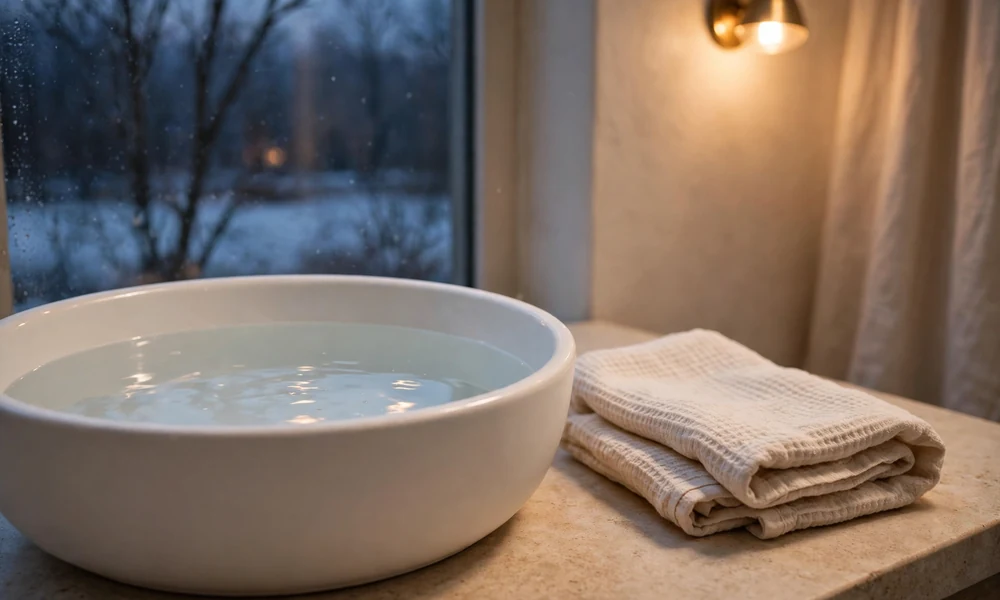
Cold skin and hot water are a poor match. A tap turned too far toward hot strips the skin of its own oils, and by bedtime the face feels tight and the hands feel papery. The kinder choice is water that feels neither warm nor cool on the inside of your wrist, the thin skin there telling the truth about temperature.
Run the basin or the tap to that middle point, splash your face and hands, and keep the whole thing brief. A soft cloth wrung out in the same water, held against the cheeks for a few slow breaths, does the same job. Then press a towel against the skin instead of rubbing, and while the skin still holds a little dampness, smooth on a thin layer of plain cream.
A Warm Mug and Something Light to Eat
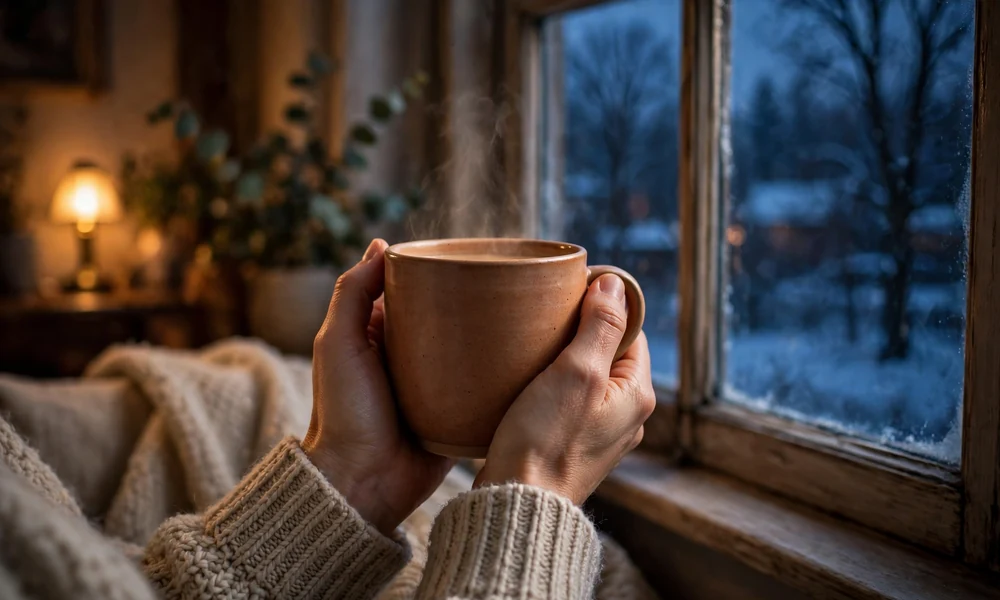
Once you are washed and dry, the mug is the best part of the evening. Wrap both hands around it and let the warmth reach your fingers before the first sip. Plain warm water is enough, though a simple warm drink you already enjoy works just as well. Sit with it for a while; the mug is not a task to finish but a reason to stay still.
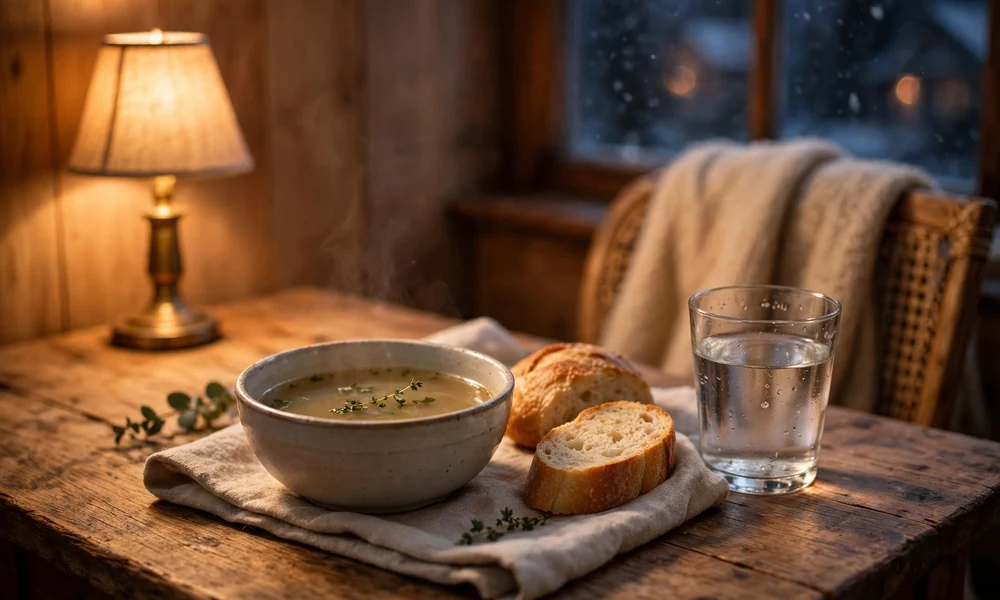
Supper stays small and warm. A bowl of plain soup with a slice of bread, eaten slowly at the table with a glass of water beside the plate, is plenty for a cold night. A light supper leaves the body ready for rest.
Water and Winter Evenings at a Glance
| Cold dark evening | Four small steps | Gentle care |
|---|---|---|
| Room temperature water | Sip, wash, supper | Lukewarm wash |
| Lamps low, blanket near | Warm mug, early rest | Pat dry, cream |
| Frost on the window | Glass by bed | Light soup, water |
Winter Evenings and Autumn Evenings
Autumn and winter evenings look alike from the doorway: both end with lamps and a glass of water by the bed. Autumn evenings follow a calm ritual for cool nights when the light is still golden and leaves drift past the glass, and the water can stay at room temperature without a second thought.
Winter is the colder, darker version of that same idea. The sky is slate blue by late afternoon, frost creeps along the window, and a warm mug matters more than it does in autumn. Autumn asks you to slow down; winter asks you to slow down and wrap up, with a blanket over your knees and an earlier bedtime.
Winter Evenings and Summer Evenings
Summer and winter evenings could hardly be further apart, and the water routine flips with the season. Summer evenings follow a cool routine for hot nights, with cool glasses, cool rinses, and windows thrown open to let the heat out.
Winter turns every one of those steps around. The glass holds room-temperature water instead of cool, the wash runs lukewarm instead of cool, and the windows stay shut against the cold. The shape of the evening is the same, a short gentle order from late afternoon to bedtime, but the season changes what each step feels like. One evening cools you down; the other warms you up.
Winter Evenings and Winter Mornings
The morning and the evening of a winter day share the cold, yet they point in opposite directions. Winter mornings follow a warm routine for cold starts, with warm water first, warm clothes laid out the night before, and a warm breakfast to face the day.
The evening is that routine played backwards. Instead of dressing for the cold, you undress the day: the warm layers come off, the mug replaces the breakfast bowl, and the glass by the bed replaces the glass that started the morning. One end of the day gathers you up; the other lets you go.
Making a Cosy Corner
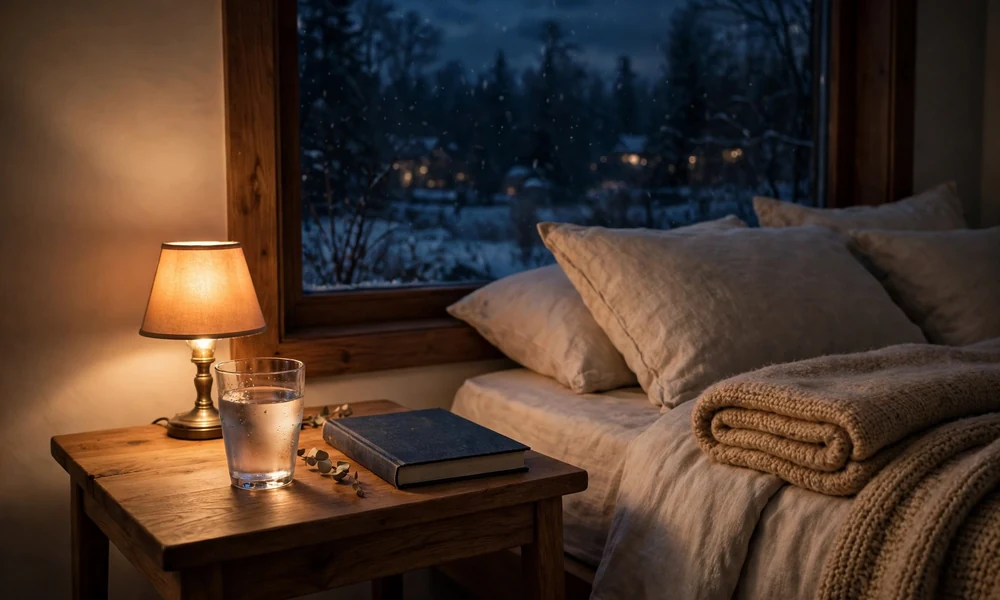
One chair can hold the whole evening if you set it up right. Pick the seat nearest the lamp, drape a blanket over its arm, and put a small table beside it for the glass, the mug, and a book. Draw the curtains, turn the lamp low, and leave the phone in another room.
Stay in that corner once it is ready. The water stays within reach, the blanket stays warm, and the evening stays slow because everything you need is already in one place.
Letting the Night Begin Early
Do not wait until you are tired to get ready for bed. Half an hour before you plan to sleep, put the mug down, lay out your night clothes, and fill a fresh glass for the bedside table. Turn the lamps down and spend a quiet while with the book and the blanket.
When you are ready, set the glass by the bed, pull the blanket up, and let the night begin. Winter nights are long, and meeting them rested is the kindest way to spend them.
Your Winter Evenings Checklist
- Fill a glass with fresh water as the sky darkens.
- Sip it slowly, a little at a time, by the lamp.
- Wash briefly with lukewarm water, never hot.
- Pat the skin dry and smooth on plain cream.
- Hold a warm mug and eat a light warm supper.
- Leave a fresh glass by the bed, and see a doctor for skin problems.
Frequently Asked Questions
What does the winter evenings ritual involve?
Four small steps in order: sip plain water slowly as the light fades, wash with lukewarm water and pat dry, hold a warm drink and eat a light warm supper, then rest early with a fresh glass of water by the bed.
How does it differ from autumn evenings?
Autumn evenings are cool and golden, with leaves at the window and room-temperature water. Winter evenings are colder and darker, with frost on the glass, a warm mug in both hands, and a blanket close by.
Should I drink hot or cold water in winter?
Neither one. Water at room temperature, or just barely warm, is the kindest choice on a cold night. Iced water is too cold, and very hot water is not a drink for every day.
Why is hot water bad for winter skin?
Hot water strips away the natural oils that protect the skin, leaving the face tight and the hands dry by bedtime. Lukewarm water cleans without that cost, and plain cream helps while the skin is still a little damp.
What makes a good winter supper?
A small bowl of plain soup with a slice of bread, and a glass of water beside the plate, is plenty. Eat slowly, sitting down, and keep the meal light so the body is ready for rest.
When should I ask a doctor about my skin?
If soreness, cracks, or flaking stay for days, or the same skin trouble returns again and again, speak to a doctor or a skin specialist. What you read here is plain everyday guidance, never a substitute for medical care.
The Bottom Line
A winter evening needs very little: slow sips of water, a lukewarm wash, a warm mug, and a light supper. Let the dark arrive early, and let the evening stay warm around you.
A Note for Winter Evenings
Keep it warm, keep it slow, keep it simple. A glass of water, a warm mug, a soft blanket, and an early rest can carry a whole winter evening.


