Some days ask to be made, not managed. The hours stretch ahead, the desk is clear, and the hands want something simple to do. On a day like that, a big project feels too heavy, and a blank screen feels too loud for the quiet mood.
Water and watercolours offer a gentler start: a jar of clean water, a brush, a small palette, and one sheet of paper. The water does most of the work, carrying the colour across the page in soft waves while you watch it move.
This guide is a simple creative ritual: how to set up a small watercolour corner, how to lay down a first wash, and how to enjoy twenty calm minutes of painting. The paints are for paper only, never for drinking, and the ritual is a quiet pleasure, not a lesson or a test.
Key Takeaways
- Water and watercolours make a simple calm creative ritual.
- The ritual needs little: clean water, a brush, paint and paper.
- Water carries the colour, so the first wash can be slow and easy.
- Paint water is for rinsing brushes only, never for drinking.
- The ritual is for quiet pleasure, not for a perfect picture.
What Water and Watercolours Means
Water and watercolours means a small daily ritual built from two simple things: fresh clean water and watercolour paint. The paint is made to dissolve in water, so a wet brush lifts a little colour from the palette and the water carries it across the paper in soft, spreading waves. No drawing skill is needed, and no finished picture is required.
The ritual is the point, not the result: fill a jar, wet the brush, touch the colour, and watch one wash of blue or green bloom across the page. The paper dries, the colour settles, and the twenty minutes belong to you alone.
Why Water Suits a Calm Ritual
Water suits a calm ritual because it is slow and forgiving. A pencil line stays where you put it, and a pen mark cannot be undone, but watercolour moves on its own, softening edges and blending colours while you watch. There is nothing to fix and nothing to hurry, because the water decides how far the colour travels.
The sound helps too: the brush dipping into the jar, the soft swish across wet paper, the quiet of a room with no screen glowing. Water asks nothing of you except attention.
Gathering Your Watercolour Kit
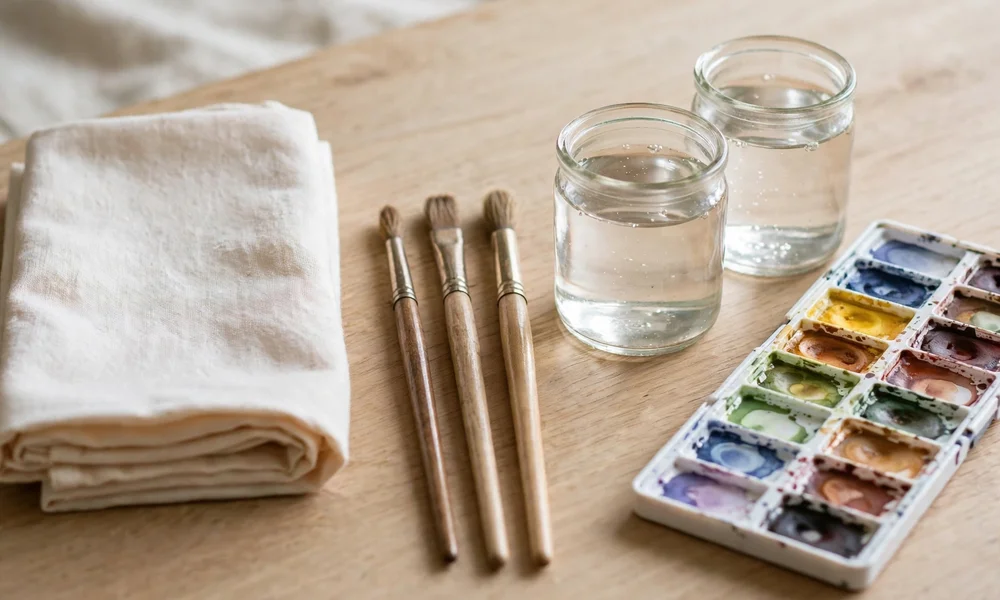
Gathering a watercolour kit takes only a few minutes, and a small kit is better than a large one. You need one sheet of thick watercolour paper, a small set of paints in blue, green and one warm colour, two brushes, one wide and one fine, two clear jars of clean water, and a folded cotton cloth for blotting the brush.
Keep the kit in a small box or tray so it is always ready: a kit on a shelf is used, and a kit in a cupboard is forgotten. Choose paints made for paper, keep them away from food and drink, and wash your hands when you finish.
Setting Up a Calm Corner
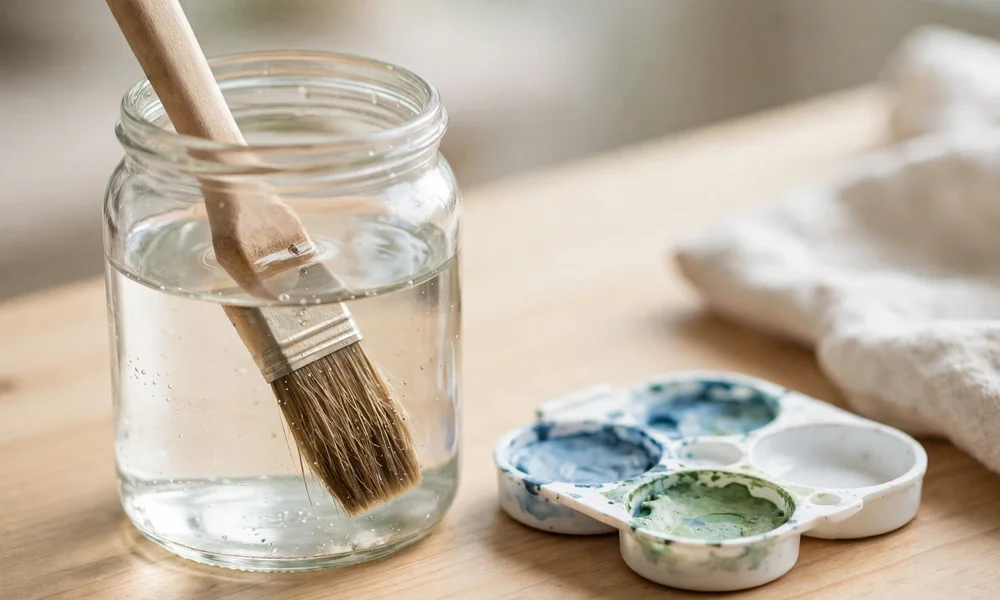
A calm corner gives the ritual a home, and a home makes the habit easier to keep. Choose a small, clear surface where the daylight can find it: a desk by a window, a kitchen table, or a corner of a dining table. Lay down a cloth to protect the wood, set the paper flat, and place the jars of water where your brush hand can reach them easily.
Keep the corner the same from day to day, so the ritual starts without decisions. Fill one jar for rinsing and one for clean water, and put a small glass of drinking water beside them, clearly separate from the paint jars.
The First Wash
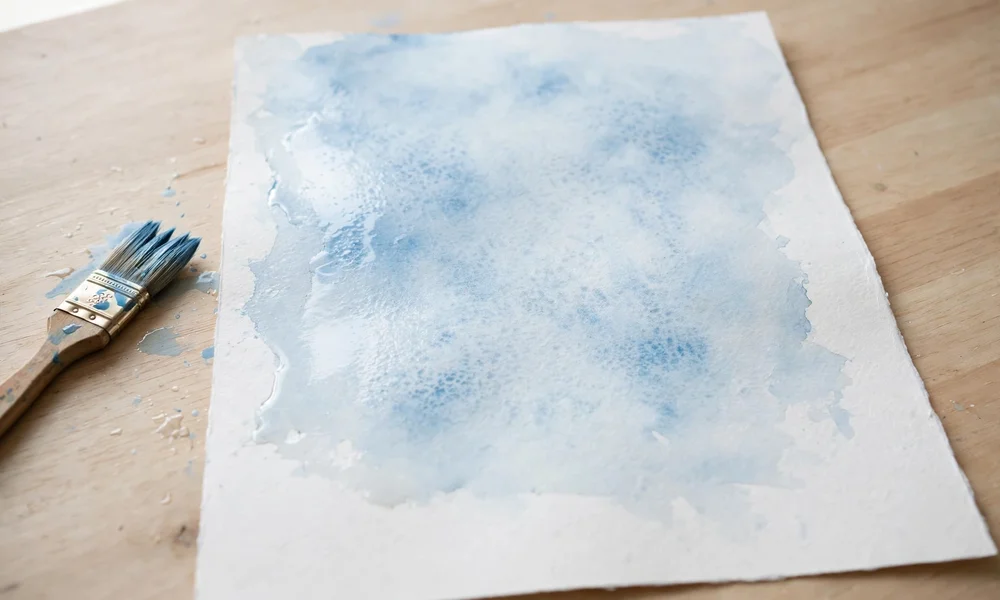
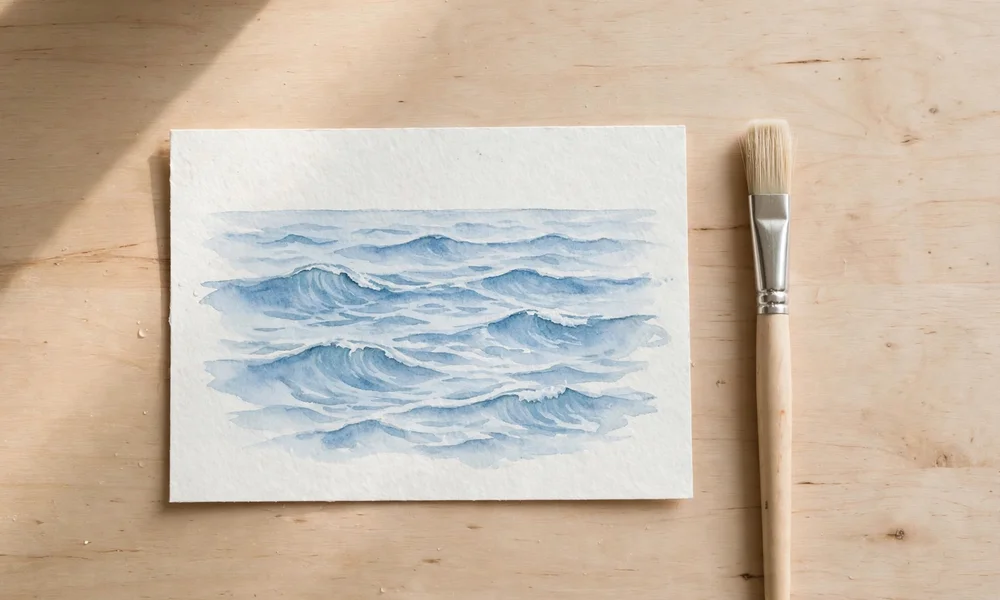
The first wash is the heart of the ritual, and it takes only a minute to begin. Wet the wide brush in the clean jar, touch it to the blue paint, and lay a band of colour across the top of the wet paper. Rinse the brush, pick up a little green, and let it flow into the blue while both are still wet.
Watch the colours meet and soften, then put the brush down. The wash will keep moving on its own, drying into soft edges and pale pools. There is nothing more to do until the paper is dry.
Painting with Water, Slowly
Painting with water, slowly, means letting each layer dry before the next one begins. Once the first wash is dry, add a second wash in a lighter colour, or a few soft shapes with the fine brush: a wave, a leaf, a simple hill. Work in small moves, and pause between them to look at the paper from a little distance.
If a wash goes darker than you wanted, leave it alone; wet paper always looks darker than dry paper. The slowness is the pleasure.
Letting the Wash Dry
Letting the wash dry is part of the ritual, not a wait to be filled. Leave the paper flat on the table, away from direct sun and away from anything that might drip on it. While it dries, rinse the brushes in the rinsing jar, wipe them on the cloth, and lay them flat to dry with the bristles pointing away from the handle.
A wash dries in twenty minutes or so, and the colours lighten as the water leaves the paper. When the paper is dry to the touch, the painting is finished for the day.
Watercolour at a Glance
| Paint and water | Calm ritual | Paper only |
|---|---|---|
| Clean water jars | Twenty quiet minutes | Never drink paint water |
| Brush and palette | Soft daylight | Wash hands after |
| One sheet daily | Water, brush, pause | Keep paints from food |
Watercolours and Sketching
Watercolours and sketching are close cousins. Sketching draws the shape first with a pencil, and the paint follows the lines; watercolour alone lets the water draw the shape, and the colour blooms where it lands. Both are quiet, both fit a small desk, and both ask only for a little time.
Where purple fluorite deep violet creative evenings keeps a deep violet stone beside the sketchbook for creative evenings, this guide keeps a jar of water and a brush for a simple creative ritual.
Watercolours and Writing
Watercolours and writing share the same slow desk and the same quiet hour. Writing fills a page with words, one line at a time, while watercolour fills a page with washes, one layer at a time. Some days the words come easily, some days the colour does, and the ritual is the same: sit down, begin small, and let the page fill itself.
Where fluorite rainbow colour creative days keeps a many-coloured stone for creative days of sketching and writing, this guide keeps water and paint for a creative ritual with no stone at all.
Watercolours and a Cup of Tea
Watercolours and a cup of tea make a gentle pair for a calm afternoon. The tea is warm and the paint water is cool, and keeping them apart is part of the ritual: one cup for drinking, clearly separate, and two jars for painting, clearly for the brush. The tea waits while the wash dries, and the pause tastes better after a few minutes of painting.
Where water tea blends calm afternoons keeps a calm pot of tea for quiet afternoons, this guide keeps a jar of water and a brush for a simple creative ritual.
Keeping Paint Water Safe
Keeping paint water safe is simple, and it is worth stating plainly: watercolour paints are for paper only. Never drink the water from a paint jar, never dip a drinking glass into a paint jar, and never let paint water near food or drink. Keep the drinking glass clearly separate from the paint jars, and wash your hands with soap and water when you finish painting.
Rinse the brushes in the rinsing jar, change the water when it grows cloudy, and tip old paint water down a sink, never into a drinking vessel. Keep paints away from small children and pets.
Your Creative Ritual Checklist
- Fill two jars with clean water, one for rinsing, one for painting.
- Lay out paper, paints, brushes and a cloth on a clear table.
- Keep a separate glass of drinking water away from the paint jars.
- Paint one slow wash, then let the paper dry flat and untouched.
- Never drink paint water, and wash your hands when you finish.
- Remember the ritual is for quiet pleasure, not a perfect picture.
Frequently Asked Questions
What do I need to start watercolours?
You need thick watercolour paper, a small paint set, two brushes, two jars of clean water and a cloth. A small kit in a tray or box, always ready, is enough.
Is watercolour hard for beginners?
No, watercolour is gentle for beginners, because the water does much of the work. Start with one wash of a single colour, let it dry, and add a second layer only when you feel ready.
Can I drink the water from a paint jar?
No, never. Paint water is for rinsing brushes only. Keep a separate glass of drinking water away from the paint jars, and wash your hands when you finish.
How long does a watercolour wash take to dry?
A light wash dries in about twenty minutes when the paper lies flat indoors. The colours lighten as the water leaves the paper, so wait until the paper is dry to the touch.
How do I clean my brushes?
Rinse them in the rinsing jar, wipe them gently on the cloth, and lay them flat to dry with the bristles pointing away from the handle. Never leave a brush standing in a jar of water.
What should I paint first?
Paint one simple wash: a band of blue across wet paper, with a little green flowing into it. A wave, a sky or a soft wash of colour is a fine first painting.
The Bottom Line
Water and watercolours make a simple creative ritual: two jars of clean water, a brush, a small palette, and one sheet of paper in soft daylight. Paint one slow wash, let it dry, and keep the paint water far from any drink.
A Note for Creative Days
Keep it wet, keep it slow, keep it simple. A jar of water, a brush, and one small wash of colour can carry a quiet day well.