Some evenings are made to be noticed. The light goes low, the room warms up, and a deep red dress comes out for a dinner, a party, or a night out with friends. On an evening like that, a small bold stone on the dressing table is the last touch before you leave the house, a deep red colour that says you are ready.
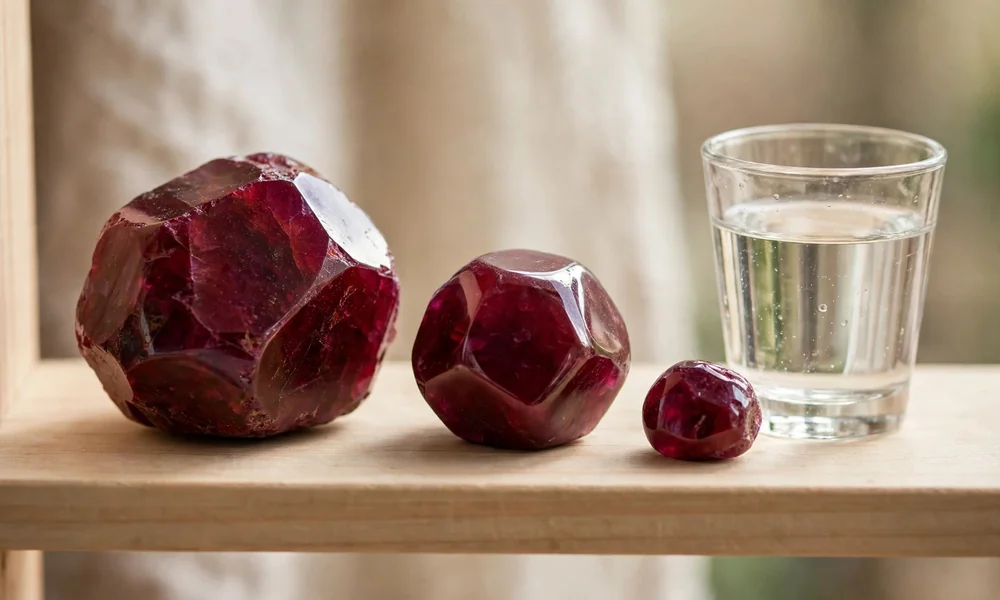
Cuprite is a stone for evenings like these: a deep red mineral, the colour of dark cherries and old wine, with a dark metallic sheen. Set it on a tray beside a glass of fresh water, and it looks like a small warm ember, kept where you can see it while you get ready.
This guide is a spotlight on cuprite: what the stone is, how to choose a piece, how to display it on a dressing table, and how to enjoy it through a bold evening. Cuprite contains copper, so it is for display and handling only, never in drinking water or soaks, and you should wash your hands after handling it. The stone will not heal anything.
Key Takeaways
- Cuprite is a deep red copper mineral, smooth and solid, with a dark metallic sheen.
- Its deep red colour suits bold evenings, low light and getting ready slowly.
- Cuprite differs from red calcite, red goldstone, red coral and red aventurine.
- Cuprite contains copper: display only, never in drinking water or soaks.
- The stone will not heal anything, and hands should be washed after handling.
What Cuprite Is
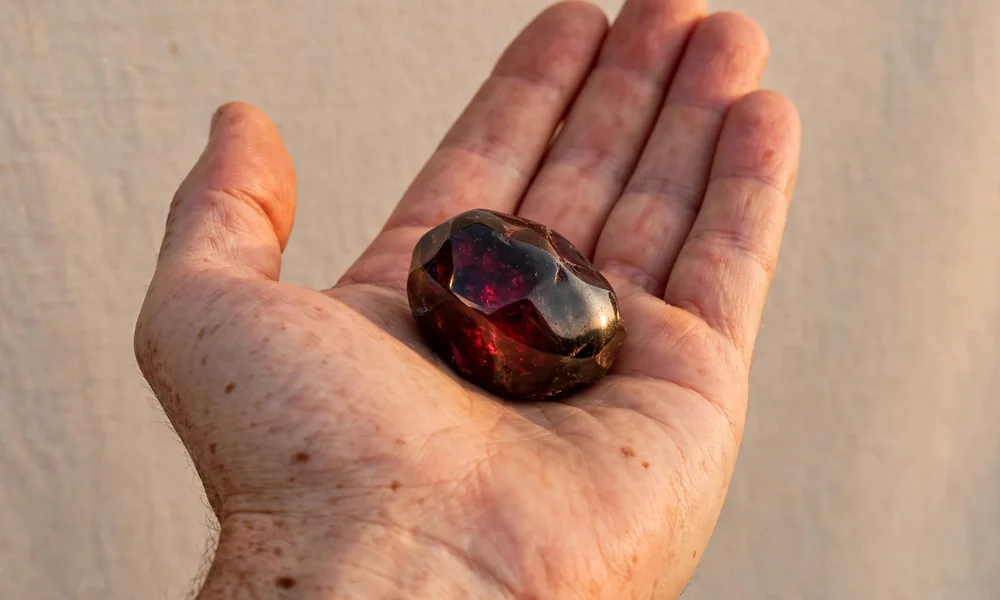
Cuprite is a copper mineral, a copper oxide that forms in the upper parts of copper deposits, where copper ore meets air and water in the earth. Its colour runs from a deep brick red to a dark wine red, sometimes almost black in low light, and the best pieces glow a rich red when the light catches them. The stone is smooth when polished, with a soft shine and a dark metallic gleam.
Cuprite also grows as small cubic crystals, and fine crystal pieces show sharp red cubes clustered together on dark rock. Hold one in your palm and it feels cool, steady and a little heavy for its size, because copper minerals are dense.
Why Deep Red Suits Bold Evenings
Deep red suits bold evenings because it is the colour of a night that has already begun. Bright red can feel loud in daylight, but in low lamplight deep red turns warm and rich, like dark cherries in a bowl or old wine in a glass. It looks its best when the room is warm and the light is low.
The stone is simple: it sits on the dressing table while you get ready, catching the lamp glow. The dark metallic sheen gives it a quiet strength, a colour that does not need to shout to be seen.
Choosing a Cuprite Stone
Choosing a cuprite is mostly a matter of looking closely and trusting your eye. A good piece shows a deep, even red, not a pale washed-out red or a dull brown-red, and the surface should be smooth with no sharp chips.
A palm-sized tumbled stone is enough for a bold-evening dressing table, and it is easy to hold, dust and move. If a piece feels pleasant in your hand, it is the right one. Buy from a trusted seller, never one who promises it will change your health, and wash your hands after handling it.
Cuprite on a Dressing Table
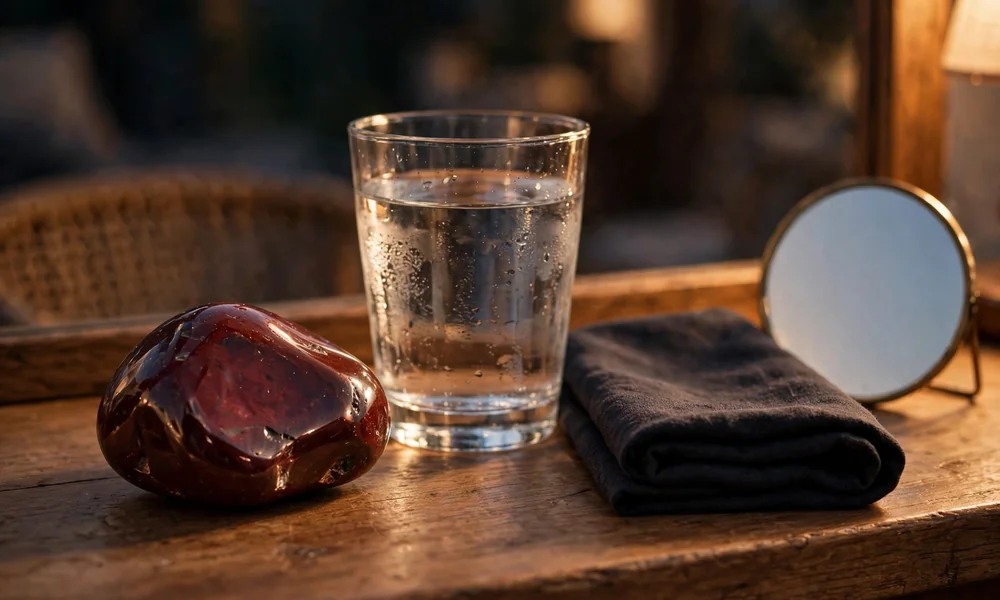
A dressing table gives cuprite a home, and a home makes the bold evening easier to keep. Choose a small, clear surface where the lamplight can find it: a dressing table, a bedside table, or a corner of a desk. Set down a small tray, the stone on it, a clear glass beside it, and little else.
Keep the table the same from evening to evening, so the stone is always where you expect it, and the slow getting-ready pause becomes a habit instead of a decision.
A Bold Evening with Cuprite
A bold evening with cuprite takes only a few minutes to begin: place the stone on its tray, fill a clear glass with fresh water, and set it beside the stone. When you sit down to get ready, drink the water slowly, in small sips, and then pick up the stone and look at its deep red colour for a few breaths.
Put the stone back, and let the evening carry on: the dress, the mirror, the last look before the door. The evening is water, low light, one deep red stone, and a short pause before you go.
Cuprite Beside Water
Water belongs beside the stone, never around it: set a clear glass of fresh drinking water next to the stone on the tray. They share a tray, not a glass. Never place the stone inside drinking water, and never soak it, because cuprite contains copper and must never go in drinking water or in soaks.
If the glass spills, lift the stone away, dry it with a soft cloth, and set it back once the tray is dry.
Keeping Cuprite Safe
Cuprite needs one clear safety rule, and it is worth stating plainly: cuprite contains copper, so it is for display and handling only. Never put cuprite in drinking water, never soak it, and never use it in a bath or a foot soak. Wash your hands with soap and water after handling the stone, and keep it away from children and pets.
Dust the stone weekly with a soft, dry cloth, never soap or polish, and never scrub it. Keep the stone away from damp windowsills, steamy bathrooms and kitchen sinks, and dry it at once if it ever gets wet.
Cuprite at a Glance
| Deep red stone | Bold evenings | Display only |
|---|---|---|
| Copper mineral | Low lamplight | Never in water |
| Dark metallic sheen | Dressing table | Wash hands after |
| Smooth solid feel | Water, light, pause | Dust with dry cloth |
Cuprite and Red Goldstone
Cuprite and red goldstone share a bold-evening mood and a deep red colour, but they are different materials for different stories. Red goldstone is a deep red glass, made by people, filled with tiny copper sparkles. Cuprite is a natural copper mineral from the earth, a deep red oxide with a dark metallic sheen and no glitter.
Where red goldstone warm red sparkle evenings keeps a sparkling man-made glass for bold evenings, this guide keeps a natural deep red copper mineral for bold evenings.
Cuprite and Red Calcite
Cuprite and red calcite are both deep warm red stones, but they suit different hours of the day. Red calcite is a cherry-red variety of calcite, coloured like ripe cherries held up to the light, sometimes crossed with soft white bands, and it suits bold mornings. Cuprite is a darker wine red, a copper mineral with a metallic gleam, and it suits bold evenings in low light.
Where red calcite warm red bold mornings keeps a bright cherry-red stone for bold mornings, this guide keeps a dark wine-red stone for bold evenings.
Cuprite and Red Coral
Cuprite and red coral are both warm red materials for bold days and evenings, but they come from very different places. Red coral is a warm red marine material, the polished skeleton of a small sea animal, built branch by branch on the seabed. Cuprite is a copper mineral from the earth, a deep red oxide formed in copper deposits, with a dark metallic sheen.
Where red coral warm red bold days keeps a warm red branch from the sea for bold days, this guide keeps a deep red copper stone from the earth for bold evenings.
Stones That Must Never Touch Water
Not every stone is safe beside water, and some must never touch water at all. Malachite must never go in water or in elixirs, because it can release harmful substances. Hematite must never go in drinking water, and apatite, lepidolite — which contains lithium — pyrite, angelite and amber must never go in drinking water or in soaks either.
Cuprite belongs on that careful list too: it contains copper, so it must never go in drinking water or in soaks, and hands should be washed after handling. Display it on a tray, keep a glass of water beside it, and never let the two meet.
Your Bold Evenings Checklist
- Set the stone on a tray beside a clear glass of water.
- Drink a glass of fresh water slowly while you get ready.
- Hold the stone for a few breaths and look at its deep red colour.
- Keep the stone beside water, never inside drinking water or soaks.
- Wash your hands after handling the stone, and dust it dry weekly.
- Remember the stone will not heal anything; see a doctor for health problems.

Frequently Asked Questions
What is cuprite?
Cuprite is a deep red copper mineral, a copper oxide formed in the upper parts of copper deposits. It is smooth when polished, sometimes grown as small red cubic crystals, and kept for display and handling.
Is cuprite safe to handle?
Yes, cuprite is safe to hold and display if you wash your hands with soap and water after handling it. It is for display only, never in drinking water, never in soaks, and kept away from children and pets.
Can I put cuprite in drinking water?
No, never. Cuprite contains copper, so it must never go in drinking water, in elixirs, in baths or in soaks. Keep a glass of water beside the stone, never around it.
Will cuprite heal anything?
No. Cuprite will not heal anything. It is a beautiful object for display and handling, and the calm comes from the pause and the bold evening.
How do I clean cuprite?
Dust it once a week with a soft, dry cloth, never soap or polish, and never scrub it. If it gets wet, dry it at once and wash your hands after.
Where should I keep my cuprite?
Keep it on a small tray or dressing table in a dry room, with a clear glass of water beside it — a dressing table or a bedside table works well.
The Bottom Line
Cuprite brings deep red to bold evenings: a copper stone, dark wine red with a metallic gleam, held beside a glass of fresh water in low lamplight. Keep it beside water, never in it, wash your hands after handling, and dust it dry.
A Note for Bold Evenings
Keep it deep, keep it dry, keep it bold. A small red stone, a glass of water, and a few slow minutes can carry an evening well.