Some days are tender days. Nothing is wrong, exactly, but the heart feels a little soft and a little tired: on a tender day, the best hours are the gentle ones, when there is nothing to prove and nowhere to rush to.
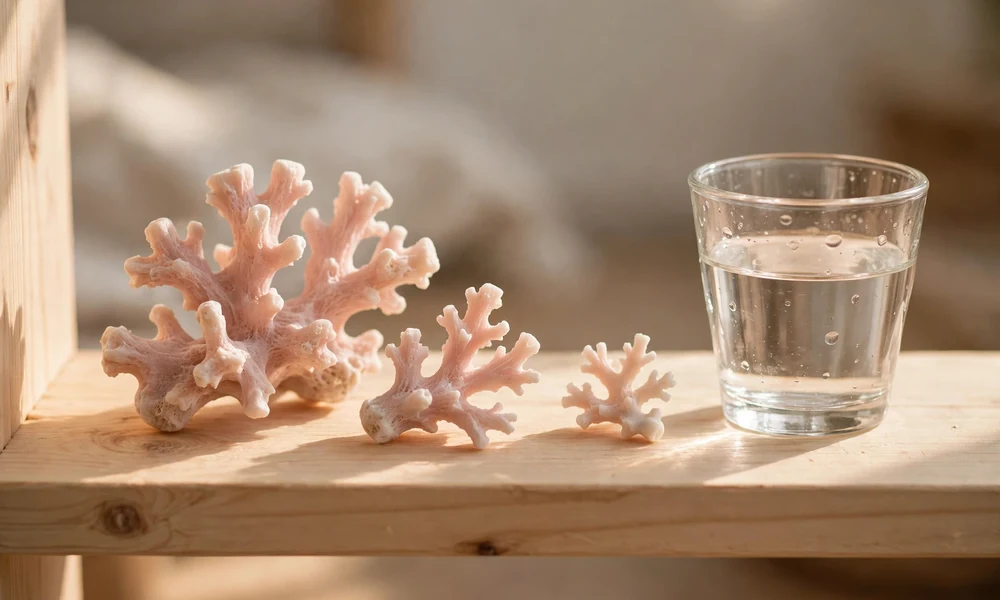
Pink coral is a material for days like these: a soft pink branch from the sea, polished until it glows like the inside of a shell in morning light, pale and warm and easy on the eye. Set it on a tray beside a glass of fresh water, and it looks like a small piece of kindness, kept where you can see it.
This guide is a spotlight on pink coral: what the material is, how to choose a piece, how to wear it and display it, and how to enjoy it through a tender day. The coral is for display and jewellery only, never a treatment, and it will not heal anything.
Key Takeaways
- Pink coral is a soft pink marine material, polished into branches, beads and jewellery.
- Its soft pink colour suits tender days, quiet mornings and gentle comfort.
- Pink coral differs from warm-red coral, fossil coral and other pink stones.
- The coral is for display and jewellery only; it will not heal anything.
- The coral stays beside drinking water, never in it, and stays dry and dusted.
What Pink Coral Is
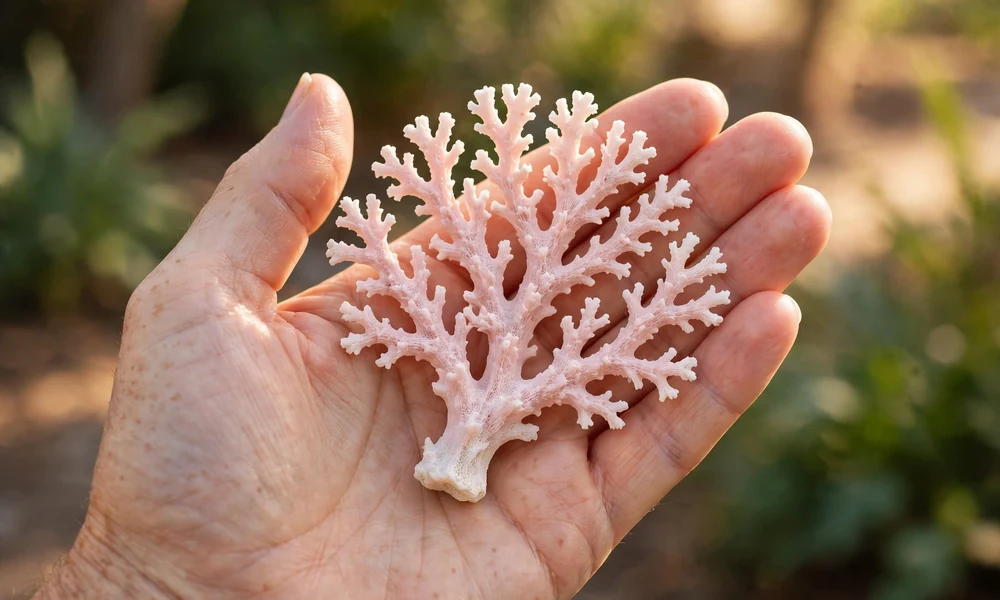
Pink coral is the hard skeleton of a small sea animal, built branch by branch on the seabed and polished by hand into beads, branches and jewellery. Its soft pink colour comes from the coral itself, and the finest pieces glow a pale, even pink that stays gentle even in bright light. Hold a polished branch in your palm and it feels cool, smooth and solid, with a soft, waxy shine.
Beads flash soft pink from every side, while a branch shows its natural shape, with small ridges and pores that prove it grew in the sea. Pink coral is not a stone in the usual sense: it is a marine material, and it deserves gentle care, like something the sea lent you for a while.
Why Soft Pink Suits Tender Days
Soft pink suits tender days because it is a colour that asks nothing of you. Warm red can feel brave and bold, and bright colours can feel loud, but soft pink is quiet and kind: the colour of a pale flower and a soft scarf. On a tender day, that colour gives the eye a gentle place to rest.
A tender day also suits pink coral because the piece is simple: no preparation, no long ceremony, simply there when you sit down, catching the soft light from the window.
Choosing a Pink Coral Piece
Choosing a pink coral piece is mostly a matter of looking closely and trusting your eye. A good piece shows a clear, even soft pink colour, not a pale washed-out white or a deep red that belongs to another coral, and the surface should be smooth, with no sharp chips or rough patches.
A small branch or a strand of beads is enough for a tender day, and it is easy to hold, dust and wear. If a piece feels pleasant in your hand and its soft pink makes you feel calmer, it is the right one. Buy only from a reputable, legal source, and never from a seller who cannot say where the coral came from, because coral is a protected marine material.
Pink Coral on a Shelf
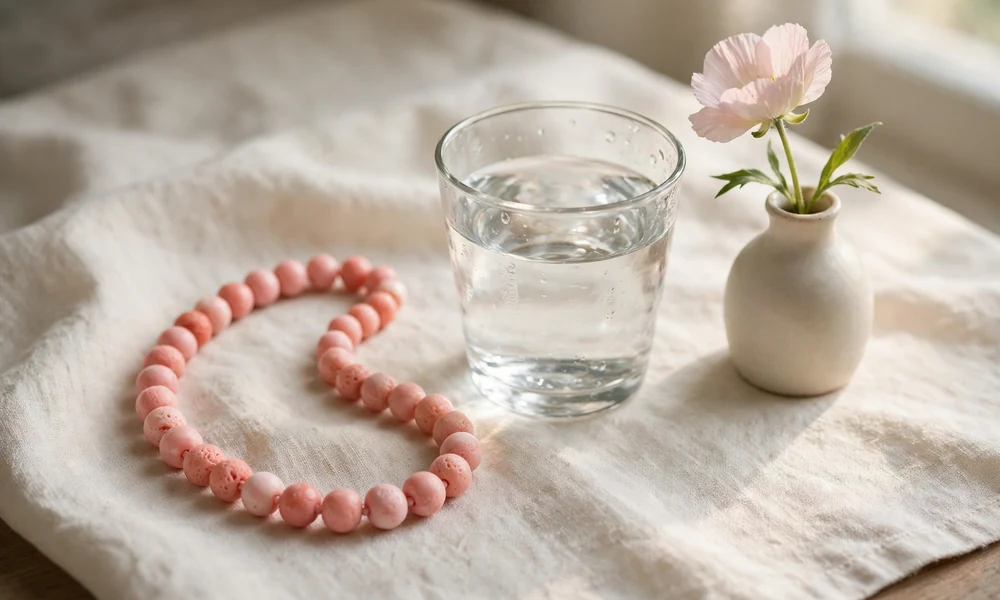
A shelf gives pink coral a home, and a home makes the tender day easier to keep. Choose a small, clear surface where the morning light can find it: a bedroom shelf, a bedside table, or a corner of a desk. Set down a small tray, the coral on it, a clear glass beside it, and little else.
Keep the shelf the same from day to day, so the coral is always where you expect it, and the gentle pause becomes a habit instead of a decision.
A Tender Day with Pink Coral
A tender day with pink coral takes only a few minutes to begin: place the coral on its shelf, fill a clear glass with fresh water, and set it beside the coral. When you sit, drink the water slowly, in small sips, and then pick up the coral and look at its soft pink colour for a few breaths.
Put the coral back on the shelf, and let the day carry on at its own pace: a book, a little music, or simply the quiet of the room. If you wear the coral as a necklace or a bracelet, put it on slowly, and let it be the gentle part of getting dressed.
Pink Coral Beside Water
Water belongs beside the coral, never around it: set a clear glass of fresh drinking water next to the coral on the shelf. They share a shelf, not a glass. Never place the coral inside drinking water, and never soak it, because pink coral is a soft marine material that water can damage and dull.
If the glass spills, lift the coral away, dry it with a soft cloth, and set it back once the shelf is dry.
Keeping the Coral Dry and Clean
Pink coral is a soft material, so it deserves gentle, dry care. It can scratch and chip more easily than harder stones, and water can dull its polish. Dust it weekly with a soft, dry cloth, never soap or polish, and never scrub it. Keep it away from perfume, hairspray and creams, and put it on last when you dress.
Keep the coral away from damp windowsills, steamy bathrooms and kitchen sinks. If it ever gets wet, dry it at once, and store it alone in a soft pouch so harder stones cannot scratch it.
Pink Coral at a Glance
| Soft pink coral | Tender days | Keep it dry |
|---|---|---|
| Pale, even pink | Slow hours, rest | Beside water only |
| Smooth cool feel | Water, light, pause | Dust with dry cloth |
| Branch or beads | One piece, one shelf | Never soak it |
Pink Coral and Red Coral
Pink coral and red coral come from the same sea, but they are different materials for different days. Red coral is a warm red, vivid and bold, and it suits bold days, big steps and speaking up. Pink coral is a soft pale pink, gentle and quiet, and it suits tender days, when the heart wants softness rather than courage.
Where red coral warm red bold days keeps a warm red piece for bold days, this guide keeps a soft pink one for tender days — same sea, different colour, different calm. Choose the colour that matches the day you are having, not the day you wish you were having.
Pink Coral and Fossil Coral
Pink coral and fossil coral are easy to confuse by name, but they are very different things. Fossil coral is coral that became stone millions of years ago, warm honey, rust and cream, covered in honeycomb cells and flower-like rings. Pink coral is fresh from the sea, smooth and pale pink, with the shape of a living branch.
Where fossil coral warm patterns ancient days keeps a warm patterned stone for ancient days, this guide keeps a soft pink branch for tender days. One is old and patterned, the other is soft and plain, and they suit different hours entirely. Pink calcite shares the soft pink colour, but it is a stone, not a marine material: where pink calcite soft pink mornings keeps a soft pink stone for mornings, this guide keeps soft pink coral for tender days, the softer and more delicate of the two.
Stones That Must Never Touch Water
Not every stone is safe beside water, and some must never touch water at all. Malachite must never go in water or in elixirs, because it can release harmful substances. Hematite must never go in drinking water, and apatite, lepidolite — which contains lithium — pyrite, angelite and amber must never go in drinking water or in soaks either.
Pink coral is different: safe to hold and wear, but it still stays beside water, never in it, and it is never soaked.
When a Stone Is Not the Answer
A stone is not the answer to a health problem, and pink coral is no exception: it will not heal anything, and it will not replace rest or a doctor. If you feel unwell, please see a doctor, and enjoy the coral for what it is: soft pink beauty from the sea.
Your Tender Days Checklist
- Set the coral on a shelf or tray beside a clear glass of water.
- Drink a glass of fresh water slowly when the morning begins.
- Hold the coral for a few breaths and look at its soft pink colour.
- Keep the coral beside water, never inside drinking water.
- Dust the coral weekly with a soft, dry cloth, never soap.
- Remember the coral will not heal anything; see a doctor for health problems.

Frequently Asked Questions
What is pink coral?
Pink coral is the hard skeleton of a small sea animal, polished by hand into branches, beads and jewellery. It is soft pink, smooth and cool, a marine material rather than a stone.
Is pink coral safe beside water?
Yes, it is safe to keep beside a glass of drinking water, on the same shelf or tray. It must never be placed inside drinking water or soaked, because water can damage its polish.
Will pink coral heal anything?
No. Pink coral will not heal anything. It is a beautiful object for display and jewellery, and the calm comes from the pause and the tender day.
How do I clean pink coral?
Dust it once a week with a soft, dry cloth, never soap or polish, and never scrub it. If it gets wet, dry it at once. Keep it away from perfume and creams.
How is pink coral different from red coral?
Pink coral is soft pale pink, for tender days. Red coral is warm red, for bold days. They come from the same sea, but they suit different days entirely.
Where should I buy pink coral?
Buy only from a reputable, legal source that can say where the coral came from, because coral is a protected marine material.
The Bottom Line
Pink coral brings soft pink to tender days: a pale branch from the sea, held beside a glass of fresh water in soft morning light. Keep it beside water, never in it, and dust it dry.
A Note for Tender Days
Keep it soft, keep it dry, keep it kind. A small pink branch, a glass of water, and a few slow minutes can carry a tender day well.