The morning commute begins before the day does. The alarm goes off, the bag is packed in a hurry, and the train or the bus is already crowded by the time you step on. By the time you reach the office, your mouth feels dry, your shirt feels warm, and the day has barely started.
Water is the simplest answer to all of that. A bottle filled the night before, a small cloth in the bag, and a few minutes of planning are all it takes to arrive feeling fresh. This guide explains how to pack water for a commute, sip it well on the move, refill it at stations, and keep clothes and skin fresh until you arrive.
It is gentle general information only, never medical advice, and it will not treat or cure anything. Water is comfort and care, and real health problems need a doctor.
Key Takeaways
- Commuting dries you out, because warm carriages, crowds and long hours pull moisture away.
- A commute needs very little: plain water, a small cloth, and a tidy bag.
- Sip plain water slowly through the journey, a little at a time.
- Refill the bottle at stations and taps, and keep it where you can reach it.
- Water is comfort and care, not a treatment, and real health problems need a doctor.
What Staying Fresh Means on a Commute
Staying fresh on a commute means arriving at the end of the journey feeling clean, calm and comfortable, not sticky, tired and thirsty. It is not about looking perfect in a photograph. It is about small comforts: a cool drink, a clean shirt, a washed face, and a bag that holds everything you need.
Freshness on a commute is built from water, in the simplest ways: water to sip, water to wash with, and water to cool a warm face at the station. A bottle, a cloth and a little soap will carry you through a whole morning of travel.
Why Commuting Dries You Out
Commuting dries you out because a train or a bus is a small, warm box, and the crowd keeps heating it all day. The air inside warms up, the windows stay shut against the cold or the noise, and the hours pass without a proper drink. By the time you arrive, your lips feel dry, your skin feels tight, and your head feels heavy.
The dryness is worse on hot days, on crowded carriages, and after a poor night of sleep. It is not dangerous, but it is uncomfortable, and a little planning makes the whole journey easier.
Packing Your Commute Water Kit
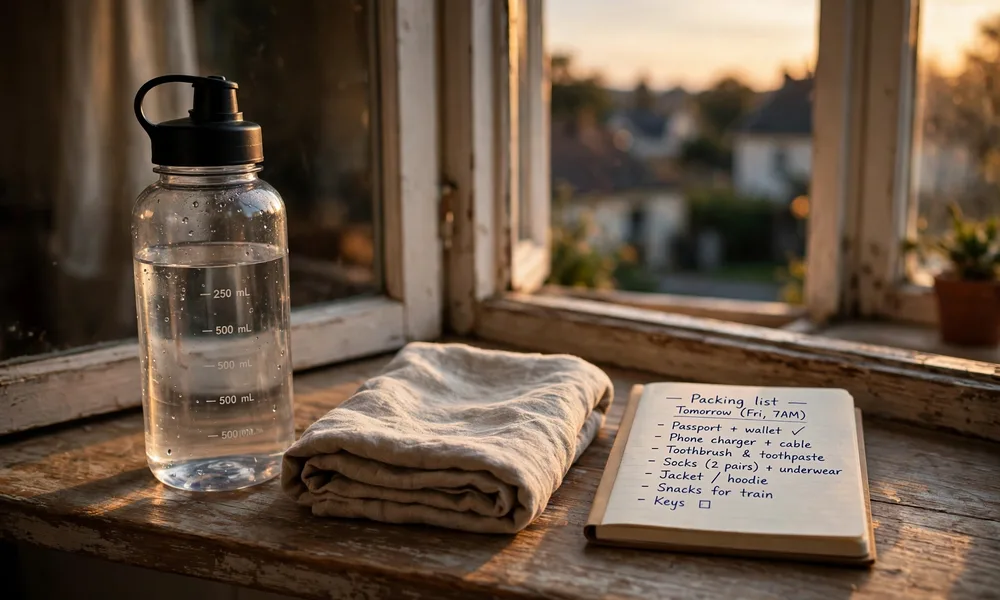
Packing your commute water kit takes five minutes the evening before you leave. Fill a reusable bottle with fresh water and put it in the side pocket of your bag, where you can reach it without digging. Pack a soft cloth, a small bar of soap, and a zip bag for damp things. Keep the kit simple and keep it where you can reach it.
Pack the night before, not in the morning rush, and the kit will always be ready. A folded fresh shirt in the bag is worth its weight on a hot day.

Sipping Water on the Move
Sipping water on the move is easy once the bottle is where you can reach it. Take small sips often, rather than a large drink all at once, and keep the bottle in the side pocket of your bag or in your hand. A little water every few minutes keeps your mouth fresh and your head clear through the whole journey.
Do not wait until you feel thirsty to drink, because thirst arrives late. Sip on the platform, sip on the train, and sip again as you walk the last stretch to work. The habit is small, and it changes the whole morning.
Refilling on the Way
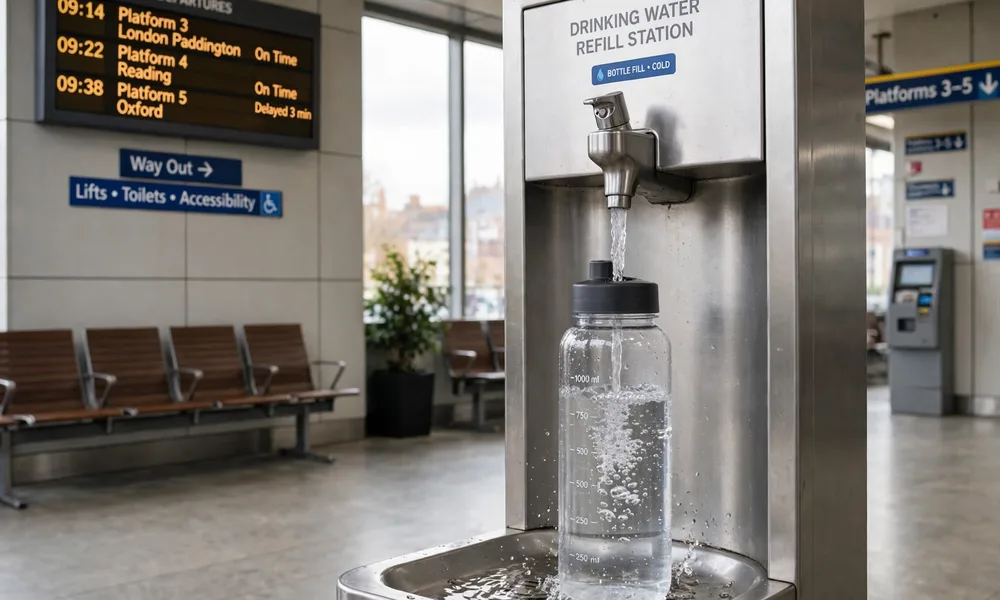
Refilling on the way is easier than most commuters think. Many stations now have drinking water refill points, and most offices have a tap or a cooler near the door. Fill the bottle before you leave home, top it up at the station if you pass a refill point, and fill it again when you arrive.
Keep the bottle clean, and rinse it every evening with hot water and a little soap. A clean bottle tastes better, and it lasts for years. If a station has no refill point, a small café will usually fill a bottle for the price of a smile.
Keeping Clothes Fresh
Keeping clothes fresh on a commute is mostly a matter of air and a little water. Wear a light layer you can remove on a crowded train, and keep a folded fresh shirt in the bag for the days when the morning is warm. A damp cloth pressed to the back of the neck cools you down in seconds, and it costs nothing.
When you arrive, hang your coat up, smooth your shirt, and wash your hands and face with plain water. Five minutes in the washroom is enough to arrive looking and feeling like the day has just begun, not like the journey wore you out. Where water and hotel stays simple fresh routine keeps a traveller fresh through a hotel stay, this guide keeps a commuter fresh through a single morning.
A Quick Wash, Anywhere
A quick wash anywhere needs very little: a tap, a soft cloth, and a little soap. Wet the cloth, add a drop of soap, and wash your face, your neck and your hands. Rinse the cloth, wring it out, and press it gently to your face for a few seconds. The cool water wakes you up better than a second coffee.
Keep the damp cloth in its zip bag until you get home, and wash it in the evening. A clean cloth every morning is a small luxury, and it is one of the cheapest comforts a commuter can carry.
Commuting at a Glance
| Small kit | Sip often | Arrive fresh |
|---|---|---|
| Bottle, cloth, soap | Little sips, often | Wash face, hands |
| Packed night before | Refill at stations | Fresh shirt ready |
| Tidy bag, easy reach | Never wait for thirst | Coat hung, shirt smooth |
Trains, Buses and Walking
Trains, buses and walking each need a slightly different kind of freshness. On a train, the bottle stays in the side pocket and the cloth stays in the bag, ready for a warm carriage. On a bus, the same kit works, but the ride is shorter and the stops are closer, so a sip at each stop is easy.
Walking the last stretch is the kindest part of the commute: fresh air, a little movement, and a sip of water before you step inside. Where water and road trips fresh on the go packs water for a long car drive with rest stops, this guide packs a smaller kit for the daily train, bus and walk to work.
Hot Days and Crowded Carriages
Hot days and crowded carriages are the hardest part of any commute. The air grows warm, the crowd grows close, and the journey feels twice as long. On those days, fill the bottle to the top, freeze it halfway the night before if you like it cold, and wear the lightest layer you can.
Stand near a window or a vent when you can, and step off for a breath of air at a longer stop. A damp cloth on the back of the neck is the fastest cool-down there is. Where water and flights skin routine meets dry cabin air with one small bottle and a soft cloth, this guide meets a hot carriage with the same simple kit.
When Freshness Is Not Enough
Freshness is not the answer to a health problem, and water is no exception: it will not heal anything, and it will not replace rest, food or a doctor. If you feel dizzy, faint or unwell on the journey, sit down, drink a little water, and ask for help. If the feeling keeps coming back, please see a doctor.
A commute should be tiring, not frightening. The water, the cloth and the fresh shirt are comforts, not cures, and they work best alongside sleep, food and real medical care when you need it.

Your Commuting Checklist
- Fill a reusable bottle with fresh water the night before.
- Pack a soft cloth, a small bar of soap and a zip bag for damp things.
- Sip plain water slowly through the journey, a little at a time.
- Refill the bottle at stations and taps, and rinse it every evening.
- Wash your face and hands with plain water when you arrive.
- Remember water is comfort, not a cure; see a doctor for health problems.
Frequently Asked Questions
How much water should I carry on a commute?
A bottle of about half a litre to one litre is enough for most commutes. Fill it the night before, sip it slowly through the journey, and refill it at a station or at work if the trip is long.
Where should I keep my bottle on a train?
Keep it in the side pocket of your bag, or in your hand, where you can reach it without digging. A bottle buried at the bottom of the bag is a bottle you will never drink from.
Can I refill my bottle at a station?
Many stations now have drinking water refill points, and most offices have a tap or a cooler near the door. If a station has no refill point, a small café will usually fill a bottle for you.
How do I keep my clothes fresh on a hot day?
Wear a light layer you can remove on a crowded train, and keep a folded fresh shirt in the bag. A damp cloth pressed to the back of the neck cools you down in seconds.
Is plain water enough for a commute?
Yes. Plain water is enough for sipping, washing and cooling down. You do not need special drinks or products for a daily journey, and plain water costs almost nothing.
What if I feel unwell on the journey?
Sit down, drink a little water, and ask for help. If the feeling keeps coming back, please see a doctor. Water is comfort and care, not a treatment.
The Bottom Line
Water and commuting go together simply: a bottle filled the night before, small sips on the move, a refill at the station, and a quick wash when you arrive. Pack light, sip often, and arrive fresh.
A Note for the Daily Commute
Keep it simple, keep it fresh, keep it calm. A bottle of water, a soft cloth, and a few small habits can make the daily journey feel like a gentle start, not a trial.