Some days are made to be taken slowly, and the morning knows it before you do. The light comes in warm and low, the house stays quiet a little longer, and there is no list waiting on the table. On a day like that, a small beautiful stone on a tray is enough of a plan.
Moroccan agate is a stone that suits those slow hours. It is a banded agate from Morocco, in North Africa, laid down in soft layers of peach, cream, dusty rose and pale grey, like the colours of a desert evening.
This guide explains what Moroccan agate soft bands are, how to choose a piece, how to keep it safely beside water, and how to build a small slow-day routine around it, with tea, a book and time to do nothing. The stone is for display and handling only, never a treatment, and it will not slow a busy day down on its own.
Key Takeaways
- Moroccan agate is a banded agate with soft peach, cream, dusty rose and pale grey bands.
- Its warm desert colours suit slow days, quiet mornings and unhurried evenings.
- The stone stays beside water only, never inside drinking water, and hands are washed after handling.
- A slow day needs very little: water, light, one stone, a book and time to do nothing.
- The stone is for display and handling only; it will not heal anything.
What Moroccan Agate Soft Bands Mean
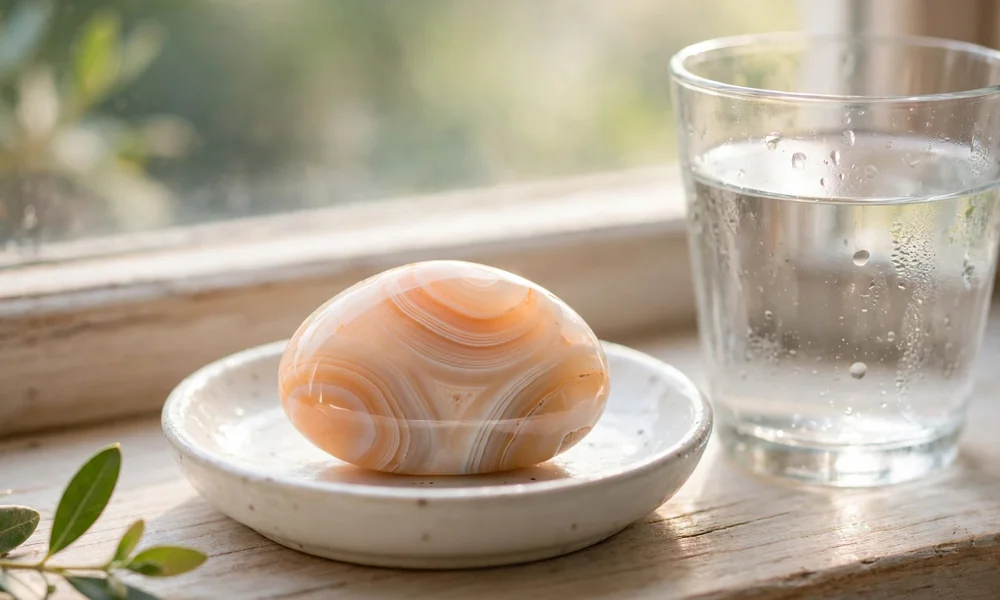
Moroccan agate is a variety of chalcedony, a pale stone laid down in fine layers over a very long time, and it takes its name from Morocco, where warm banded agate is found in the dry hills and desert edges of North Africa. Its soft bands come from tiny traces of iron and other minerals, and the colours stay gentle: peach like a late sun, cream like warm sand, dusty rose like a faded flower, and pale grey like morning cloud. In daylight the bands glow softly, and the stone feels smooth, cool and solid in the hand.
Peach, Cream and Dusty Rose
The colours of Moroccan agate are its warmest feature, and they are what set it apart from the cooler banded agates. Where Botswana agate soft bands for slow days is grey and dove soft, with pink and cream running through a cool stone, Moroccan agate is warm all the way through, like sand that has kept the heat of the afternoon. Peach is the colour that leads, and it sits beside cream without ever turning bright or loud.
Why Slow Days Matter
A slow day is not a wasted day, even though a busy week can make it feel like one. It is a day with room in it: room to drink water slowly, to sit by a window, and to finish a chapter without a list chasing it. When a day has room, small pleasures feel larger, and the evening arrives without exhaustion. Without that room, even a quiet day can feel crowded, because the mind fills every gap with chores and worries.
The Safety Rule First: Beside Water Only
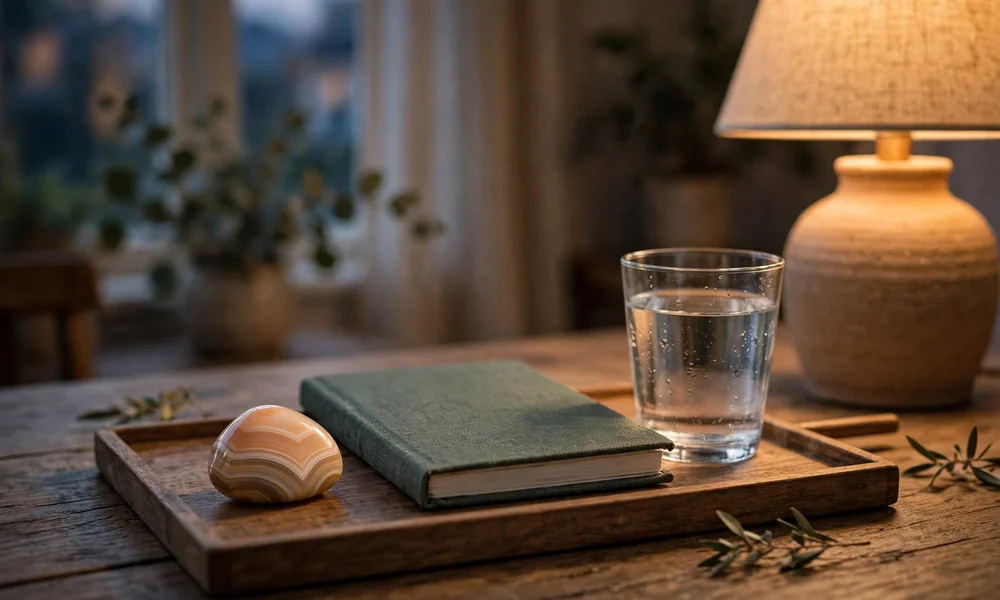
This is the most important part of this article, and it must be understood before anything else. The stone stays beside water only, never inside drinking water, never soaked, and never used in elixirs of any kind. Keep the glass beside the stone's dish, and keep the stone dry. If a piece ever falls into a glass by accident, throw the water away, wash the glass, and wash your hands.
Stones that must never touch water at all are worth naming here, because the rule is easy to forget. Malachite must never go in water or elixirs, apatite and lepidolite must never go in drinking water, lepidolite contains lithium, pyrite must never go in drinking water, angelite must never be soaked, and amber must never go in drinking water or soaks. Hematite must never go in drinking water either. Moroccan agate itself is a hard chalcedony, but water can still dull its polish over time, and no stone belongs in a drink.

Choosing a Moroccan Agate Stone
Choose a stone you can see clearly before you buy it, in daylight as well as in the shop light. Look for a piece where the peach, cream and dusty rose bands wander naturally, in soft waves rather than in straight lines or perfect stripes. Hold it up to daylight: the colours should stay warm and gentle, and the stone should feel smooth, cool and dry, with a soft, almost waxy shine. A piece that fits in your palm is enough, and a small tumbled stone is often the best choice for a tray.
A Slow Morning with Moroccan Agate
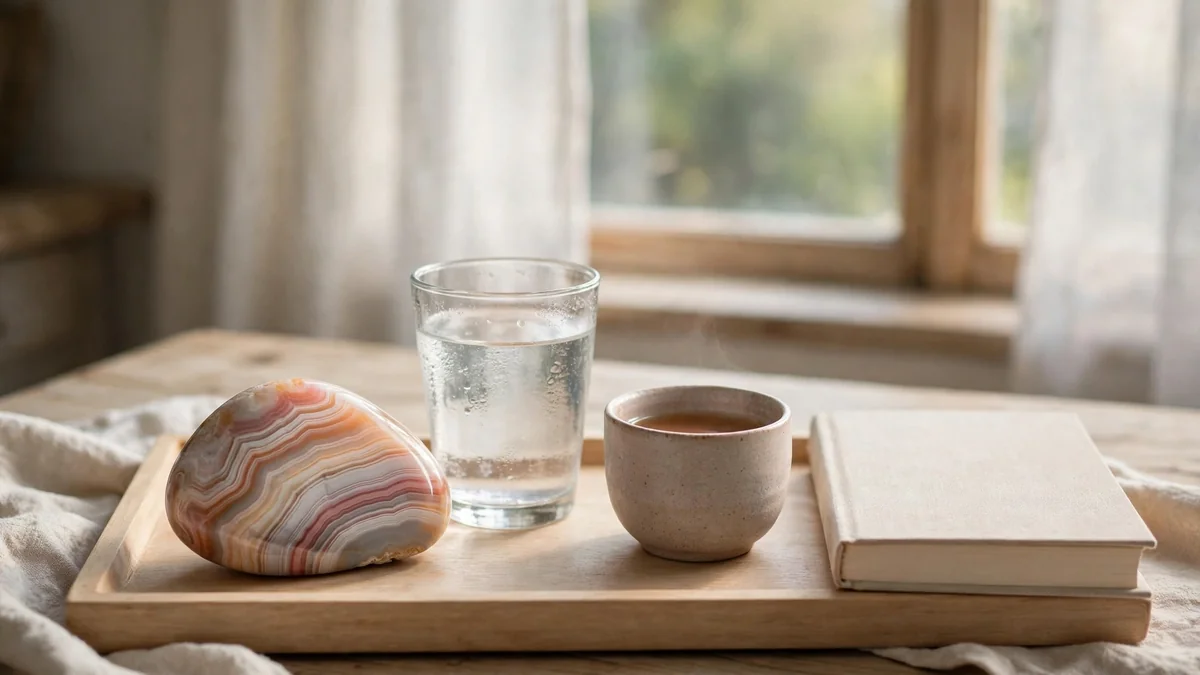
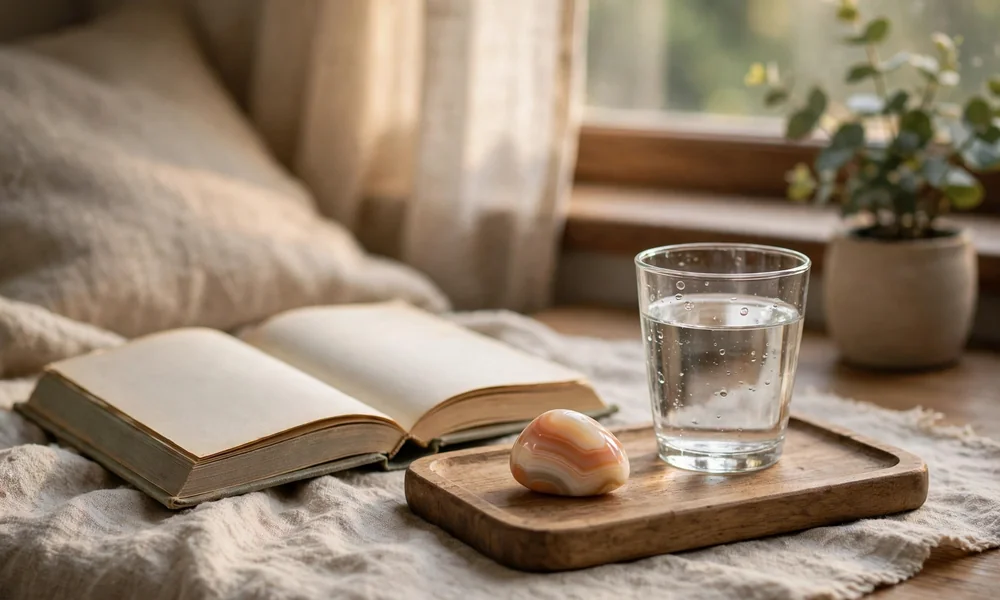
A slow morning takes no planning at all, and it starts with the tray. Set out the glass, the stone and what you need for the day the evening before, so the morning does not begin with searching: a book, a journal, a cup of tea, and the Moroccan agate on its dish. Lay the tray where the light falls, and leave the phone in another room, because a slow day cannot start with a screen.
Moroccan Agate in Your Palm
Holding the stone is the quietest part of the routine, and it takes less than a minute. Pick up the Moroccan agate, close your fingers around it, and feel its cool, smooth weight. Turn it once, look at the bands, and set it back down. This gives your hands a task while your mind settles, and it is enough. Slow days pull the mind in gentle directions, and a small object gives it one thing to rest on.
Tea and a Book Beside Your Stone
A slow day is made for reading, and a stone beside the book makes the pause feel deliberate. Open your book beside the Moroccan agate and read a chapter without checking the time. When it ends, set the book down, drink your tea, and look at the stone for a moment. Keep the reading spot simple: a chair, a cushion, a glass of water and the stone. The same gentle idea runs through moss agate green calm for plant lovers, where a small stone sits happily among pots and leaves.
Moroccan Agate at a Glance
| Peach bands | Cream bands | Dusty rose |
|---|---|---|
| Warm desert colour | Soft sandy light | Quiet faded pink |
| Beside water only | Never in elixirs | Wash hands after |
| Palm-sized tumbled stone | Smooth waxy shine | Slow morning tray |
| Tea and book | One clear pause | Store dry always |
Caring for a Soft Banded Stone
Moroccan agate is fairly hard, and its care is simple, because everything is gentle. Clean it with a dry, soft cloth, or with a cloth barely dampened with plain water, then dry it at once. Never soak it, and never use vinegar, lemon juice or harsh chemicals. Handle it gently: agate can chip if it is dropped on a hard floor, so keep it away from harder stones and metal. Do not wear it while gardening, cleaning or doing heavy work.
What It Will Not Do
Be honest about what a stone can and cannot do. Moroccan agate will not calm you, cure anxiety or make a busy day easy. It is a beautiful object, and its value is the pleasure of looking at it and the calm of the routine around it. The same honesty applies to the water beside it: fresh water drunk slowly is good for you, but it is not a treatment either.
No stone or ritual will replace rest and sleep. If slow days feel impossible week after week, the answer is a lighter schedule or advice from a professional. A bright patterned stone can still lift a light day, as in crazy lace agate bright patterns for light days, but the lifting comes from the day itself, not from the stone. Keep the claim small and the day slow, and the stone will do its quiet job.
Your Moroccan Agate Soft Bands Checklist
- Choose a palm-sized Moroccan agate with soft peach, cream and dusty rose bands that wander.
- Set a glass of fresh water beside the stone each morning, never in it.
- Drink the water slowly, hold the stone briefly, and take one slow breath.
- Read one chapter beside the stone, then rest your eyes for a minute.
- Carry the stone in its own soft pouch and keep it away from keys and hard stones.
- Clean the stone with a dry soft cloth, never soak it, and store it dry on its tray.
Frequently Asked Questions
What is Moroccan agate?
Moroccan agate is a banded chalcedony from Morocco, in North Africa. Its soft bands of peach, cream, dusty rose and pale grey form in fine layers over a very long time,
How is Moroccan agate different from Botswana agate?
Botswana agate is a cool grey chalcedony with soft pink, cream and dove grey bands from Botswana in southern Africa. Moroccan agate is warmer, with peach leading the colours, and it comes from Morocco in North Africa
Can I put Moroccan agate in drinking water?
No. Moroccan agate should never go into drinking water: keep the stone beside the glass, never in it. Water can dull its polish, and no stone belongs in a drink, even a clean-looking one.
Is Moroccan agate safe to handle?
A polished piece is safe to display and handle briefly with clean, dry hands, but wash your hands afterwards, especially before eating or drinking. Never cut, grind, sand, or break it.
How do I clean Moroccan agate safely?
Wipe it with a dry, soft cloth, or with a cloth barely dampened with plain water, then dry it at once. Never soak it or use vinegar, lemon juice or harsh chemicals, and store it dry in a soft pouch.
Can I carry Moroccan agate every day?
Yes, if you treat it gently. Carry it in its own soft pouch, away from keys and harder stones, and take it off before gardening, cleaning or swimming.
The Bottom Line
Moroccan agate soft bands is a warm peach stone, a glass of water beside it, and a day with room in it. Set your stone out tonight, and let tomorrow move slowly.
A Note for Slow Days
Keep it warm, keep it dry, keep it beside the water. The slow hours can still belong to you.