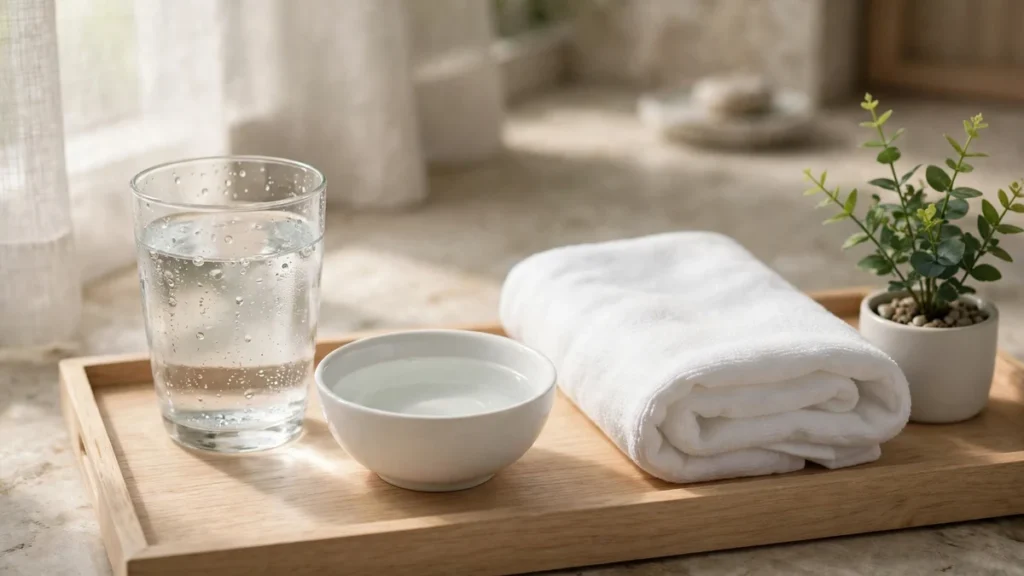
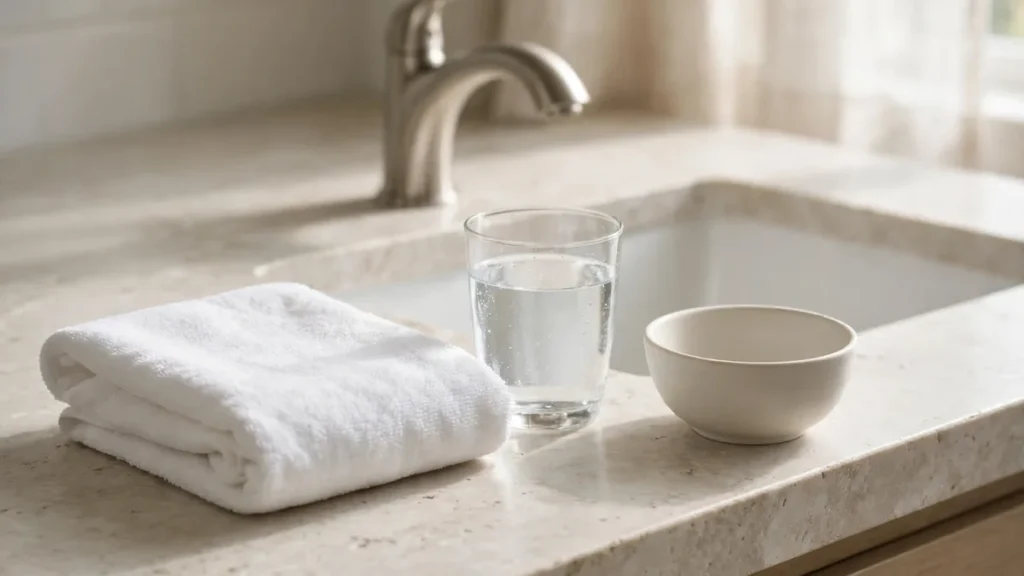
Some days ask for very little. The morning moves slowly, the light comes in softly through the window, and there is time to notice the grain of the wood on the table.
Petrified wood is a stone for days like these. It was once a living tree, and over millions of years its wood turned slowly to stone, keeping every ring and grain line exactly where it grew.
This article is a gentle guide to petrified wood for slow living: what the stone is, how to choose one, how to keep it safely beside water, and how to build a short, unhurried routine around it. The stone is a companion, never a treatment.
Key Takeaways
- Petrified wood means a fossilised stone that keeps the rings and grain of an ancient tree.
- Petrified wood is a display stone, so keep it dry, handle it gently, and enjoy it by looking.
- The stone always stays beside drinking water, never in it; this is the only safe way.
- A slow day needs very little: water, daylight, one ancient stone, and unhurried pauses.
- Petrified wood is a beautiful object, not a treatment, and it will not slow time for you.
What Petrified Wood Means
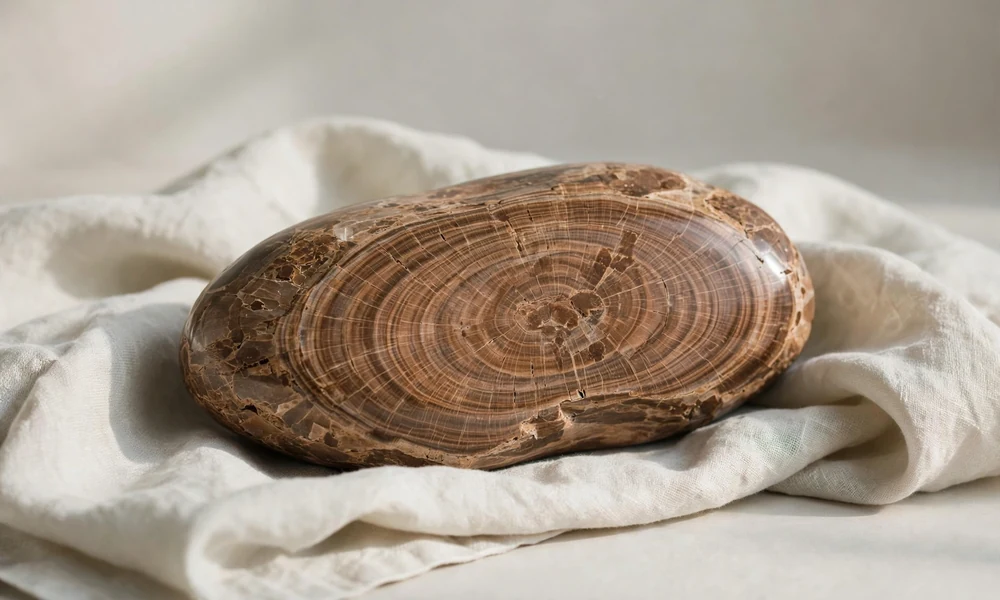
Petrified wood is wood that became stone. Millions of years ago, fallen trees were buried under mud and ash, and minerals slowly replaced the wood cell by cell. The shape stayed the same: the rings, the grain and even the bark can still be seen, but the whole piece is now hard stone.
Hold a polished slice up to the light and the rings look like the growth rings of a tree cut clean across. The colours are warm browns, creams, rusts and soft greys, and no two pieces carry the same pattern.
Why Slow Living Feels Good
A slow day feels good because nothing in it is hurried. There is no long list, no heavy meeting, and no clock watching every minute. The morning stretches out, the afternoon arrives gently, and the evening feels like a reward rather than a deadline.
An ancient object can mark a day like this. When the petrified wood catches your eye, it is a reminder that some things took millions of years to form, and that your own day can afford to move slowly.
Choosing a Petrified Wood Piece
Choose a petrified wood piece you can see before you buy it. Look for clear grain lines and rings in warm brown, cream or rust, rather than a dull grey colour or a surface where the pattern is hard to see. Hold it up to daylight: the rings should stay clear and warm, and the stone should feel cool, dry and solid, with a gentle weight in the hand.
Petrified wood is often sold as small polished slices and tumbled pieces, and a piece that fits in your palm is enough. Avoid pieces with cracks, chips or chalky patches, and avoid any piece that feels rough or gritty all over.
Petrified Wood Beside Water, Never in It
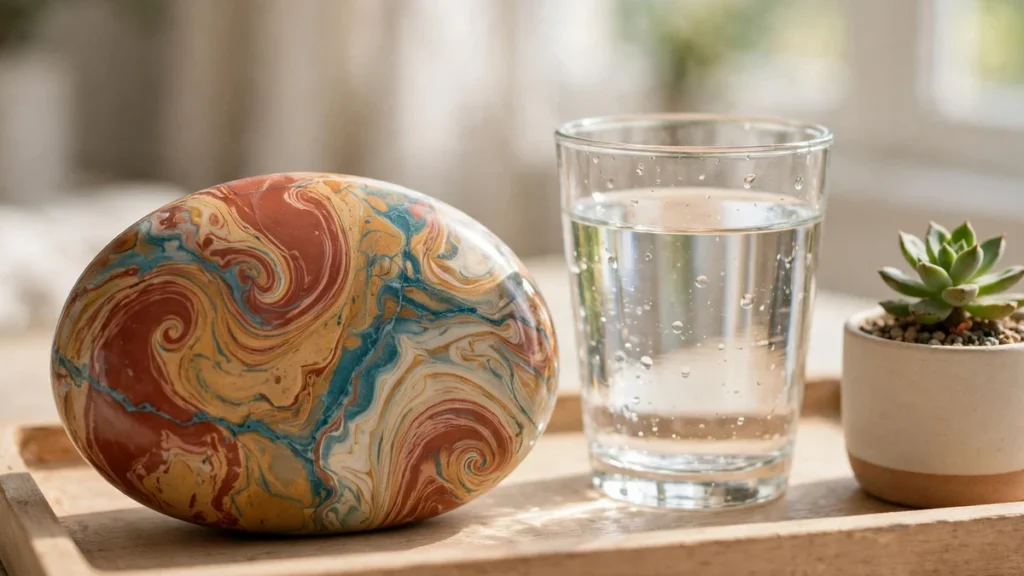
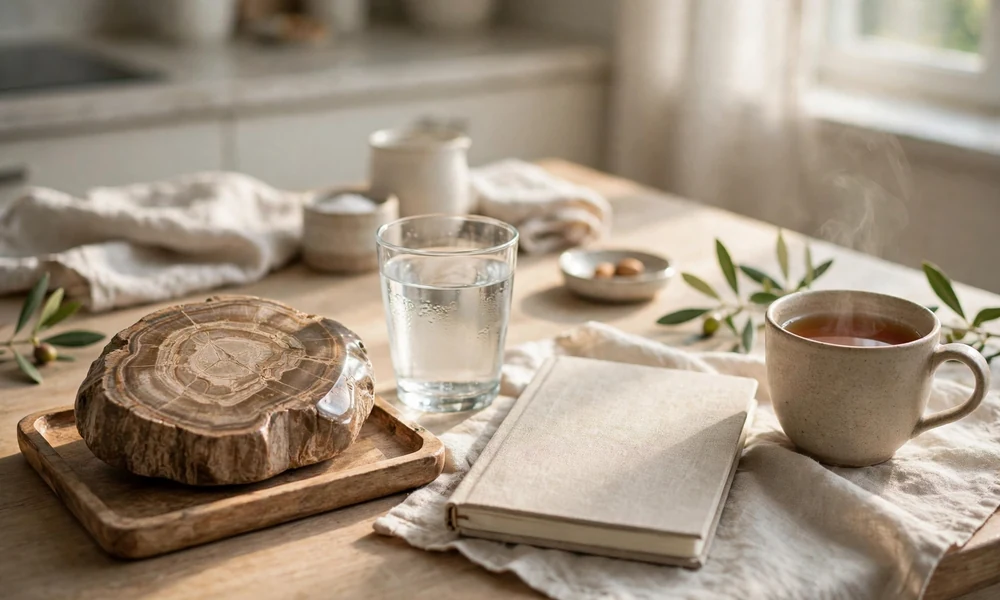
The safety rule is simple and absolute: the stone stays beside the water, never in it. A glass of fresh drinking water stands on the table, and the petrified wood rests beside the glass. The water stays plain, and the stone stays dry. This is the only safe way to pair a stone with drinking water.
Petrified wood must never be soaked, and it must never go into a drink. Even a clean-looking stone can carry dust and oils, and no stone belongs in drinking water. Keep the glass and the stone as neighbours, never as one.
A Slow Morning in Small Steps
A slow morning takes no planning at all, and it starts with the tray. Set out the glass, the stone and what you need for the morning — a notebook, a pen, a cup of tea — so the day does not begin with searching.
When you sit down, pour a glass of fresh water and set it beside the petrified wood. Drink it slowly, in small sips, and look at the rings of the stone for a minute. Then open your notebook, write down the one thing that would make today feel good, and begin with that.
Petrified Wood in Your Palm
Holding the stone is the quietest part of the routine. Pick up the petrified wood, close your fingers around it, and feel its cool, smooth weight. Turn it once, follow one grain line with your eyes, and try to count the rings you can see.
This takes less than a minute: it gives your hands a task while your mind rests. Slow days leave room for small observations, and an ancient stone is a gentle invitation to look closely. Set it back down when you are done, and let it wait for the next pause.
Reading and Resting Beside Your Stone
A slow day is made for short pauses, and a stone beside the book makes the pause feel deliberate. Between chapters, close the book for a minute and look at the petrified wood beside your glass of water.
Keep the pause simple: a chair, a glass of water and the stone. The same gentle idea runs through picture jasper earth art for calm spaces, where a patterned stone marks a slow, calm hour at home.
Petrified Wood on the Shelf
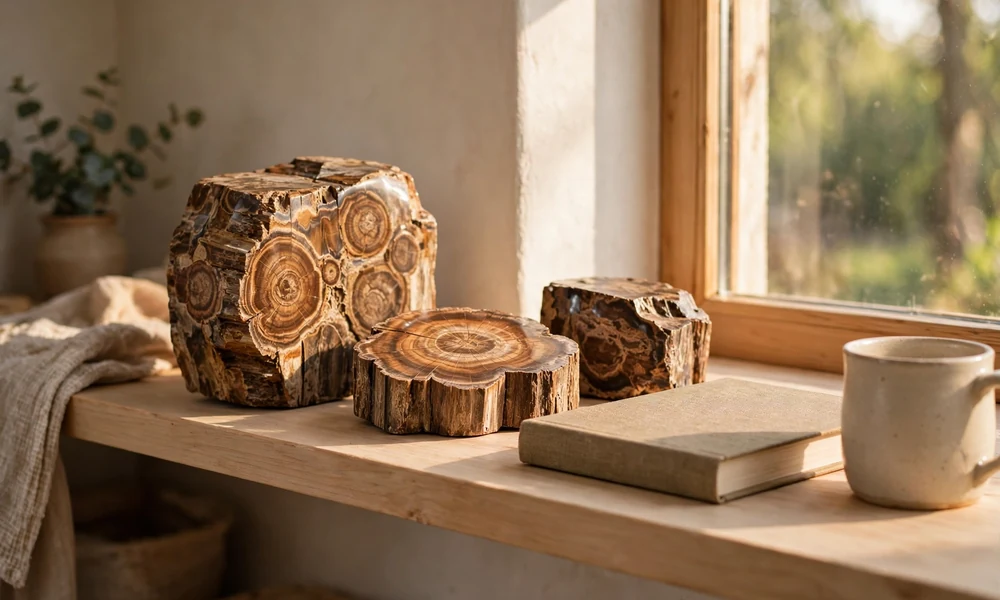
The shelf is where an ancient stone earns its keep, and a small petrified wood piece on the shelf can steady the whole room. Set the stone beside a folded cloth and a glass of water, where you will see it every time you walk past.
Wipe the shelf once a week with a dry cloth, and keep the stone away from coffee rings and sticky notes. Leave the stone on the shelf, dry and safe, and wipe it if it catches any dust.
Carrying Petrified Wood Through the Day
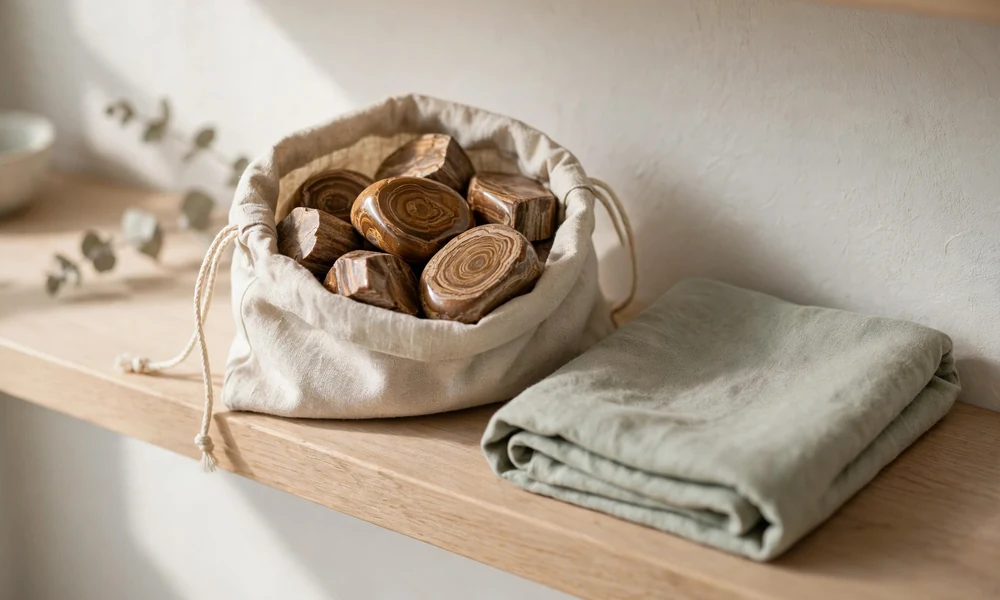
Some slow days still ask you to move around, and the stone can travel with you. A small petrified wood piece in a soft pouch fits in a pocket, a bag or a drawer. The pouch protects the stone, because even a hard stone can chip against keys.
Choose a soft cloth pouch with room for one stone and nothing else, and keep the petrified wood away from cleaning products. Take it out at your table when you need a pause, then put it back. An ancient stone travels well, as in botswana agate soft bands for slow days, where a banded stone marks the start of a slow day.
Caring for an Ancient Stone
Petrified wood needs gentle care, even though it is a fairly hard stone. Clean it with a dry, soft cloth, or with a cloth barely dampened with plain water, then dry it at once. Never soak it, and never use vinegar, lemon juice or harsh chemicals.
Handle it gently: petrified wood can chip if it is dropped on a hard floor, so keep it away from harder stones and metal. Store it dry, in its own pouch or on its tray, as explained in tree agate quiet green for home corners.
What Petrified Wood Will Not Do
Be honest about what a stone can and cannot do. Petrified wood will not slow time, calm anxiety, bring good luck or make a busy day slow. It will not help you sleep, balance your energy or change your mood. It is a beautiful object, and its value is the pleasure of looking at it and the slowness of the routine around it.
The same honesty applies to the water beside it: fresh water drunk slowly is good for you, but it is not a treatment either. No stone or ritual will replace rest and sleep. If slow days feel rare week after week, the answer is a lighter schedule or advice from a professional.
| Slow pause | Water beside | Stone care |
|---|---|---|
| Drink fresh water | Glass beside stone | Wipe dry cloth |
| Hold stone briefly | Sip water slowly | Store in pouch |
| Look out window | Plan on paper | Keep stone dry |
| Rest eyes briefly | Lukewarm water first | Clean soft cloth |
Your Petrified Wood Slow Living Checklist
- Choose a petrified wood piece with clear grain rings and no cracks.
- Set a glass of fresh water beside the stone each morning, never in it.
- Drink the water slowly, hold the stone briefly, and take one slow breath.
- Pause between tasks, look out of the window, and rest your eyes for a minute.
- Carry the stone in its own soft pouch and keep it away from keys and hard stones.
- Clean the stone with a dry soft cloth, never soak it, and store it dry on its tray.
Frequently Asked Questions
What is petrified wood?
Petrified wood is wood that turned to stone over millions of years. Fallen trees were buried under mud and ash, and minerals slowly replaced the wood cell by cell, keeping the rings and grain lines while the whole piece became hard stone.
Can I put petrified wood in drinking water?
No. Petrified wood should never go into drinking water: keep the stone beside the glass, never in it. Even a clean-looking stone can carry dust and oils, and no stone belongs in a drink.
Is petrified wood a crystal?
Petrified wood is a fossilised stone, not a crystal in the usual sense. It is mostly quartz minerals that replaced ancient wood, and it is kept for display and handling only, like other stones in this journal.
How do I clean petrified wood safely?
Wipe it with a dry, soft cloth, or with a cloth barely dampened with plain water, then dry it at once. Never soak it or use vinegar, lemon juice or harsh chemicals, and store it dry in a soft pouch.
Can I keep petrified wood out every day?
Yes, if you treat it gently. Keep it on its tray beside your glass of water, away from coffee rings and harder stones, and wipe it with a dry cloth once a week.
Will petrified wood slow time or calm anxiety?
No. Petrified wood will not slow time or calm anxiety on its own. It is a beautiful ancient object, and the slow routine around it — water, daylight, short pauses and one slow breath — is what makes a day feel slower.
The Bottom Line
Petrified wood is an ancient stone with wood grain rings, a glass of water beside it, and a slow day with pauses in it.
Set your stone out tonight, and let tomorrow move a little more slowly.
A Note for Slow Living
Keep it ancient, keep it dry, keep it beside the water. The slow hours can still belong to you.